European Economic
and Social Committee
European Economic
and Social Committee
The European Economic and Social Committee (EESC) is the voice of organised civil society in Europe.
Find out more about its role and structure at http://www.eesc.europa.eu/en/about
The EESC issues between 160 and 190 opinions, evaluation and information reports a year.
It also organises several annual initiatives and events with a focus on civil society and citizens’ participation such as the Civil Society Prize, the Civil Society Days, the Your Europe, Your Say youth plenary and the ECI Day.
Find the latest EESC opinions and publications at http://www.eesc.europa.eu/en/our-work/opinions-information-reports/opinions and http://www.eesc.europa.eu/en/our-work/publications-other-work/publications respectively.
The EESC is active in a wide range of areas, from social affairs to economy, energy and sustainability.
Learn more about our policy areas and policy highlights at http://www.eesc.europa.eu/en/policies
The EESC holds nine plenary sessions per year. It also organises many conferences, public hearings and high-level debates related to its work.
Find out more about our upcoming events at http://www.eesc.europa.eu/en/agenda/our-events/upcoming-events
Here you can find news and information about the EESC'swork, including its social media accounts, the EESC Info newsletter, photo galleries and videos.
Read the latest EESC news http://www.eesc.europa.eu/en/news-media/news and press releases http://www.eesc.europa.eu/en/news-media/press-releases
The EESC brings together representatives from all areas of organised civil society, who give their independent advice on EU policies and legislation. The EESC's326 Members are organised into three groups: Employers, Workers and Various Interests.
Find out more about our Members and groups at http://www.eesc.europa.eu/en/members-groups
The EESC has six sections, specialising in concrete topics of relevance to the citizens of the European Union, ranging from social to economic affairs, energy, environment, external relations or the internal market.
Find out more at http://www.eesc.europa.eu/en/sections-other-bodies
Február 23-án az EGSZB véleményt fogadott el a 2023. évi éves fenntartható növekedési jelentésről szóló európai bizottsági közleményről. Ebben az EGSZB arra sürgette az Európai Bizottságot, hogy az világosabban kommunikálja az EU előtt álló kihívásokat és a leküzdésükhöz szükséges teendőket.
A 2023. évi éves fenntartható növekedési jelentés, amely felvázolja az EU következő 12–18 hónapra vonatkozó gazdaság- és foglalkoztatáspolitikai prioritásait, rövid távon enyhíteni kívánja az energiasokkok negatív hatásait, előmozdítva a fenntartható és inkluzív növekedést, valamint középtávon növelve az EU gazdasági és társadalmi rezilienciáját.
Véleményében az EGSZB üdvözölte azokat a prioritásokat, amelyeket a versenyképes fenntarthatósággal kapcsolatban határoztak meg, valamint azt is, hogy több figyelmet fordítanak az EU-n belüli szociális párbeszéd megerősítésérére. Ezenkívül az EGSZB arra kérte az Európai Bizottságot, hogy kötelezze el magát a jó kommunikáció mellett, hiszen az nagyon fontos. Az egységes piac működésének javítása érdekében az EGSZB tisztességes munkafeltételeket, hatékony versenyt és a civil társadalom aggályainak jobb figyelembevételét szorgalmazta. Az EGSZB arra is ösztönözte a tagállamokat, hogy az infláció kezelése során alkalmazzanak életszerű, mérsékelt és kiegyensúlyozott megközelítést.
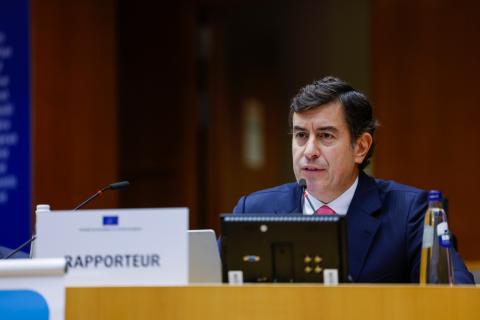
„A polgárok számára alapvetően fontos, hogy határozottan, következetesen és közösen nevezzük meg a kihívásokat, illetve kommunikáljuk mindazt, amit az EU a leküzdésük érdekében tesz. Mindez segít majd elkerülni az európai projekttel kapcsolatos félreértéseket, és erősíti azt az érzést, hogy Európa mindenkiért működik” – nyilatkozta Gonçalo Lobo Xavier, az EGSZB előadója. (tk)