European Economic
and Social Committee
European Economic
and Social Committee
The European Economic and Social Committee (EESC) is the voice of organised civil society in Europe.
Find out more about its role and structure at http://www.eesc.europa.eu/en/about
The EESC issues between 160 and 190 opinions, evaluation and information reports a year.
It also organises several annual initiatives and events with a focus on civil society and citizens’ participation such as the Civil Society Prize, the Civil Society Days, the Your Europe, Your Say youth plenary and the ECI Day.
Find the latest EESC opinions and publications at http://www.eesc.europa.eu/en/our-work/opinions-information-reports/opinions and http://www.eesc.europa.eu/en/our-work/publications-other-work/publications respectively.
The EESC is active in a wide range of areas, from social affairs to economy, energy and sustainability.
Learn more about our policy areas and policy highlights at http://www.eesc.europa.eu/en/policies
The EESC holds nine plenary sessions per year. It also organises many conferences, public hearings and high-level debates related to its work.
Find out more about our upcoming events at http://www.eesc.europa.eu/en/agenda/our-events/upcoming-events
Here you can find news and information about the EESC'swork, including its social media accounts, the EESC Info newsletter, photo galleries and videos.
Read the latest EESC news http://www.eesc.europa.eu/en/news-media/news and press releases http://www.eesc.europa.eu/en/news-media/press-releases
The EESC brings together representatives from all areas of organised civil society, who give their independent advice on EU policies and legislation. The EESC's326 Members are organised into three groups: Employers, Workers and Various Interests.
Find out more about our Members and groups at http://www.eesc.europa.eu/en/members-groups
The EESC has six sections, specialising in concrete topics of relevance to the citizens of the European Union, ranging from social to economic affairs, energy, environment, external relations or the internal market.
Find out more at http://www.eesc.europa.eu/en/sections-other-bodies
Ve stanovisku, které bylo přijato dne 23. února, se EHSV vyjádřil ke sdělení Evropské komise o roční analýze udržitelného růstu 2023 a vyzval Komisi, aby investovala do komunikace o výzvách, jimž EU čelí, a o tom, co je třeba učinit k jejich překonání.
Cílem roční analýzy udržitelného růstu 2023, která nastiňuje priority hospodářské politiky a politiky zaměstnanosti pro EU na příštích 12 až 18 měsíců, je – v krátkodobém horizontu – zmírnit negativní dopady otřesů v oblasti energetiky a v horizontu střednědobém posílit udržitelný růst podporující začlenění a zvýšit hospodářskou a sociální odolnost EU.
Výbor ve svém stanovisku uvítal priority stanovené pro oblast konkurenceschopné udržitelnosti, jakož i pozornost věnovanou posílení sociálního dialogu v EU. EHSV dále zdůraznil význam dobře vedené komunikace a vyzval Komisi, aby do ní investovala. V zájmu zlepšení fungování jednotného trhu vyzval též k zajištění spravedlivých pracovních podmínek a účinné hospodářské soutěže a k většímu zohledňování zájmů občanské společnosti. Po členských státech požaduje umírněný, realistický a vyvážený přístup k řešení inflace
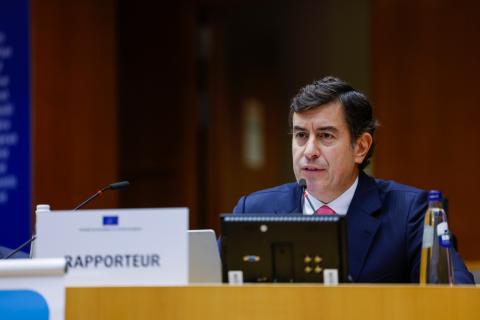
„Občané potřebují silný, spolehlivý a jednotný diskurz o výzvách a o tom, jak se EU mobilizovala, aby je překonala. Díky němu bude možné předejít nedorozuměním ohledně evropské integrace a právě takový diskurz podpoří myšlenku Evropy pro všechny,“ uvedl zpravodaj EHSV Gonçalo Lobo Xavier. (tk)