European Economic
and Social Committee
European Economic
and Social Committee
The European Economic and Social Committee (EESC) is the voice of organised civil society in Europe.
Find out more about its role and structure at http://www.eesc.europa.eu/en/about
The EESC issues between 160 and 190 opinions, evaluation and information reports a year.
It also organises several annual initiatives and events with a focus on civil society and citizens’ participation such as the Civil Society Prize, the Civil Society Days, the Your Europe, Your Say youth plenary and the ECI Day.
Find the latest EESC opinions and publications at http://www.eesc.europa.eu/en/our-work/opinions-information-reports/opinions and http://www.eesc.europa.eu/en/our-work/publications-other-work/publications respectively.
The EESC is active in a wide range of areas, from social affairs to economy, energy and sustainability.
Learn more about our policy areas and policy highlights at http://www.eesc.europa.eu/en/policies
The EESC holds nine plenary sessions per year. It also organises many conferences, public hearings and high-level debates related to its work.
Find out more about our upcoming events at http://www.eesc.europa.eu/en/agenda/our-events/upcoming-events
Here you can find news and information about the EESC'swork, including its social media accounts, the EESC Info newsletter, photo galleries and videos.
Read the latest EESC news http://www.eesc.europa.eu/en/news-media/news and press releases http://www.eesc.europa.eu/en/news-media/press-releases
The EESC brings together representatives from all areas of organised civil society, who give their independent advice on EU policies and legislation. The EESC's326 Members are organised into three groups: Employers, Workers and Various Interests.
Find out more about our Members and groups at http://www.eesc.europa.eu/en/members-groups
The EESC has six sections, specialising in concrete topics of relevance to the citizens of the European Union, ranging from social to economic affairs, energy, environment, external relations or the internal market.
Find out more at http://www.eesc.europa.eu/en/sections-other-bodies
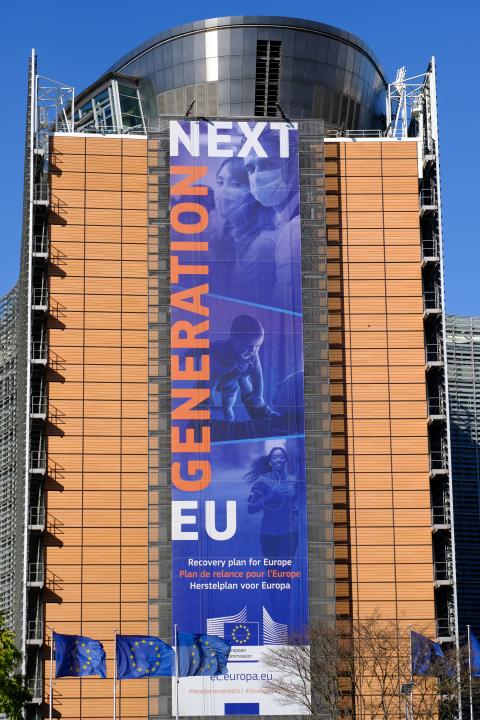
Spoľahlivá stratégia financovania má kľúčový význam pri získavaní finančných prostriedkov na oživenie Európskej únie na medzinárodných kapitálových trhoch. Výbor vo svojom stanovisku, ktoré vypracovala Judith Vorbach a ktoré bolo prijaté na júlovom plenárnom zasadnutí, zdôrazňuje, že bezproblémové vykonávanie nástroja NextGenerationEU si vyžaduje riadne a udržateľné financovanie spolu so spoľahlivým riadením rizík a nízkymi nákladmi na prijaté úvery a pôžičky
Judith Vorbach vo svojom vystúpení počas diskusie uviedla, že vypožičiavanie v rámci nástroja NextGenerationEU sa musí uskutočňovať na základe demokratickej kontroly, legitímne a transparentne. Účinná stratégia financovania zahŕňajúca stabilné a udržateľné financovanie, spoľahlivé riadenie rizík, ako aj vysokú úverovú bonitu a nízke náklady na prijaté úvery a pôžičky je vo verejnom záujme, a najmä v záujme občianskej spoločnosti, ktorá v konečnom dôsledku znáša trhové riziká.“
EHSV hodnotí pozitívne rozhodnutie Európskej komisie posilniť svoje vlastné kompetencie a ľudské zdroje s cieľom zaoberať sa financovaním nástroja NextGenerationEU. Vzhľadom na silný verejný záujem o riadne financovanie je dôležité, aby stratégiu riadila priamo Komisia a aby jej riadenie nebolo zabezpečované externe. EHSV požaduje vyvážené zastúpenie mužov a žien pri vymenúvaní zamestnancov zodpovedných za vykonávanie tejto úlohy.
Výbor tiež žiada, aby sa zriadil poradný výbor, v ktorom budú zastúpené Komisia, Európsky parlament, Rada, sociálni partneri a zástupcovia organizovanej občianskej spoločnosti. (mp)