European Economic
and Social Committee
European Economic
and Social Committee
The European Economic and Social Committee (EESC) is the voice of organised civil society in Europe.
Find out more about its role and structure at http://www.eesc.europa.eu/en/about
The EESC issues between 160 and 190 opinions, evaluation and information reports a year.
It also organises several annual initiatives and events with a focus on civil society and citizens’ participation such as the Civil Society Prize, the Civil Society Days, the Your Europe, Your Say youth plenary and the ECI Day.
Find the latest EESC opinions and publications at http://www.eesc.europa.eu/en/our-work/opinions-information-reports/opinions and http://www.eesc.europa.eu/en/our-work/publications-other-work/publications respectively.
The EESC is active in a wide range of areas, from social affairs to economy, energy and sustainability.
Learn more about our policy areas and policy highlights at http://www.eesc.europa.eu/en/policies
The EESC holds nine plenary sessions per year. It also organises many conferences, public hearings and high-level debates related to its work.
Find out more about our upcoming events at http://www.eesc.europa.eu/en/agenda/our-events/upcoming-events
Here you can find news and information about the EESC'swork, including its social media accounts, the EESC Info newsletter, photo galleries and videos.
Read the latest EESC news http://www.eesc.europa.eu/en/news-media/news and press releases http://www.eesc.europa.eu/en/news-media/press-releases
The EESC brings together representatives from all areas of organised civil society, who give their independent advice on EU policies and legislation. The EESC's326 Members are organised into three groups: Employers, Workers and Various Interests.
Find out more about our Members and groups at http://www.eesc.europa.eu/en/members-groups
The EESC has six sections, specialising in concrete topics of relevance to the citizens of the European Union, ranging from social to economic affairs, energy, environment, external relations or the internal market.
Find out more at http://www.eesc.europa.eu/en/sections-other-bodies
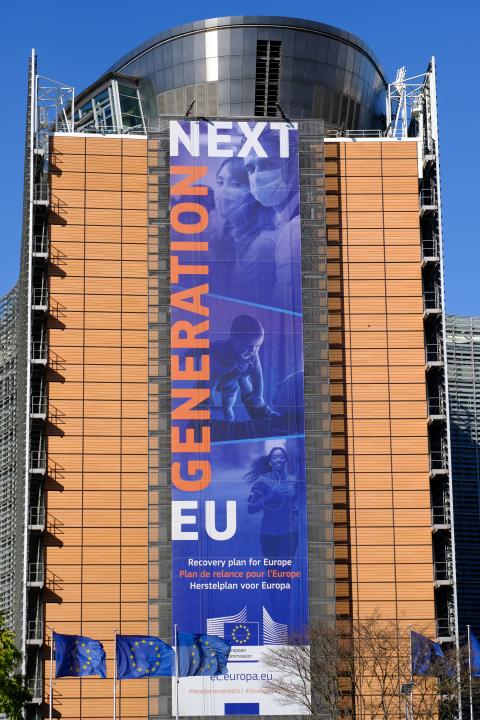
Μια εύρυθμα λειτουργούσα στρατηγική χρηματοδότησης είναι καίριας σημασίας κατά τον δανεισμό κεφαλαίων από τις διεθνείς κεφαλαιαγορές για την ανάκαμψη της Ευρωπαϊκής Ένωσης. Η ΕΟΚΕ στη γνωμοδότησή της, η οποία καταρτίστηκε από την Judith Vorbach και εγκρίθηκε κατά τη σύνοδο ολομέλειας του Ιουλίου, τονίζει ότι η ομαλή υλοποίηση του μέσου NextGenerationEU απαιτεί ισχυρή και βιώσιμη χρηματοδότηση, καθώς και χρηστή διαχείριση των κινδύνων και χαμηλό κόστος δανεισμού.
Κατά τη διάρκεια της συζήτησης, η κ. Vorbach δήλωσε: «Ο δανεισμός στο πλαίσιο του NextGenerationEU πρέπει να στηρίζεται στον δημοκρατικό έλεγχο, τη νομιμότητα και τη διαφάνεια. Μια αποτελεσματική στρατηγική χρηματοδότησης βασισμένη σε σταθερή και βιώσιμη χρηματοδότηση, χρηστή διαχείριση κινδύνων, υψηλή φερεγγυότητα και χαμηλό κόστος δανεισμού είναι προς το δημόσιο συμφέρον και αποβαίνει ιδιαίτερα προς όφελος της κοινωνίας των πολιτών, η οποία τελικά επωμίζεται τους κινδύνους της αγοράς».
Η ΕΟΚΕ επικροτεί την επιλογή της Ευρωπαϊκής Επιτροπής να ενισχύσει τις αρμοδιότητες και το ανθρώπινο δυναμικό της προκειμένου να διαχειριστεί τη χρηματοδότηση του NextGenerationEU. Δεδομένου του έντονου δημόσιου ενδιαφέροντος για τη χρηστή χρηματοδότηση, είναι σημαντικό η στρατηγική να τελεί υπό την άμεση διαχείριση της Ευρωπαϊκής Επιτροπής και να μην ανατίθεται σε εξωτερικούς φορείς. Η ΕΟΚΕ ζητεί να διασφαλιστεί η ισότητα των φύλων κατά τον διορισμό προσωπικού επιφορτισμένου με τα εν λόγω καθήκοντα.
Η ΕΟΚΕ ζητεί επίσης τη σύσταση συμβουλευτικής επιτροπής, στην οποία θα εκπροσωπούνται η Ευρωπαϊκή Επιτροπή, το Ευρωπαϊκό Κοινοβούλιο, το Συμβούλιο, οι κοινωνικοί εταίροι και η οργανωμένη κοινωνία των πολιτών. (mp)