European Economic
and Social Committee
European Economic
and Social Committee
The European Economic and Social Committee (EESC) is the voice of organised civil society in Europe.
Find out more about its role and structure at http://www.eesc.europa.eu/en/about
The EESC issues between 160 and 190 opinions, evaluation and information reports a year.
It also organises several annual initiatives and events with a focus on civil society and citizens’ participation such as the Civil Society Prize, the Civil Society Days, the Your Europe, Your Say youth plenary and the ECI Day.
Find the latest EESC opinions and publications at http://www.eesc.europa.eu/en/our-work/opinions-information-reports/opinions and http://www.eesc.europa.eu/en/our-work/publications-other-work/publications respectively.
The EESC is active in a wide range of areas, from social affairs to economy, energy and sustainability.
Learn more about our policy areas and policy highlights at http://www.eesc.europa.eu/en/policies
The EESC holds nine plenary sessions per year. It also organises many conferences, public hearings and high-level debates related to its work.
Find out more about our upcoming events at http://www.eesc.europa.eu/en/agenda/our-events/upcoming-events
Here you can find news and information about the EESC'swork, including its social media accounts, the EESC Info newsletter, photo galleries and videos.
Read the latest EESC news http://www.eesc.europa.eu/en/news-media/news and press releases http://www.eesc.europa.eu/en/news-media/press-releases
The EESC brings together representatives from all areas of organised civil society, who give their independent advice on EU policies and legislation. The EESC's326 Members are organised into three groups: Employers, Workers and Various Interests.
Find out more about our Members and groups at http://www.eesc.europa.eu/en/members-groups
The EESC has six sections, specialising in concrete topics of relevance to the citizens of the European Union, ranging from social to economic affairs, energy, environment, external relations or the internal market.
Find out more at http://www.eesc.europa.eu/en/sections-other-bodies
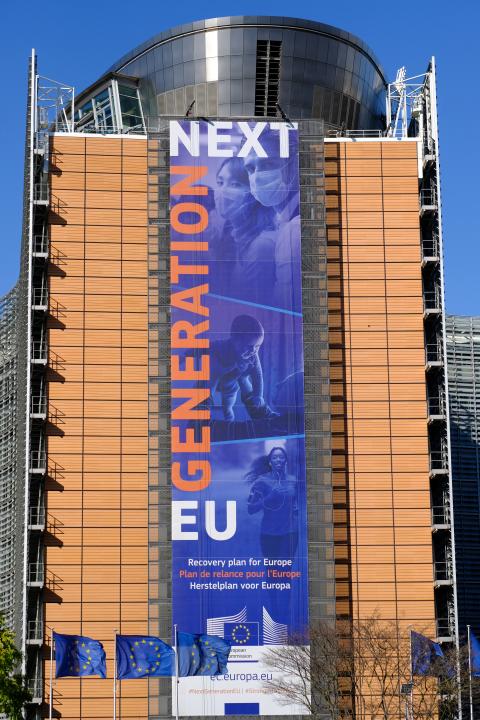
Při získávání finančních prostředků na oživení Evropské unie na mezinárodních kapitálových trzích má klíčový význam dobře fungující strategie financování. Ve stanovisku zpravodajky Judith Vorbach, které bylo přijato na červencovém plenárním zasedání, Výbor zdůrazňuje, že hladké provádění Nástroje Evropské unie na podporu oživení vyžaduje řádné a udržitelné financování, spolehlivé řízení rizik a nízké výpůjční náklady.
Judith Vorbach se během diskuse vyjádřila takto: „Půjčky v rámci nástroje Next Generation EU se musí uskutečňovat v souladu s demokratickou kontrolou, legitimitou a transparentností. Účinná strategie financování, založená na stabilním a udržitelném financování, spolehlivém řízení rizik, vysoké úvěruschopnosti a nízkých výpůjčních nákladech, je ve veřejném zájmu, a zvláště v zájmu občanské společnosti, která v konečném důsledku nese tržní rizika.“
EHSV považuje rozhodnutí Evropské komise posílit své kompetence a lidské zdroje, aby mohla řešit financování nástroje Next Generation EU, za pozitivní. Vzhledem k výraznému veřejnému zájmu na řádném financování je důležité, aby strategii řídila přímo Komise a nikoli externí subjekt. EHSV vyzývá k tomu, aby byl při pověřování pracovníků tímto úkolem uplatňován genderově vyvážený přístup.
Výbor rovněž vyzývá k tomu, aby byl zřízen poradní výbor, v němž by byla zastoupena Komise, Evropský parlament, Rada, sociální partneři a organizovaná občanská společnost. (mp)