European Economic
and Social Committee
European Economic
and Social Committee
The European Economic and Social Committee (EESC) is the voice of organised civil society in Europe.
Find out more about its role and structure at http://www.eesc.europa.eu/en/about
The EESC issues between 160 and 190 opinions, evaluation and information reports a year.
It also organises several annual initiatives and events with a focus on civil society and citizens’ participation such as the Civil Society Prize, the Civil Society Days, the Your Europe, Your Say youth plenary and the ECI Day.
Find the latest EESC opinions and publications at http://www.eesc.europa.eu/en/our-work/opinions-information-reports/opinions and http://www.eesc.europa.eu/en/our-work/publications-other-work/publications respectively.
The EESC is active in a wide range of areas, from social affairs to economy, energy and sustainability.
Learn more about our policy areas and policy highlights at http://www.eesc.europa.eu/en/policies
The EESC holds nine plenary sessions per year. It also organises many conferences, public hearings and high-level debates related to its work.
Find out more about our upcoming events at http://www.eesc.europa.eu/en/agenda/our-events/upcoming-events
Here you can find news and information about the EESC'swork, including its social media accounts, the EESC Info newsletter, photo galleries and videos.
Read the latest EESC news http://www.eesc.europa.eu/en/news-media/news and press releases http://www.eesc.europa.eu/en/news-media/press-releases
The EESC brings together representatives from all areas of organised civil society, who give their independent advice on EU policies and legislation. The EESC's326 Members are organised into three groups: Employers, Workers and Various Interests.
Find out more about our Members and groups at http://www.eesc.europa.eu/en/members-groups
The EESC has six sections, specialising in concrete topics of relevance to the citizens of the European Union, ranging from social to economic affairs, energy, environment, external relations or the internal market.
Find out more at http://www.eesc.europa.eu/en/sections-other-bodies
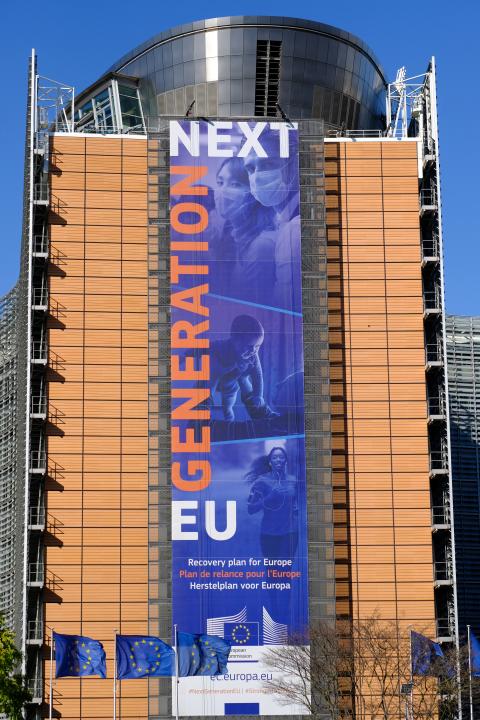
Bij het aantrekken van geld voor het herstel van de Europese Unie op de internationale kapitaalmarkten is een goed werkende financieringsstrategie essentieel. In zijn advies, opgesteld door Judith Vorbach en goedgekeurd tijdens de zitting van juli, benadrukt het Comité dat voor een soepele tenuitvoerlegging van NextGenerationEU degelijke en duurzame financiering, gezond risicobeheer en lage financieringskosten nodig zijn.
Tijdens het debat zei mevrouw Vorbach: “Geld lenen voor NextGenerationEU moet op legitieme en transparante wijze gebeuren, en met democratische controle. Een doeltreffende financieringsstrategie, met goede en duurzame financiering, solide risicobeheer, hoge kredietwaardigheid en lage financieringskosten, is in het algemeen belang en met name goed voor het maatschappelijk middenveld, dat uiteindelijk de marktrisico’s draagt.”
Volgens het Comité is de Europese Commissie terecht haar eigen competenties en personele middelen aan het uitbreiden om de financiering van NextGenerationEU in goede banen te leiden. Gezien het grote publieke belang van adequate financiering is het belangrijk dat de strategie rechtstreeks door de Commissie wordt beheerd en niet wordt uitbesteed. Bij het aantrekken van personeel voor de uitvoering van de bijbehorende taken moet op het genderevenwicht worden gelet.
Het Comité pleit ook voor de oprichting van een adviesraad waarin de Commissie, het Europees Parlement, de Raad, de sociale partners en het maatschappelijk middenveld zijn vertegenwoordigd. (mp)