European Economic
and Social Committee
European Economic
and Social Committee
The European Economic and Social Committee (EESC) is the voice of organised civil society in Europe.
Find out more about its role and structure at http://www.eesc.europa.eu/en/about
The EESC issues between 160 and 190 opinions, evaluation and information reports a year.
It also organises several annual initiatives and events with a focus on civil society and citizens’ participation such as the Civil Society Prize, the Civil Society Days, the Your Europe, Your Say youth plenary and the ECI Day.
Find the latest EESC opinions and publications at http://www.eesc.europa.eu/en/our-work/opinions-information-reports/opinions and http://www.eesc.europa.eu/en/our-work/publications-other-work/publications respectively.
The EESC is active in a wide range of areas, from social affairs to economy, energy and sustainability.
Learn more about our policy areas and policy highlights at http://www.eesc.europa.eu/en/policies
The EESC holds nine plenary sessions per year. It also organises many conferences, public hearings and high-level debates related to its work.
Find out more about our upcoming events at http://www.eesc.europa.eu/en/agenda/our-events/upcoming-events
Here you can find news and information about the EESC'swork, including its social media accounts, the EESC Info newsletter, photo galleries and videos.
Read the latest EESC news http://www.eesc.europa.eu/en/news-media/news and press releases http://www.eesc.europa.eu/en/news-media/press-releases
The EESC brings together representatives from all areas of organised civil society, who give their independent advice on EU policies and legislation. The EESC's326 Members are organised into three groups: Employers, Workers and Various Interests.
Find out more about our Members and groups at http://www.eesc.europa.eu/en/members-groups
The EESC has six sections, specialising in concrete topics of relevance to the citizens of the European Union, ranging from social to economic affairs, energy, environment, external relations or the internal market.
Find out more at http://www.eesc.europa.eu/en/sections-other-bodies
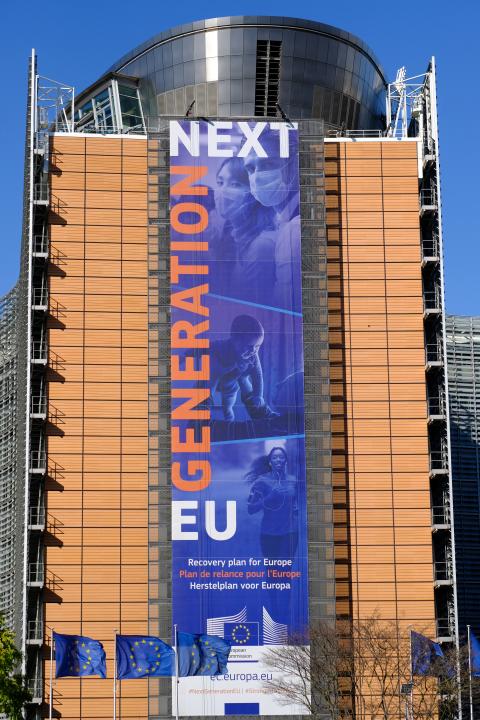
Egy jól működő finanszírozási stratégia kulcsfontosságú, ha az Európai Unió a nemzetközi tőkepiacokon akar pénzt szerezni a helyreállításhoz. A Judith Vorbach által kidolgozott és a júliusi plenáris ülésen elfogadott véleményében az EGSZB hangsúlyozza, hogy a NextGenerationEU zökkenőmentes végrehajtása szilárd és fenntartható finanszírozást, valamint megbízható kockázatkezelést és alacsony hitelfelvételi költségeket igényel.
A vita során Judith Vorbach kijelentette: „A NextGenerationEU keretében történő hitelfelvételnek demokratikus ellenőrzéssel és legitimitással, átláthatóan kell történnie. A stabil és fenntartható finanszírozást, gondos kockázatkezelést, továbbá jó hitelképességet és alacsony hitelfelvételi költségeket magában foglaló, eredményes finanszírozási stratégia közérdek, és mindenekelőtt a civil társadalom érdeke, mivel végső soron az viseli a piaci kockázatokat.”
Az EGSZB üdvözli, hogy az Európai Bizottság úgy döntött, hogy a NextGenerationEU kezelése érdekében megerősíti saját hatásköreit és emberi erőforrásait. Mivel a hatékony és eredményes finanszírozás határozottan közérdek, fontos, hogy a stratégiát ne szervezzék ki, hanem közvetlenül az Európai Bizottság irányítsa. Az EGSZB kéri, hogy a feladattal megbízott személyzet kijelölésekor vegyék figyelembe a nemek közötti egyensúlyt.
Kéri továbbá, hogy hozzanak létre egy tanácsadó testületet, amelyben az Európai Bizottság, az Európai Parlament, a Tanács, a szociális partnerek és a szervezett civil társadalom is képviselteti magát. (mp)