Pacto Ecológico Europeu

This page is also available in:

Em 11 de dezembro de 2019, a Comissão Europeia lançou o Pacto Ecológico Europeu, reforçando o empenho da UE em responder aos desafios relacionados com o clima e o ambiente, que constitui a tarefa principal desta geração. O objetivo do Pacto Ecológico Europeu é transformar a UE numa economia moderna, eficiente na utilização dos recursos e competitiva, assegurando que:

  • deixem de existir emissões líquidas de gases com efeitos de estufa até 2050;
  • o crescimento económico se dissocie da exploração de recursos;
  • não se esqueça ninguém nem nenhuma região.

Para concretizar o Pacto Ecológico Europeu, a UE está a aplicar um amplo pacote de iniciativas, que inclui iniciativas políticas e legislativas, bem como o desenvolvimento e a modernização de instrumentos de financiamento.

O CESE tem vindo a solicitar um «Pacto Ecológico e Social», sublinhando a relação estreita que existe entre o Pacto Ecológico e a justiça social. Para promover a sustentabilidade e competitividade das empresas do futuro, num ambiente saudável, é fundamental ouvir a voz de todas as partes interessadas.

O Pacto Ecológico Europeu coloca a tónica no investimento e no financiamento com vista a uma transição ecológica e sustentável. Constitui a nossa boia de salvação para ultrapassar a pandemia de COVID-19 e é financiado por um terço dos 1,8 biliões de euros em investimentos do Instrumento de Recuperação da União Europeia (NextGenerationEU) e pelo orçamento da UE para sete anos. Este aumento exponencial das oportunidades de financiamento visa transformar a crise numa oportunidade de mudança para o futuro da Europa.

O CESE desempenha um papel fundamental no acompanhamento da execução das iniciativas e ações do Pacto Ecológico Europeu. Elabora pareceres e organiza atividades (consultar o menu lateral esquerdo desta página) para garantir que as instituições da UE tomam em consideração as vozes da sociedade civil organizada e que as ações e iniciativas do Pacto Ecológico são coerentes com as circunstâncias económicas, sociais e cívicas no terreno.

Devido à sua natureza transversal e abrangente, os assuntos relacionados com o Pacto Ecológico Europeu são da competência de todas as secções do CESE, bem como da CCMI.

  • Published in
    20 pages

    Call for an EU Blue Deal - Event highlights - 26 October 2023

  • Published in
    8 pages

    The European Economic and Social Committee calls on the European institutions to consider water as a priority and to adopt an EU Blue Deal as a standalone strategic policy, on an equal footing with the EU Green Deal.

  • Published in
    Study
    80 pages

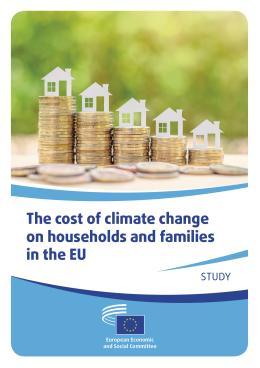
    This study investigates the major climate-related risks for households in the EU by quantifying the relationship between a set of selected climate-hazards metrics, households’ income by source, and sector-specific expenditures, capturing both the climate induced cost of impacts and adaptation measures. This analysis is complemented with the assessment of mitigation policy costs for households using a mixed modelling approach.

  • Published in
    Study
    61 pages

    The study reviews recent analyses to understand the green or circular skills of the future which have been identified thus far in sectoral and EU-wide research. Moreover, it examines EU Initiatives on skills development for circularity, by highlighting some limitations of these instruments and making suggestions for improvement.

  • Published in
    16 pages

    EESC Employers’ Group priorities

  • Published in
    12 pages

    Approach and priority areas of the Civil Society Organisations' Group for 2023

  • Published in
    24 pages

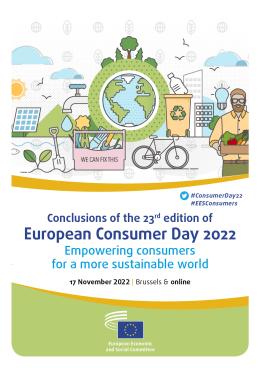
    Conclusions of the 23rd edition of European Consumer Day 2022 - 17 November 2022

  • Published in
    Study
    53 pages

    This study identifies key barriers to accelerating the renovation rate in the residential building sector and to implementing the Minimum Energy Performance Standards (MEPS). It provides a summary of, and recommendations for, overcoming these obstacles. 

  • Published in
    Study
    72 pages

    This study deals with the use of hydrogen for the de-carbonization of the Resources and Energy Intensive Industries (REIIs) and gives a specific insight of the situation of the steel-making industry.

  • Danish Presidency of the Council of the EU

    In this issue:

    • Our members write about their expectations and proposals for the Danish Presidency
    • Guest articles by Simon PRAHM (GAME), Per BACH (Social Entrepreneurs in Denmark) and Daniel VOCES DE ONAÍNDI (Europêche)
    • Interview with rapporteur Joe HEALY on 'Ensuring sustainable food production and a fair income for European farmers' (EESC opinion NAT/939)
    • Interview with the CEPS co-authors of the new EESC study 'Mapping civil dialogue practices in the EU institutions'
    • Reports on recent activities of the EESC Civil Society Organisations' Group
    • Civil Society Organisations' Bulletin - July 2025