Pactul verde european

This page is also available in:

La 11 decembrie 2019, Comisia Europeană a lansat Pactul verde european, care consolidează angajamentul UE de a aborda provocările legate de climă și mediu – sarcina definitorie a acestei generații. Obiectivul Pactului verde european este de a transforma UE într-o economie modernă, eficientă din punctul de vedere al utilizării resurselor și competitivă, asigurând:

  • absența emisiilor nete de gaze cu efect de seră până în 2050;
  • creștere economică decuplată de utilizarea resurselor;
  • că nicio persoană și niciun loc nu a fost lăsat în urmă.

Pentru a pune în aplicare Pactul verde european, UE desfășoară un pachet cuprinzător de inițiative, inclusiv propuneri de politici și propuneri legislative, precum și un proces de dezvoltare și modernizare a instrumentelor de finanțare.

CESE a solicitat un „Pact verde și social”, subliniind legătura strânsă dintre Pactul verde și justiția socială. Este esențial să se țină cont de opinia tuturor părților interesate pentru a promova întreprinderile de mâine – durabile și competitive – într-un mediu sănătos.

Pactul verde european a pus un accent apăsat pe investiții și pe finanțarea tranziției verzi și durabile. Pactul verde reprezintă colacul de salvare al Europei din pandemia de COVID‑19. O treime din investițiile în valoare de 1,8 miliarde de euro din Planul de redresare „NextGenerationEU” și din bugetul pe șapte ani al UE finanțează Pactul verde european. Această sporire a oportunităților de finanțare vizează utilizarea crizei drept o oportunitate de transformare pentru viitorul Europei.

CESE joacă un rol esențial în monitorizarea punerii în aplicare a inițiativelor și acțiunilor Pactului verde european. CESE elaborează avize și organizează activități (a se vedea meniul lateral din stânga acestei pagini) pentru a se asigura că instituțiile UE iau în considerare punctele de vedere ale societății civile organizate, iar inițiativele Pactului verde sunt coerente cu circumstanțele economice, sociale și civice de la fața locului.

Datorită naturii sale transversale și atotcuprinzătoare, Pactul verde european este un subiect abordat de toate secțiunile CESE și CCMI.

  • Published in
    20 pages

    Call for an EU Blue Deal - Event highlights - 26 October 2023

  • Published in
    8 pages

    The European Economic and Social Committee calls on the European institutions to consider water as a priority and to adopt an EU Blue Deal as a standalone strategic policy, on an equal footing with the EU Green Deal.

  • Published in
    Study
    80 pages

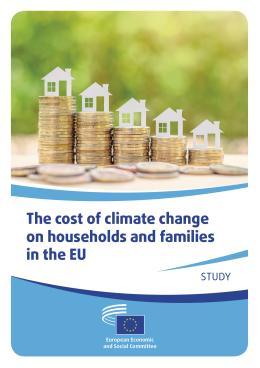
    This study investigates the major climate-related risks for households in the EU by quantifying the relationship between a set of selected climate-hazards metrics, households’ income by source, and sector-specific expenditures, capturing both the climate induced cost of impacts and adaptation measures. This analysis is complemented with the assessment of mitigation policy costs for households using a mixed modelling approach.

  • Published in
    Study
    61 pages

    The study reviews recent analyses to understand the green or circular skills of the future which have been identified thus far in sectoral and EU-wide research. Moreover, it examines EU Initiatives on skills development for circularity, by highlighting some limitations of these instruments and making suggestions for improvement.

  • Published in
    16 pages

    EESC Employers’ Group priorities

  • Published in
    12 pages

    Approach and priority areas of the Civil Society Organisations' Group for 2023

  • Published in
    24 pages

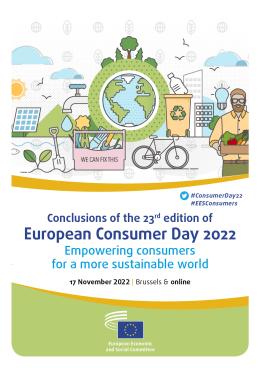
    Conclusions of the 23rd edition of European Consumer Day 2022 - 17 November 2022

  • Published in
    Study
    53 pages

    This study identifies key barriers to accelerating the renovation rate in the residential building sector and to implementing the Minimum Energy Performance Standards (MEPS). It provides a summary of, and recommendations for, overcoming these obstacles. 

  • Published in
    Study
    72 pages

    This study deals with the use of hydrogen for the de-carbonization of the Resources and Energy Intensive Industries (REIIs) and gives a specific insight of the situation of the steel-making industry.

  • Danish Presidency of the Council of the EU

    In this issue:

    • Our members write about their expectations and proposals for the Danish Presidency
    • Guest articles by Simon PRAHM (GAME), Per BACH (Social Entrepreneurs in Denmark) and Daniel VOCES DE ONAÍNDI (Europêche)
    • Interview with rapporteur Joe HEALY on 'Ensuring sustainable food production and a fair income for European farmers' (EESC opinion NAT/939)
    • Interview with the CEPS co-authors of the new EESC study 'Mapping civil dialogue practices in the EU institutions'
    • Reports on recent activities of the EESC Civil Society Organisations' Group
    • Civil Society Organisations' Bulletin - July 2025