European Green Deal

This page is also available in:

On 11 December 2019, the European Commission launched the European Green Deal reinforcing the EU’s commitment to tackling climate and environmental-related challenges that is this generation’s defining task. The objective of the European Green Deal is to transform the EU into a modern, resource-efficient and competitive economy, ensuring:

  • no net emissions of greenhouse gases by 2050;
  • economic growth decoupled from resource use;
  • no person and no place left behind.

To deliver the European Green Deal, the EU is carrying out a comprehensive package of initiatives, including policy and legislative proposals and the development and modernisation of financing instruments.

The EESC has been calling for a "Green and Social Deal", stressing the close link between the Green Deal and social justice. It is essential to hear the voice of all stakeholders in order to foster the sustainable and competitive companies of tomorrow in a healthy environment.

The European Green Deal placed a strong emphasis on investment and the financing of the green and sustainable transition. The Green Deal is Europe’s lifeline out of the COVID-19 pandemic. One third of the 1.8 trillion euro investments from the NextGenerationEU Recovery Plan, and the EU’s seven-year budget finances the European Green Deal. This boost in funding opportunities aims to turn the crisis into a transformational opportunity for the future of Europe.

The EESC plays a crucial role in monitoring the implementation of the European Green Deal initiatives and actions. The EESC prepares opinions and organises activities (see side menu on the left of this page) to ensure the EU institutions take into account the views of organised civil society and the Green Deal initiatives are coherent with the economic, social and civic circumstances on the ground.

Due to the transversal and all-encompassing nature, the European Green Deal is covered by all EESC Sections and CCMI.

  • Published in
    24 pages

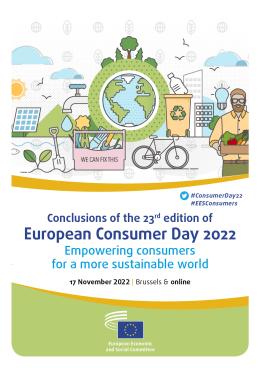
    Conclusions of the 23rd edition of European Consumer Day 2022 - 17 November 2022

  • Published in
    Study
    53 pages

    This study identifies key barriers to accelerating the renovation rate in the residential building sector and to implementing the Minimum Energy Performance Standards (MEPS). It provides a summary of, and recommendations for, overcoming these obstacles. 

  • Published in
    Study
    72 pages

    This study deals with the use of hydrogen for the de-carbonization of the Resources and Energy Intensive Industries (REIIs) and gives a specific insight of the situation of the steel-making industry.

  • Danish Presidency of the Council of the EU

    In this issue:

    • Our members write about their expectations and proposals for the Danish Presidency
    • Guest articles by Simon PRAHM (GAME), Per BACH (Social Entrepreneurs in Denmark) and Daniel VOCES DE ONAÍNDI (Europêche)
    • Interview with rapporteur Joe HEALY on 'Ensuring sustainable food production and a fair income for European farmers' (EESC opinion NAT/939)
    • Interview with the CEPS co-authors of the new EESC study 'Mapping civil dialogue practices in the EU institutions'
    • Reports on recent activities of the EESC Civil Society Organisations' Group
    • Civil Society Organisations' Bulletin - July 2025
  • Building green and inclusive

    In this issue:

    • Members on the future of housing and public spaces in the EU
    • Guest articles by Laura KLITGAARD (The Danish Society of Engineers - IDA), Signe HELLEDI (Cycle Superhighways), Nils Thor ROSTED (Amager Resource Centre), and Gustavo GHIDINI (Movimento Consumatori)
    • Interview with rapporteur Elena-Alexandra CALISTRU on Measures for a resilient, cohesive and inclusive European economy (EESC opinion ECO/661)
    • Civil Society Organisations' Bulletin - June 2025
  • Nature Restoration Law in the Focus of Civil Society

    In this issue:

    • Our members discuss the long-debated Nature Restoration Law
    • Guest articles by Silvie Kreibiehl and Svenja Schünemann (German Nature Conservation Association - DNR), Edwin Michiels (Agriculture and Horticulture Organisation Netherlands (LTO)) and Susanne Westhausen (Cooperatives Europe)
    • Interview with rapporteur Pietro Barbieri on the EESC opinion 'Strengthening civil dialogue and participatory democracy in the EU: a path forward'
    • Civil Society Organisations' Bulletin - March 2024