Den europæiske grønne pagt

This page is also available in:

Den 11. december 2019 lancerede Kommissionen den europæiske grønne pagt, der var en styrkelse af EU's tilsagn om at gøre noget ved de klima- og miljørelaterede udfordringer, som er denne generations helt store opgave. Målet med den europæiske grønne pagt er at omdanne EU til en moderne, ressourceeffektiv og konkurrencedygtig økonomi, der sikrer, at:

  • der ikke er nettoudledning af drivhusgasser i 2050
  • den økonomiske vækst afkobles fra ressourceanvendelsen
  • intet menneske og intet sted lades i stikken.

For at realisere målene i den europæiske grønne pagt gennemfører EU en omfattende pakke af initiativer, herunder politiske og lovgivningsmæssige forslag, og udvikler og moderniserer finansieringsinstrumenterne.

EØSU har efterlyst en "grøn og social pagt", idet det har understreget den tætte forbindelse mellem den grønne pagt og social retfærdighed. Det er vigtigt at høre alle interessenter for at gøde jorden for fremtidens bæredygtige og konkurrencedygtige virksomheder i et sundt miljø.

Den europæiske grønne pagt har et stærkt fokus på investeringer og finansiering af den grønne og bæredygtige omstilling. Den grønne pagt er Europas livslinje ud af covid-19-pandemien. En tredjedel af investeringerne på 1,8 mia. EUR fra genopretningsplanen NextGenerationEU og EU's 7-årige budget finansierer den europæiske grønne pagt. Denne saltvandsindsprøjtning til finansieringsmulighederne skal vende krisen til en mulighed for at forandre Europas fremtid.

EØSU spiller en vigtig rolle i at overvåge gennemførelsen af initiativerne og aktionerne forbundet med den europæiske grønne pagt. EØSU udarbejder udtalelser og arrangerer aktiviteter (se sidemenuen til venstre på denne side) for at sikre, at EU-institutionerne tager det organiserede civilsamfunds synspunkter i betragtning, og at initiativerne knyttet til den grønne pagt er forenelige med de økonomiske, sociale og samfundsmæssige forhold i praksis.

Alle EØSU's sektioner og CCMI beskæftiger sig med den europæiske grønne pagt som følge af dens horisontale og altfavnende karakter.
  • The EU as a driver of shared prosperity – civil society for an economy that works for people & the planet
    -

    While Europe and its societies are still in the grip of the COVID-19 pandemic and with the Conference on the Future of Europe in its closing stages, the EESC will be holding its annual Civil Society Days in March 2022.

  • Published in
    Study
    104 pages

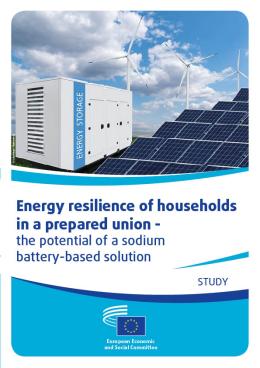
    This study examines the potential of sodium ion battery technology to strengthen energy resilience in European households and businesses, particularly in meeting a 72 hour electricity self sufficiency objective under the EU’s preparedness strategy.

  • Published in
    8 pages

    This publication presents the Civil Society Organisations’ Group of the European Economic and Social Committee (EESC) and outlines its priorities for the term 2025-2028. Under the theme 'Striving for sustainable communities, the beating heart of civil society and democracy', the group will focus on the following priorities:

  • Published in
    28 pages

    On 8 June 2022 the Consultative Commission on Industrial Change (CCMI) celebrated its 20th anniversary with a conference focused on the challenges of today and the prospects for tomorrow. This publication is a record of the occasion and a commemoration of what CCMI has achieved since joining the EESC.

  • Published in
    12 pages

    Approach and priority areas of the Civil Society Organisations' Group for 2025

  • Published in
    Study
    71 pages

    Taking Stock of SDG 2 and Future Perspectives

  • Published in
    16 pages

    EESC Employers’ Group priorities
    This document presents the short- and mid-term objectives of the EESC Employers’ Group and 10 policy actions for policymakers to improve the business environment, and thereby the EU’s competitiveness and conditions for creating prosperity for citizens.

  • Published in
    Study
    53 pages

    This study explores effective practices for youth participation in policy and decision-making processes, providing a comprehensive overview of what youth participation means and its key characteristics

  • Published in
    7 pages

    On 20 February 2024 in Brussels, the EESC organised a conference on the Housing Crisis in Europe. This publication sets out the participants' assessment of the current state of affairs and their recommendations on how to tackle the current housing crisis.

  • Published in
    Study
    70 pages

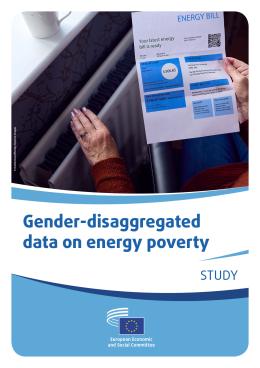
    Recent economic shocks from the COVID-19 pandemic and the energy crisis in Europe following Russia’s invasion of Ukraine have brought energy poverty to the forefront of social and political debate. While EU policies increasingly address energy poverty, gender considerations remain overlooked. This study addresses this gap and aims to increase the understanding of the gender-energy poverty nexus, analysing existing literature and EU and national policies.