Pacto Ecológico Europeu

This page is also available in:

Em 11 de dezembro de 2019, a Comissão Europeia lançou o Pacto Ecológico Europeu, reforçando o empenho da UE em responder aos desafios relacionados com o clima e o ambiente, que constitui a tarefa principal desta geração. O objetivo do Pacto Ecológico Europeu é transformar a UE numa economia moderna, eficiente na utilização dos recursos e competitiva, assegurando que:

  • deixem de existir emissões líquidas de gases com efeitos de estufa até 2050;
  • o crescimento económico se dissocie da exploração de recursos;
  • não se esqueça ninguém nem nenhuma região.

Para concretizar o Pacto Ecológico Europeu, a UE está a aplicar um amplo pacote de iniciativas, que inclui iniciativas políticas e legislativas, bem como o desenvolvimento e a modernização de instrumentos de financiamento.

O CESE tem vindo a solicitar um «Pacto Ecológico e Social», sublinhando a relação estreita que existe entre o Pacto Ecológico e a justiça social. Para promover a sustentabilidade e competitividade das empresas do futuro, num ambiente saudável, é fundamental ouvir a voz de todas as partes interessadas.

O Pacto Ecológico Europeu coloca a tónica no investimento e no financiamento com vista a uma transição ecológica e sustentável. Constitui a nossa boia de salvação para ultrapassar a pandemia de COVID-19 e é financiado por um terço dos 1,8 biliões de euros em investimentos do Instrumento de Recuperação da União Europeia (NextGenerationEU) e pelo orçamento da UE para sete anos. Este aumento exponencial das oportunidades de financiamento visa transformar a crise numa oportunidade de mudança para o futuro da Europa.

O CESE desempenha um papel fundamental no acompanhamento da execução das iniciativas e ações do Pacto Ecológico Europeu. Elabora pareceres e organiza atividades (consultar o menu lateral esquerdo desta página) para garantir que as instituições da UE tomam em consideração as vozes da sociedade civil organizada e que as ações e iniciativas do Pacto Ecológico são coerentes com as circunstâncias económicas, sociais e cívicas no terreno.

Devido à sua natureza transversal e abrangente, os assuntos relacionados com o Pacto Ecológico Europeu são da competência de todas as secções do CESE, bem como da CCMI.
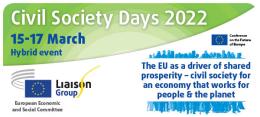
  • The EU as a driver of shared prosperity – civil society for an economy that works for people & the planet
    -

    While Europe and its societies are still in the grip of the COVID-19 pandemic and with the Conference on the Future of Europe in its closing stages, the EESC will be holding its annual Civil Society Days in March 2022.

  • Published in
    Study
    104 pages

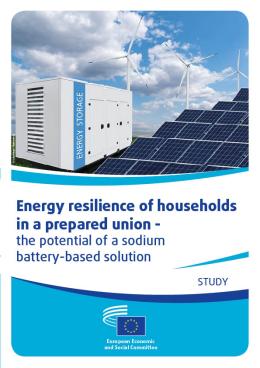
    This study examines the potential of sodium ion battery technology to strengthen energy resilience in European households and businesses, particularly in meeting a 72 hour electricity self sufficiency objective under the EU’s preparedness strategy.

  • Published in
    8 pages

    This publication presents the Civil Society Organisations’ Group of the European Economic and Social Committee (EESC) and outlines its priorities for the term 2025-2028. Under the theme 'Striving for sustainable communities, the beating heart of civil society and democracy', the group will focus on the following priorities:

  • Published in
    28 pages

    On 8 June 2022 the Consultative Commission on Industrial Change (CCMI) celebrated its 20th anniversary with a conference focused on the challenges of today and the prospects for tomorrow. This publication is a record of the occasion and a commemoration of what CCMI has achieved since joining the EESC.

  • Published in
    12 pages

    Approach and priority areas of the Civil Society Organisations' Group for 2025

  • Published in
    Study
    71 pages

    Taking Stock of SDG 2 and Future Perspectives

  • Published in
    16 pages

    EESC Employers’ Group priorities
    This document presents the short- and mid-term objectives of the EESC Employers’ Group and 10 policy actions for policymakers to improve the business environment, and thereby the EU’s competitiveness and conditions for creating prosperity for citizens.

  • Published in
    Study
    53 pages

    This study explores effective practices for youth participation in policy and decision-making processes, providing a comprehensive overview of what youth participation means and its key characteristics

  • Published in
    7 pages

    On 20 February 2024 in Brussels, the EESC organised a conference on the Housing Crisis in Europe. This publication sets out the participants' assessment of the current state of affairs and their recommendations on how to tackle the current housing crisis.

  • Published in
    Study
    70 pages

    Recent economic shocks from the COVID-19 pandemic and the energy crisis in Europe following Russia’s invasion of Ukraine have brought energy poverty to the forefront of social and political debate. While EU policies increasingly address energy poverty, gender considerations remain overlooked. This study addresses this gap and aims to increase the understanding of the gender-energy poverty nexus, analysing existing literature and EU and national policies.