European Green Deal

This page is also available in:

On 11 December 2019, the European Commission launched the European Green Deal reinforcing the EU’s commitment to tackling climate and environmental-related challenges that is this generation’s defining task. The objective of the European Green Deal is to transform the EU into a modern, resource-efficient and competitive economy, ensuring:

  • no net emissions of greenhouse gases by 2050;
  • economic growth decoupled from resource use;
  • no person and no place left behind.

To deliver the European Green Deal, the EU is carrying out a comprehensive package of initiatives, including policy and legislative proposals and the development and modernisation of financing instruments.

The EESC has been calling for a "Green and Social Deal", stressing the close link between the Green Deal and social justice. It is essential to hear the voice of all stakeholders in order to foster the sustainable and competitive companies of tomorrow in a healthy environment.

The European Green Deal placed a strong emphasis on investment and the financing of the green and sustainable transition. The Green Deal is Europe’s lifeline out of the COVID-19 pandemic. One third of the 1.8 trillion euro investments from the NextGenerationEU Recovery Plan, and the EU’s seven-year budget finances the European Green Deal. This boost in funding opportunities aims to turn the crisis into a transformational opportunity for the future of Europe.

The EESC plays a crucial role in monitoring the implementation of the European Green Deal initiatives and actions. The EESC prepares opinions and organises activities (see side menu on the left of this page) to ensure the EU institutions take into account the views of organised civil society and the Green Deal initiatives are coherent with the economic, social and civic circumstances on the ground.

Due to the transversal and all-encompassing nature, the European Green Deal is covered by all EESC Sections and CCMI.
  • The EU as a driver of shared prosperity – civil society for an economy that works for people & the planet
    -

    While Europe and its societies are still in the grip of the COVID-19 pandemic and with the Conference on the Future of Europe in its closing stages, the EESC will be holding its annual Civil Society Days in March 2022.

  • Published in
    Study
    104 pages

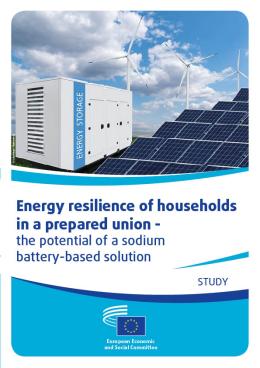
    This study examines the potential of sodium ion battery technology to strengthen energy resilience in European households and businesses, particularly in meeting a 72 hour electricity self sufficiency objective under the EU’s preparedness strategy.

  • Published in
    8 pages

    This publication presents the Civil Society Organisations’ Group of the European Economic and Social Committee (EESC) and outlines its priorities for the term 2025-2028. Under the theme 'Striving for sustainable communities, the beating heart of civil society and democracy', the group will focus on the following priorities:

  • Published in
    28 pages

    On 8 June 2022 the Consultative Commission on Industrial Change (CCMI) celebrated its 20th anniversary with a conference focused on the challenges of today and the prospects for tomorrow. This publication is a record of the occasion and a commemoration of what CCMI has achieved since joining the EESC.

  • Published in
    12 pages

    Approach and priority areas of the Civil Society Organisations' Group for 2025

  • Published in
    Study
    71 pages

    Taking Stock of SDG 2 and Future Perspectives

  • Published in
    16 pages

    EESC Employers’ Group priorities
    This document presents the short- and mid-term objectives of the EESC Employers’ Group and 10 policy actions for policymakers to improve the business environment, and thereby the EU’s competitiveness and conditions for creating prosperity for citizens.

  • Published in
    Study
    53 pages

    This study explores effective practices for youth participation in policy and decision-making processes, providing a comprehensive overview of what youth participation means and its key characteristics

  • Published in
    7 pages

    On 20 February 2024 in Brussels, the EESC organised a conference on the Housing Crisis in Europe. This publication sets out the participants' assessment of the current state of affairs and their recommendations on how to tackle the current housing crisis.

  • Published in
    Study
    70 pages

    Recent economic shocks from the COVID-19 pandemic and the energy crisis in Europe following Russia’s invasion of Ukraine have brought energy poverty to the forefront of social and political debate. While EU policies increasingly address energy poverty, gender considerations remain overlooked. This study addresses this gap and aims to increase the understanding of the gender-energy poverty nexus, analysing existing literature and EU and national policies.