EUROMED

This page is also available in:

ES santykiai su pietų kaimynais yra vienas iš mūsų prioritetų. Mūsų darbas apima įvairias sritis, tokias kaip pilietinės visuomenės dalyvavimas politiniame ir pilietiniame dialoge, perėjimas prie demokratijos, jaunimo užimtumas, darnus vystymasis, judumas ir imigracija, prekyba, atsinaujinančiųjų išteklių energija ir verslo plėtra.

EESRK dirba šiais klausimais nuo 1995 m. Atsižvelgdami į pokyčius regione 2010 m., atitinkamai pakoregavome savo tikslus siekdami:

  • paremti pilietinės visuomenės organizacijas šalyse, kuriose vyksta pereinamasis procesas. Ši parama pirmiausia skiriama profesinėms sąjungoms ir darbdavių organizacijoms, taip pat moterų, jaunimo ir ūkininkų asociacijoms;
  • palaikyti dvišalius santykius su nacionalinėmis ekonomikos ir socialinių reikalų tarybomis regione ir dirbti siekiant sudaryti sąlygas pilietinės visuomenės dalyvavimui politiniame dialoge pietų šalyse partnerėse;
  • rengti nuomones ir bendrus pranešimus dėl svarbiausių politikos problemų, su kuriomis susiduria regionas;
  • rengti reguliarius susitikimus su Europos institucijomis ir tarptautinėmis organizacijomis politikai, susijusiai su pilietine visuomene regione, aptarti;
  • organizuoti metinį aukščiausiojo lygio susitikimą ekonomikos ir socialinių reikalų taryboms ir panašioms institucijoms, kuriame nacionalinių vyriausybių ir ES politikos formuotojams pateikiamos svarbios rekomendacijos dėl pagrindinių regiono problemų.
  • Joint meeting REX and ECO Sections

    Macro-regional recovery and resilience initiatives - Joint meeting of REX and ECO Sections.

    The purpose of this meeting is to explore how macro-regional strategies contribute to the recovery and resilience of their regions. The meeting will look at how management authorities of the strategies were actually involved in the preparation of the national recovery plans, which projects have been included, how civil society organisations were part of the process. The afternoon session will be dedicated to the idea of a new macro-regional strategy for the whole Mediterranean region encompassing the countries of the Southern Neighbourhood.

  • Euromed Summit 2020

    The Euro-Mediterranean Summit of Economic and Social Councils and Similar Institutions aims at promoting greater understanding of the main issues affecting organised civil society in the Euromed region and at discussing the common challenges they face.

  • -

    The Euro-Mediterranean Summit of Economic and Social Councils and Similar Institutions aims at promoting greater understanding of the main issues affecting organised civil society in the Euromed region and at discussing the common challenges they face

  • Euromed Summit 2018
    -

    The Euro-Mediterranean Summit of Economic and Social Councils and Similar Institutions aims at promoting greater understanding of the main issues affecting organised civil society in the Euromed region and at discussing the common challenges they face. The Summit brings together aound 120 participants from economic and social councils, or similar institutions, representatives of employers, trade unions, other economic and social interests groups and NGOs from countries which are members of the Union for the Mediterranean (UFM). This year, the exchange will focus on the following topics:

    • Education and Training in the Euro-Mediterranean region
    • Social Economy and entrepreneurship in the Euro Mediterranean region

    The meeting will conclude with the adoption of recommendations that will be sent to the political authorities of the countries involved in the UFM Ministerial Summits and disseminated widely amongst civil society organisations in the region.

    This year's event is co-organised by the European Economic and Social Committee (EESC) and the European Training Foundation  (ETF). The event is co-financed by the European Commission.

  • -
    Event type
    Conference
  • -

    The Euromed Summit brings together some 120 participants from a range of economic and social councils, or similar institutions, representatives of employers, trade unions, other economic and social interests groups and NGOs from countries which are members of the Union for the Mediterranean.

  • Published in
    Study
    72 pages

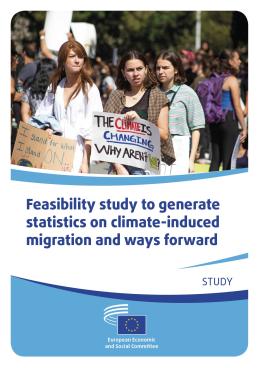
    This feasibility study to generate statistics on climate-induced migration and ways forward sought to gather and review existing data on climate-induced migration, focussing on five Member States (France, Germany, Greece, Italy and Spain) and one candidate country (Türkiye), to inform an effective EU response. There is no universally agreed definition of climate-induced migration. The majority of population movements as a result of rapid onset events takes place within a country as opposed to across borders.

  • Published in
    Study
    42 pages

    This report proposes the creation of a Public EU Rating Agency focused on environmental and social sustainability and human rights, aiming to support EU sustainability efforts by setting standards, accrediting auditors, and centralizing data

  • Published in
    8 pages

    The External Relations Section (REX) of the European Economic and Social Committee (EESC) is responsible for dialogue between European civil society organisations and their homologues from the countries with which the European Union has formal relations (e.g. under the form of a Free Trade Agreement). Through this dialogue, made possible by a series of bilateral bodies, and through specialized opinions and information reports, the Committee is able to concretely contribute to EU foreign policy.

  • Speaker
    EESC President Oliver Röpke
    Organisation
    European Economic and Social Committee

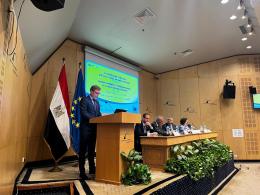
    On 5 July President Röpke participated in the 2023 Euromed Summit organised in cooperation with the Union for the Mediterranean Secretariat, the Anna Lindh Foundation and Bibliotheca Alexandrina. This year's summit focused on water scarcity and desertification as well as on digital and energy transitions in the Euro-Mediterranean region.

    • Oliver Röpke's speech at the 2023 Euromed summit
    • Oliver Röpke's speech at the 2023 Euromed summit