EUROMED

This page is also available in:

Relations between the EU and its southern neighbours constitute one of our priorities. Our work covers a wide variety of areas, such as the participation of civil society in political and civil dialogue, democratic transition, youth employment, sustainable development, mobility and immigration, trade, renewable energy and business development.

The EESC has been working on these issues since 1995. Following changes in the region in 2010, we have adjusted our objectives accordingly, aiming to:

  • Support civil society organisations in countries undergoing transition. Such support is targeted, in particular, at trade unions and employers’ organisations, as well as women’s, youth and farmers’ associations.
  • Maintain bilateral relations with national economic and social councils in the region, and work towards creating conditions for the inclusion of civil society in political dialogue in the southern partner countries.
  • Issue opinions and joint reports on the key policy challenges facing the region.
  • Hold regular meetings with European institutions and international organisations to discuss the policies concerning civil society across the region.
  • Organise an annual summit for economic and social councils and similar institutions, at which key policy recommendations on the region’s main challenges are put to policy-makers from national governments and the EU.

Euromed Follow-Up Committee

EU-Morocco Joint Advisory Group
 

  • Published in
    Study
    72 pages

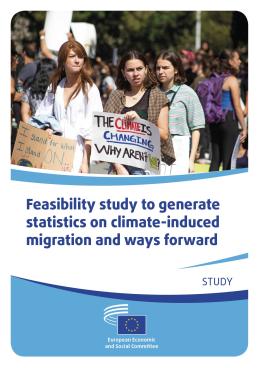
    This feasibility study to generate statistics on climate-induced migration and ways forward sought to gather and review existing data on climate-induced migration, focussing on five Member States (France, Germany, Greece, Italy and Spain) and one candidate country (Türkiye), to inform an effective EU response. There is no universally agreed definition of climate-induced migration. The majority of population movements as a result of rapid onset events takes place within a country as opposed to across borders.

  • Published in
    Study
    42 pages

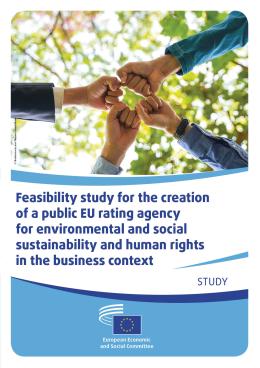
    This report proposes the creation of a Public EU Rating Agency focused on environmental and social sustainability and human rights, aiming to support EU sustainability efforts by setting standards, accrediting auditors, and centralizing data

  • In an opinion adopted at the September plenary session, the European Economic and Social Committee (EESC) identifies that fostering entrepreneurship and quality job creation in the Mediterranean region is the answer to high unemployment rates. Leveraging the potential of women and young people can promote inclusive, resilient growth.

  • At its September plenary session, the European Economic and Social Committee (EESC) adopted an opinion on the New Pact for the Mediterranean, a month ahead of its official launch by the European Commission. The Committee calls for bottom-up processes ensuring that the Pact has a direct, positive impact on all people, especially on youth. 

  • Reference number
    1/2025

    Young people in the Mediterranean region must be included in every step of the way, from policy-making to implementation. They shape not only policies but also life, as highlighted in the debate held by the European Economic and Social Committee (EESC).

  • 2024 Euromed Summit
    -

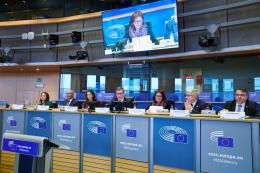
    The annual Euro-Mediterranean Summit of Economic and Social Councils and Similar Institutions provides civil society organisations (CSOs) from the UfM Member States with a platform to debate common challenges and opportunities and to exchange best practices.

  • Joint EESC and ESC of Spain
    -

    The EESC and the Spanish Economic and Social Council (CES) are organising this joint conference in the context of the Spanish Presidency of the Council of the EU, dedicated to "The impact of the climate crisis on migration flows in the Mediterranean region". This event will contribute to the EESC's mandate to establish and reinforce a Euro-Mediterranean network of Economic and Social Councils and Similar Institutions. It will provide CSOs with an opportunity to meet, exchange best practices and discuss an issue of importance
    throughout the Mediterranean region. 

  • Speaker
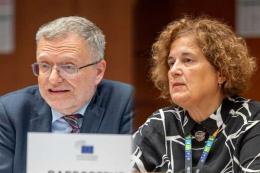
    EESC President Oliver Röpke
    Organisation
    European Economic and Social Committee

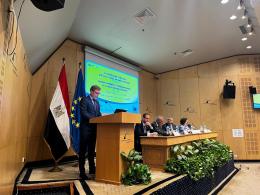
    On 5 July President Röpke participated in the 2023 Euromed Summit organised in cooperation with the Union for the Mediterranean Secretariat, the Anna Lindh Foundation and Bibliotheca Alexandrina. This year's summit focused on water scarcity and desertification as well as on digital and energy transitions in the Euro-Mediterranean region.

    • Oliver Röpke's speech at the 2023 Euromed summit
    • Oliver Röpke's speech at the 2023 Euromed summit
  • Published in
    8 pages

    The External Relations Section (REX) of the European Economic and Social Committee (EESC) is responsible for dialogue between European civil society organisations and their homologues from the countries with which the European Union has formal relations (e.g. under the form of a Free Trade Agreement). Through this dialogue, made possible by a series of bilateral bodies, and through specialized opinions and information reports, the Committee is able to concretely contribute to EU foreign policy.

  • -

    The 2023 edition of the Euromed Summit will be dedicated to "Energy transition in the Euro-Mediterranean region". While gas will continue to play an important role in the energy mix on both shores of the Mediterranean, the region is also blessed with great renewable potential – increasingly attracting public and private stakeholders...