Inbhuanaitheacht bia

This page is also available in:

Ní fhéadfaimis maireachtáil gan bhia agus is cuid lárnach de chultúr na hEorpa é. Mar sin féin, tá tionchar mór ag an mbia a ithimid, na bealaí ina dtáirgtear é agus an méid a chuirtear amú ar shláinte an duine, ar acmhainní nádúrtha agus ar an tsochaí ina hiomláine:

  • Tá saoránaigh — agus leanaí go háirithe — ag dul i dtroime de réir a chéile agus ag fulaingt leis an murtall mar gheall ar aistí bia míshláintiúla.
  • Ní fhaigheann feirmeoirí ná oibrithe praghas cóir ar a gcuid táirgí.
  • Cailltear nó cuirtear amú aon trian den bhia ar fud an bhiashlabhra.
  • Is é an comhshaol féin atá thíos leis na héifeachtaí suntasacha atá ag táirgeadh agus tomhaltas bia ar an athrú aeráide, ar chailliúint bithéagsúlachta, ar thruailliú aeir agus uisce, ar dhíghrádú ithreach, etc.

Gairm chun gnímh agus chun athruithe a dhéanamh is ea géarchéim COVID-19. Léiríodh ón bpaindéim nach féidir talamh slán a dhéanamh de bhia a fháil ‘ón bhfeirm go dtí an forc’ agus léiríodh idirnascthacht na ngníomhaithe agus na ngníomhaíochtaí ar fud an chórais bhia. Tá slabhraí soláthair atá cothrom, tíosach ar acmhainní, cuimsitheach agus inbhuanaithe de dhíth níos mó ná riamh in earnáil iomlán na talmhaíochta agus an bhia chun go bhfreastalófar go cothrom ar leas na saoránach, na bhfeirmeoirí, na n-oibrithe agus na ngnólachtaí.

Tá CESE ar thús cadhnaíochta le blianta beaga anuas maidir le beartas bia inbhuanaithe agus cuimsitheach a iarraidh. Tá cur chuige comhtháite sistéamach den sórt sin bunriachtanach chun dul i ngleic leis na dúshláin iomadúla idirnasctha a mbíonn tionchar acu ar chórais bhia; chun inbhuanaitheacht eacnamaíoch, comhshaoil agus shoch-chultúrtha a bhaint amach; chun comhtháthú agus comhleanúnachas a áirithiú ar fud réimsí beartais (amhail talmhaíocht, comhshaol, sláinte, oideachas, trádáil, geilleagar, teicneolaíocht, etc.); agus chun comhar a chur chun cinn ar fud na leibhéal rialachais.
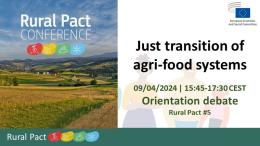
  • Rural Pact debate #5
    Event type
    Debate

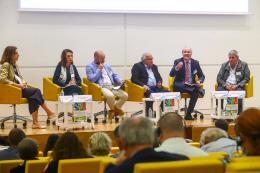
    With this debate, the EESC wants to contribute to reflections on the foundations of a just transition framework on the agri-food sector to achieve a sustainable food system and move forward with concrete recommendations, for example, looking at the skills, capacity and mental support needed, or identifying some key policy areas and legal leverage points that could be triggered to start a just food transition for the EU.

    Given the link between agriculture and rural areas and farmers with food production, the recommendations of this opinion will also have a positive impact on rural development.

  • Tuairimí a glacadh on 23/10/2024 - Bureau decision date: 19/03/2024
    Reference
    NAT/935-EESC-2024
    Plenary session number
    591
    -

    In this opinion, the EESC calls for a sustainable EU Food Policy that supports farmers' incomes, protects food security and strengthens crisis management. Proposals include introducing tools and mechanism to strengthen the position of farmers and devising an EU-wide system of public insurance against natural disasters.

    • Record of proceedings NAT/935
    • Follow-up from the Commission NAT/935
    Download format:
    Download — Tuairim ó CESE: Fostering sustainable and resilient food systems at times of growing crises
  • Tuairimí a glacadh on 18/09/2024 - Bureau decision date: 18/01/2024
    Reference
    NAT/925-EESC-2024
    Employers - GR I
    Estonia
    Workers - GR II
    Romania
    Plenary session number
    590
    -
    • NAT/925 CR
    • Follow-up from the Commission NAT/925
    Download format:
    Download — Tuairim ó CESE: A just transition to ensure a sustainable future for EU agri-food systems
  • Tuairimí a glacadh on 10/07/2024 - Bureau decision date: 12/12/2023
    Reference
    NAT/924-EESC-2024
    Civil Society Organisations - GR III
    Bulgaria
    Plenary session number
    589
    -
    • NAT/924 Record of the proceedings
    • Follow-up from the Commission NAT/924
    Download format:
    Download — Tuairim ó CESE: How to ensure the social, environmental and economic sustainability of the EU agri-food sector with future enlargement?
  • During its section meeting of 22 November 2023, the NAT section held a debate on food speculation as a follow up of its opinion on "Food price crisis: the role of speculation and concrete proposals for action in the aftermath of the Ukraine war".

  • Event type
    Public hearing

    On 17 November 2023, the Permanent Group on Sustainable Food Systems (PG) and the Sustainable Development Observatory (SDO) of the EESC will hold a joint meeting on the theme "Sustainable food systems as drivers for the implementation of the SDGs" to bring together members of the two EESC bodies and representatives from the European Commission and other stakeholders from the agri-food chain.

  • On 6 November 2023, the EESC will host a public hearing in the context of its ongoing opinion on 'Promoting autonomous and sustainable food production: strategies for the Common Agricultural Policy (CAP) post-2027' requested by the upcoming Belgian Presidency of the Council of the EU.

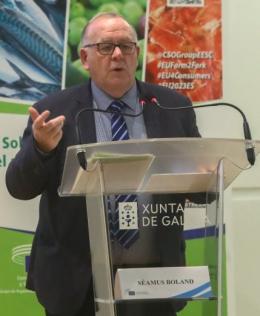
  • Speech by President Séamus Boland on EU food sovereignty

    Inaugural speech by Séamus Boland, President of the Civil Society Organisations' Group of the European Economic and Social Committee (EESC)

    Conference on 'EU food sovereignty: the role of agriculture, fisheries and consumers', Santiago de Compostela, Spain, 26 September 2023

  • Fair prices for both farmers and consumers and truthful and transparent information are essential if the primary sector and consumers are to play their key role in guaranteeing strategic autonomy in European food production. This sovereignty must be in line with the European Green Deal's Farm to Fork strategy, which requires an adjustment of current food policies.

  • Extraordinary meeting of the Civil Society Organisations' Group
    Event type
    Conference

    This is an in-person conference that will be live streamed. Registration for in-person participation is required.