European Economic
and Social Committee
European Economic
and Social Committee
The European Economic and Social Committee (EESC) is the voice of organised civil society in Europe.
Find out more about its role and structure at http://www.eesc.europa.eu/en/about
The EESC issues between 160 and 190 opinions, evaluation and information reports a year.
It also organises several annual initiatives and events with a focus on civil society and citizens’ participation such as the Civil Society Prize, the Civil Society Days, the Your Europe, Your Say youth plenary and the ECI Day.
Find the latest EESC opinions and publications at http://www.eesc.europa.eu/en/our-work/opinions-information-reports/opinions and http://www.eesc.europa.eu/en/our-work/publications-other-work/publications respectively.
The EESC is active in a wide range of areas, from social affairs to economy, energy and sustainability.
Learn more about our policy areas and policy highlights at http://www.eesc.europa.eu/en/policies
The EESC holds nine plenary sessions per year. It also organises many conferences, public hearings and high-level debates related to its work.
Find out more about our upcoming events at http://www.eesc.europa.eu/en/agenda/our-events/upcoming-events
Here you can find news and information about the EESC'swork, including its social media accounts, the EESC Info newsletter, photo galleries and videos.
Read the latest EESC news http://www.eesc.europa.eu/en/news-media/news and press releases http://www.eesc.europa.eu/en/news-media/press-releases
The EESC brings together representatives from all areas of organised civil society, who give their independent advice on EU policies and legislation. The EESC's326 Members are organised into three groups: Employers, Workers and Various Interests.
Find out more about our Members and groups at http://www.eesc.europa.eu/en/members-groups
The EESC has six sections, specialising in concrete topics of relevance to the citizens of the European Union, ranging from social to economic affairs, energy, environment, external relations or the internal market.
Find out more at http://www.eesc.europa.eu/en/sections-other-bodies
Komitee toetab sellise tulevase elektrituru loomist, mis põhineb avaliku ja erasektori partnerlusel ning reguleerimise ja liberaliseerimise kombinatsioonil.
Väljapakutud mudeli keskmes on valitsuse kehtestatav elektrituruvahend („e-facility“), mille kaudu ostetakse tootjatelt elektrit ja müüakse seda kodutarbijate, VKEde, kodanike energiakogukondade ja suurtarbijate elektritarnijatele ning vajaduse ja võimaluse korral teistele riikidele.
Selle vahendi kaudu sõlmitaks elektritootjatega pakkumismenetluste alusel pikaajalised lepingud. Neid lepinguid oleks mitut liiki, näiteks energiaostulepingud, hinnavahelepingud ja „kulud pluss“-lepingud.
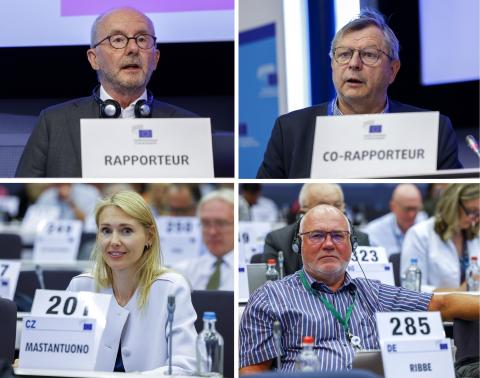
Jan Dirxi ja Christophe Quarezi koostatud ja 14. juunil 2023 täiskogu istungjärgul vastu võetud komitee arvamuse kohaselt on see peamine reform, mis tuleks ELi praegusel elektriturul läbi viia.
„Komitee on pikka aega toetanud ELi elektrituru reformi,“ ütles Jan Dirx. „Meie arvates on edasiminekuks vaja hübriidmudelit, mis põhineb põhimõttel „võimaluse korral liberaliseerida, vajaduse korral reguleerida“.“
„Energia on meie majandus- ja sotsiaalsüsteemi põhielement ning seda ei tohiks käsitleda nagu mis tahes muud kaupa. Energia on avalike teenuste keskne osa,“ rõhutas Christophe Quarez. „Meie ettepaneku kohaselt vastutab valitsus kestlikkuse, taskukohasuse ja varustuskindluse eesmärkide saavutamise eest.“ (mp)