European Economic
and Social Committee
European Economic
and Social Committee
The European Economic and Social Committee (EESC) is the voice of organised civil society in Europe.
Find out more about its role and structure at http://www.eesc.europa.eu/en/about
The EESC issues between 160 and 190 opinions, evaluation and information reports a year.
It also organises several annual initiatives and events with a focus on civil society and citizens’ participation such as the Civil Society Prize, the Civil Society Days, the Your Europe, Your Say youth plenary and the ECI Day.
Find the latest EESC opinions and publications at http://www.eesc.europa.eu/en/our-work/opinions-information-reports/opinions and http://www.eesc.europa.eu/en/our-work/publications-other-work/publications respectively.
The EESC is active in a wide range of areas, from social affairs to economy, energy and sustainability.
Learn more about our policy areas and policy highlights at http://www.eesc.europa.eu/en/policies
The EESC holds nine plenary sessions per year. It also organises many conferences, public hearings and high-level debates related to its work.
Find out more about our upcoming events at http://www.eesc.europa.eu/en/agenda/our-events/upcoming-events
Here you can find news and information about the EESC'swork, including its social media accounts, the EESC Info newsletter, photo galleries and videos.
Read the latest EESC news http://www.eesc.europa.eu/en/news-media/news and press releases http://www.eesc.europa.eu/en/news-media/press-releases
The EESC brings together representatives from all areas of organised civil society, who give their independent advice on EU policies and legislation. The EESC's326 Members are organised into three groups: Employers, Workers and Various Interests.
Find out more about our Members and groups at http://www.eesc.europa.eu/en/members-groups
The EESC has six sections, specialising in concrete topics of relevance to the citizens of the European Union, ranging from social to economic affairs, energy, environment, external relations or the internal market.
Find out more at http://www.eesc.europa.eu/en/sections-other-bodies
Výbor se zasazuje o to, aby byl budoucí trh s elektřinou založen na partnerství veřejného a soukromého sektoru a na kombinaci regulace a liberalizace.
Ústředním prvkem tohoto modelu by byla vládou ustavená „e-agentura“, která by nakupovala elektřinu od výrobců a prodávala ji subjektům dodávajícím elektřinu domácnostem, malým a středním podnikům, občanským energetickým společenstvím a velkým spotřebitelům a v případě možnosti a ve vhodných případech i do jiných zemí.
Tato „e-agentura“ by uzavírala dlouhodobé smlouvy s výrobci elektřiny na základě zadávacích řízení. Jednalo by se o různé druhy smluv, jako jsou smlouvy o nákupu elektřiny, rozdílové smlouvy a smlouvy typu náklady plus přirážka.
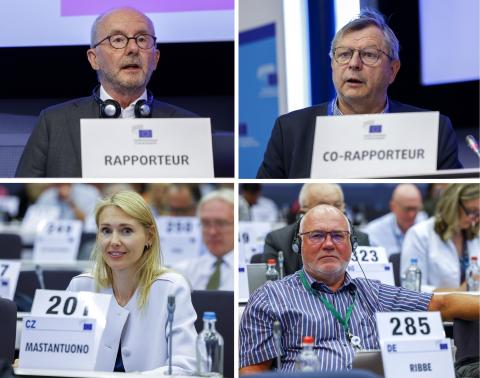
Podle stanoviska EHSV, jež bylo přijato na plenárním zasedání dne 14. června 2023 a jehož zpravodaji byli Jan Dirx a Christophe Quarez, jde o klíčovou reformu stávajícího trhu EU s elektřinou.
Jak připomněl Jan Dirx, „Výbor se zasazuje o reformu trhu s elektřinou v EU už dlouho. Myslíme si, že řešením je hybridní model založený na principu ‚liberalizovat tam, kde je to možné, a regulovat tam, kde je to nezbytné‘.“
„Energie je základním stavebním prvkem našeho hospodářského a sociálního systému, proto by se k ní nemělo přistupovat jako k jakékoli jiné komoditě. Je zásadním aspektem poskytování veřejných služeb,“ zdůraznil Christophe Quarez. „Podle našeho návrhu by byly za plnění cílů udržitelnosti, cenové dostupnosti a bezpečnosti dodávek odpovědné vlády.“ (mp)