European Economic
and Social Committee
European Economic
and Social Committee
The European Economic and Social Committee (EESC) is the voice of organised civil society in Europe.
Find out more about its role and structure at http://www.eesc.europa.eu/en/about
The EESC issues between 160 and 190 opinions, evaluation and information reports a year.
It also organises several annual initiatives and events with a focus on civil society and citizens’ participation such as the Civil Society Prize, the Civil Society Days, the Your Europe, Your Say youth plenary and the ECI Day.
Find the latest EESC opinions and publications at http://www.eesc.europa.eu/en/our-work/opinions-information-reports/opinions and http://www.eesc.europa.eu/en/our-work/publications-other-work/publications respectively.
The EESC is active in a wide range of areas, from social affairs to economy, energy and sustainability.
Learn more about our policy areas and policy highlights at http://www.eesc.europa.eu/en/policies
The EESC holds nine plenary sessions per year. It also organises many conferences, public hearings and high-level debates related to its work.
Find out more about our upcoming events at http://www.eesc.europa.eu/en/agenda/our-events/upcoming-events
Here you can find news and information about the EESC'swork, including its social media accounts, the EESC Info newsletter, photo galleries and videos.
Read the latest EESC news http://www.eesc.europa.eu/en/news-media/news and press releases http://www.eesc.europa.eu/en/news-media/press-releases
The EESC brings together representatives from all areas of organised civil society, who give their independent advice on EU policies and legislation. The EESC's326 Members are organised into three groups: Employers, Workers and Various Interests.
Find out more about our Members and groups at http://www.eesc.europa.eu/en/members-groups
The EESC has six sections, specialising in concrete topics of relevance to the citizens of the European Union, ranging from social to economic affairs, energy, environment, external relations or the internal market.
Find out more at http://www.eesc.europa.eu/en/sections-other-bodies
Il Comitato appoggia la creazione di un futuro mercato dell'energia elettrica basato su un partenariato pubblico-privato e su una combinazione di regolamentazione e liberalizzazione.
Questo modello è incentrato su un "servizio E", istituito dallo Stato, che acquista l'energia elettrica dai produttori e la rivende ai fornitori delle utenze domestiche, alle PMI, alle comunità energetiche dei cittadini, ai grandi consumatori e - laddove ciò sia appropriato e possibile - anche ad altri paesi.
Sulla base di gare d'appalto, il "servizio E" stipulerebbe con i produttori di energia elettrica contratti a lungo termine di vario tipo, ad esempio accordi per l'acquisto di energia elettrica, contratti per differenza e commesse a margine garantito.
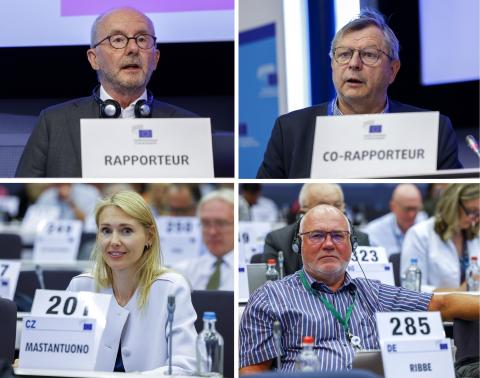
È questa la riforma principale che si dovrebbe realizzare nell'attuale mercato dell'energia elettrica dell'UE, secondo le raccomandazioni formulate nel parere del CESE a cura di Jan Dirx e Christophe Quarez, adottato nella sessione plenaria del Comitato dello scorso 14 giugno.
"Il Comitato raccomanda da tempo di operare una riforma nel mercato dell'energia elettrica dell'UE", ha dichiarato il relatore Jan Dirx. "A nostro avviso, la via da seguire consiste in un modello ibrido basato sul principio di liberalizzare ove possibile e regolamentare ove necessario".
"L'energia è un elemento costitutivo fondamentale del nostro sistema economico e sociale e non dovrebbe essere trattata come una merce qualsiasi. L'energia è un fattore centrale dei servizi pubblici erogati", ha sottolineato il correlatore Christophe Quarez. "In base alla nostra proposta, le autorità pubbliche hanno la responsabilità di conseguire gli obiettivi di sostenibilità, accessibilità economica e sicurezza dell'approvvigionamento". (mp)