European Economic
and Social Committee
European Economic
and Social Committee
The European Economic and Social Committee (EESC) is the voice of organised civil society in Europe.
Find out more about its role and structure at http://www.eesc.europa.eu/en/about
The EESC issues between 160 and 190 opinions, evaluation and information reports a year.
It also organises several annual initiatives and events with a focus on civil society and citizens’ participation such as the Civil Society Prize, the Civil Society Days, the Your Europe, Your Say youth plenary and the ECI Day.
Find the latest EESC opinions and publications at http://www.eesc.europa.eu/en/our-work/opinions-information-reports/opinions and http://www.eesc.europa.eu/en/our-work/publications-other-work/publications respectively.
The EESC is active in a wide range of areas, from social affairs to economy, energy and sustainability.
Learn more about our policy areas and policy highlights at http://www.eesc.europa.eu/en/policies
The EESC holds nine plenary sessions per year. It also organises many conferences, public hearings and high-level debates related to its work.
Find out more about our upcoming events at http://www.eesc.europa.eu/en/agenda/our-events/upcoming-events
Here you can find news and information about the EESC'swork, including its social media accounts, the EESC Info newsletter, photo galleries and videos.
Read the latest EESC news http://www.eesc.europa.eu/en/news-media/news and press releases http://www.eesc.europa.eu/en/news-media/press-releases
The EESC brings together representatives from all areas of organised civil society, who give their independent advice on EU policies and legislation. The EESC's326 Members are organised into three groups: Employers, Workers and Various Interests.
Find out more about our Members and groups at http://www.eesc.europa.eu/en/members-groups
The EESC has six sections, specialising in concrete topics of relevance to the citizens of the European Union, ranging from social to economic affairs, energy, environment, external relations or the internal market.
Find out more at http://www.eesc.europa.eu/en/sections-other-bodies
Odbor podržava stvaranje budućeg tržišta električne energije na temelju javno-privatnog partnerstva i kombinacije propisa i liberalizacije.
U središtu tog modela bio bi „e-mehanizam” koji bi uspostavile vlade, a u sklopu kojeg bi se električna energija kupovala od proizvođača i prodavala opskrbljivačima kućanstava, MSP-ovima, energetskim zajednicama građana i velikim potrošačima, a po potrebi i kad je to moguće i drugim zemljama.
U okviru mehanizma sklapali bi se dugoročni ugovori s proizvođačima električne energije na temelju natječaja. Ti bi ugovori bili različitih vrsta, na primjer ugovori o kupnji električne energije, ugovori za razlike i ugovori o dodatnim troškovima.
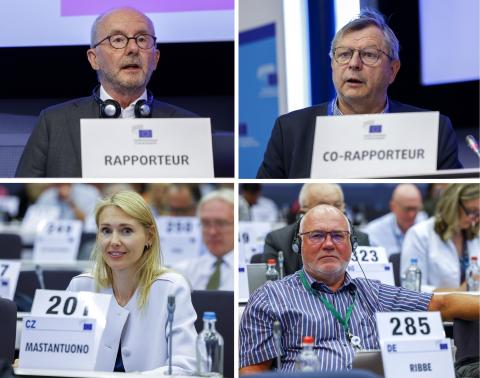
To je najvažnija reforma koju bi trebalo provesti na sadašnjem europskom tržištu električnom energijom, navodi se u mišljenju EGSO-a koje su izradili Jan Dirx i Christophe Quarez i koje je usvojeno na plenarnom zasjedanju 14. lipnja 2023.
„Odbor se već dugo zalaže za reformu europskog tržišta električnom energijom”, poručio je izvjestitelj Dirx. „Smatramo da treba težiti hibridnom modelu zasnovanom na načelu 'liberalizacija tamo gdje je to moguće i reguliranje tamo gdje je to potrebno'.”
„Energija je ključna sastavnica našeg gospodarskog i socijalnog sustava te s njom ne bi trebalo postupati kao s drugom robom. Energija je središnja sastavnica javnih usluga”, naglasio je izvjestitelj Quarez. „Prema našem prijedlogu, za ostvarivanje ciljeva održivosti, cjenovne pristupačnosti i sigurnosti opskrbe bile bi zadužene vlade.” (mp)