European Economic
and Social Committee
European Economic
and Social Committee
The European Economic and Social Committee (EESC) is the voice of organised civil society in Europe.
Find out more about its role and structure at http://www.eesc.europa.eu/en/about
The EESC issues between 160 and 190 opinions, evaluation and information reports a year.
It also organises several annual initiatives and events with a focus on civil society and citizens’ participation such as the Civil Society Prize, the Civil Society Days, the Your Europe, Your Say youth plenary and the ECI Day.
Find the latest EESC opinions and publications at http://www.eesc.europa.eu/en/our-work/opinions-information-reports/opinions and http://www.eesc.europa.eu/en/our-work/publications-other-work/publications respectively.
The EESC is active in a wide range of areas, from social affairs to economy, energy and sustainability.
Learn more about our policy areas and policy highlights at http://www.eesc.europa.eu/en/policies
The EESC holds nine plenary sessions per year. It also organises many conferences, public hearings and high-level debates related to its work.
Find out more about our upcoming events at http://www.eesc.europa.eu/en/agenda/our-events/upcoming-events
Here you can find news and information about the EESC'swork, including its social media accounts, the EESC Info newsletter, photo galleries and videos.
Read the latest EESC news http://www.eesc.europa.eu/en/news-media/news and press releases http://www.eesc.europa.eu/en/news-media/press-releases
The EESC brings together representatives from all areas of organised civil society, who give their independent advice on EU policies and legislation. The EESC's326 Members are organised into three groups: Employers, Workers and Various Interests.
Find out more about our Members and groups at http://www.eesc.europa.eu/en/members-groups
The EESC has six sections, specialising in concrete topics of relevance to the citizens of the European Union, ranging from social to economic affairs, energy, environment, external relations or the internal market.
Find out more at http://www.eesc.europa.eu/en/sections-other-bodies
Výbor sa zasadzuje za to, aby budúci trh s elektrinou spočíval na verejno-súkromnom partnerstve a kombinácii regulácie a liberalizácie.
Ústredným pilierom tohto modelu by bola vládou zriadená „energetická agentúra“, ktorá by nakupovala elektrinu od výrobcov a predávala ju dodávateľom elektriny pre domácnosti, MSP, občianske energetické spoločenstvá a veľkoodberateľov a prípadne aj do iných krajín.
Táto agentúra by uzatvárala dlhodobé zmluvy s výrobcami elektriny na základe verejného obstarávania. Boli by to rôzne typy zmlúv, napríklad zmluvy o nákupe elektriny, rozdielové zmluvy a zmluvy o nákladoch +.
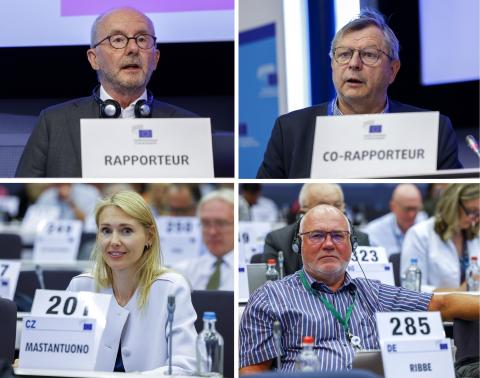
Podľa názoru EHSV ide o zásadnú reformu, ktorá by sa mala uskutočniť na súčasnom trhu s elektrinou v EÚ. Výbor to zdôraznil v stanovisku, ktoré vypracovali Jan Dirx a Christophe Quarez, prijatom na plenárnom zasadnutí 14. júna 2023.
Spravodajca Jan Dirx pripomenul, že výbor sa už dlho zasadzuje za reformu trhu s elektrinou v EÚ: „Myslíme si, že riešením by mohol byť hybridný model založený na zásade: liberalizovať tam, kde je to možné, a regulovať tam, kde je to potrebné.“
„Energia je základným stavebným kameňom nášho hospodárskeho a sociálneho systému a nemalo by sa k nej pristupovať tak ako k iným komoditám. Je to ústredný prvok verejných služieb,“ zdôraznil spoluspravodajca Christophe Quarez. „Podľa nášho návrhu by za splnenie cieľov udržateľnosti, cenovej dostupnosti a bezpečnosti dodávok bola zodpovedná vláda.“ (mp)