European Economic
and Social Committee
European Economic
and Social Committee
The European Economic and Social Committee (EESC) is the voice of organised civil society in Europe.
Find out more about its role and structure at http://www.eesc.europa.eu/en/about
The EESC issues between 160 and 190 opinions, evaluation and information reports a year.
It also organises several annual initiatives and events with a focus on civil society and citizens’ participation such as the Civil Society Prize, the Civil Society Days, the Your Europe, Your Say youth plenary and the ECI Day.
Find the latest EESC opinions and publications at http://www.eesc.europa.eu/en/our-work/opinions-information-reports/opinions and http://www.eesc.europa.eu/en/our-work/publications-other-work/publications respectively.
The EESC is active in a wide range of areas, from social affairs to economy, energy and sustainability.
Learn more about our policy areas and policy highlights at http://www.eesc.europa.eu/en/policies
The EESC holds nine plenary sessions per year. It also organises many conferences, public hearings and high-level debates related to its work.
Find out more about our upcoming events at http://www.eesc.europa.eu/en/agenda/our-events/upcoming-events
Here you can find news and information about the EESC'swork, including its social media accounts, the EESC Info newsletter, photo galleries and videos.
Read the latest EESC news http://www.eesc.europa.eu/en/news-media/news and press releases http://www.eesc.europa.eu/en/news-media/press-releases
The EESC brings together representatives from all areas of organised civil society, who give their independent advice on EU policies and legislation. The EESC's326 Members are organised into three groups: Employers, Workers and Various Interests.
Find out more about our Members and groups at http://www.eesc.europa.eu/en/members-groups
The EESC has six sections, specialising in concrete topics of relevance to the citizens of the European Union, ranging from social to economic affairs, energy, environment, external relations or the internal market.
Find out more at http://www.eesc.europa.eu/en/sections-other-bodies
Il-Kumitat jappoġġja l-ħolqien ta’ suq tal-elettriku futur ibbażat fuq sħubija pubblika-privata u taħlita ta’ regolamentazzjoni u liberalizzazzjoni.
Fil-qalba ta’ dan il-mudell insibu “faċilità elettronika” stabbilita mill-gvern li tixtri l-elettriku mill-produtturi u tbigħu lill-fornituri tal-klijenti tal-unitajiet domestiċi, l-SMEs, il-komunitajiet tal-enerġija taċ-ċittadini u konsumaturi fuq skala kbira, u fejn adegwat u possibbli, lil pajjiżi oħrajn.
Il-“faċilità elettronika” tikkonkludi kuntratti fit-tul mal-produtturi tal-elettriku abbażi ta’ sejħiet għall-offerti. Dawn il-kuntratti jkunu ta’ diversi tipi, bħal ftehimiet dwar ix-xiri tal-enerġija (PPA), kuntratti għad-differenza u kuntratti abbażi tal-kost b’addenda.
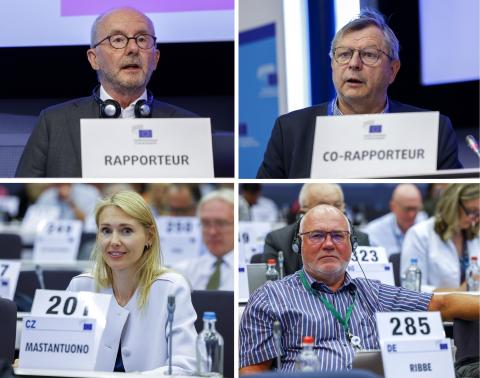
Din hija r-riforma ewlenija li għandha titwettaq fis-suq tal-elettriku attwali tal-UE, skont Opinjoni tal-KESE abbozzata minn Jan Dirx u Christophe Quarez, adottata fis-sessjoni plenarja fl-14 ta’ Ġunju 2023.
“Il-Kumitat ilu jsostni l-ħtieġa għal riforma tas-suq tal-elettriku tal-UE,” qal is-Sur Dirx. “Aħna naħsbu li t-triq ’il quddiem hija mudell ibridu bbażat fuq il-prinċipju ta’ “liberalizza fejn possibbli u rregola fejn meħtieġ”.
“L-enerġija hija element essenzjali tas-sistema ekonomika u soċjali tagħna, u m’għandhiex tiġi ttrattata bħal kwalunkwe komodità oħra. L-enerġija hija parti ċentrali mis-servizzi pubbliċi,” saħaq is-Sur Quarez. “Bil-proposta tagħna, il-gvern huwa responsabbli għat-twettiq tal-objettivi tas-sostenibbiltà, l-affordabbiltà u s-sigurtà tal-provvista.” (mp)