Χώρες της διεύρυνσης

This page is also available in:

Η ΕΟΚΕ συμμετέχει ενεργά στη διαδικασία διεύρυνσης της ΕΕ και έχει αναπτύξει διττή προσέγγιση ―περιφερειακή και διμερή― στις σχέσεις της με τις οργανώσεις της κοινωνίας των πολιτών στις χώρες της διεύρυνσης.

Σε ό,τι αφορά την περιφερειακή προσέγγιση, το κύριο μέσο για τον συντονισμό των δραστηριοτήτων της ΕΟΚΕ στην περιοχή των Δυτικών Βαλκανίων αποτελεί η επιτροπή παρακολούθησης «Δυτικά Βαλκάνια», ένα μόνιμο εσωτερικό όργανο της ΕΟΚΕ. Το Φόρουμ της κοινωνίας των πολιτών των Δυτικών Βαλκανίων, το οποίο διοργανώνεται κάθε δύο χρόνια, εντάσσεται στο πλαίσιο του έργου της επιτροπής παρακολούθησης.

Η ΕΟΚΕ συνεργάζεται επίσης σε διμερές επίπεδο με τις χώρες των Δυτικών Βαλκανίων και την Τουρκία. Βάσει συμφωνιών σύνδεσης μεταξύ αυτών των χωρών και της ΕΕ, και προκειμένου να συμμετάσχουν οι οργανώσεις της κοινωνίας των πολιτών στις προενταξιακές και ενταξιακές διαδικασίες, η ΕΟΚΕ έχει δημιουργήσει τρεις κοινούς φορείς με τους εκπροσώπους της κοινωνίας των πολιτών – με την Τουρκία, το Μαυροβούνιο και τη Σερβία. Κάθε φορέας αποτελείται από ίσο αριθμό μελών από την ΕΟΚΕ και τη χώρα εταίρο και συνεδριάζει δύο φορές τον χρόνο.

Η ΕΟΚΕ διατηρεί τακτικές επαφές και διοργανώνει κοινές δραστηριότητες με τις οργανώσεις της κοινωνίας των πολιτών των χωρών της διεύρυνσης με τις οποίες δεν έχει θεσπιστεί ακόμη κοινό όργανο εκπροσώπων της κοινωνίας των πολιτών.

Το έργο των κοινών οργάνων συμπληρώνεται με την εκπόνηση γνωμοδοτήσεων της ΕΟΚΕ για τις προενταξιακές και ενταξιακές διαδικασίες των επιμέρους χωρών, καθώς και για θέματα περιφερειακού ενδιαφέροντος.
  • Reference number
    22/2022

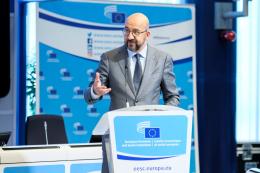
    The May plenary session of the European Economic and Social Committee (EESC) hosted a debate led by its President Christa Schweng and the President of the European Council Charles Michel on Europe's response to this turning point in history.

  • With youth as one of the main policy areas of the Innovation Agenda for the Western Balkans (WBs), the participants in the hearing "Youth Policy in the Western Balkans, as part of the Innovation Agenda for the WBs", held by the EESC, reaffirmed the importance of young people for the future of the region.

  • The 51st Western Balkans Follow-up Committee meeting, held on 3 December 2021, placed conflict resolution and normalisation of relations between Kosovo* and Serbia in the spotlight. The meeting, presided by Ionuţ Sibian, hosted prominent speakers from the ranks of EU officials, Western Balkans experts, as well as civil society representatives from the local communities, all of whom agreed that EU-facilitated dialogue was the only way to move forward.

  • Members of the European Economic and Social Committee (EESC) and representatives of the Montenegrin organised civil society held on the 1st March the 14th meeting of the EU-Montenegro Joint Consultative Committee (JCC), which took place online. Members of the JCC adopted a joint declaration urging the EU to assist Montenegro to face the devastating consequences of the COVID-19 pandemic in the country.

  • Event type
    Debate

    EU enlargement is a key priority for the European Economic and Social Committee (EESC). The Committee considers enlargement to be a geostrategic investment in a strong, stable, secure and united Europe, grounded in shared democratic values.

  • Event type
    JCC Meeting

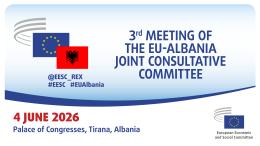
    The 3rd meeting of the EU–Albania Joint Consultative Committee (JCC) brought together representatives of organised civil society and social partners from Albania and the European Union to exchange views on Albania’s accession process.

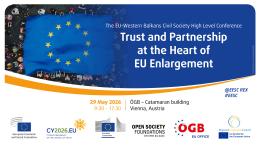
  • Trust and Partnership at the Heart of EU Enlargement
    Event type
    Conference

    On 29 May 2026, the European Economic and Social Committee (EESC) organised a High‑Level Civil Society Conference that brought together EU and Western Balkans stakeholders to discuss the role of civil society in advancing EU enlargement, strengthening democratic resilience and supporting socio‑economic convergence in the region.

  • Event type
    JCC Meeting

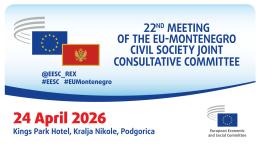
    The 22nd meeting of the EU–Montenegro Joint Consultative Committee (JCC) was hold in Podgorica. The meeting brought together representatives of organised civil society from the European Union and Montenegro to exchange views on recent developments in EU–Montenegro relations and on key priorities in the EU accession process.

  • Event type
    JCC Meeting

    European Economic and Social Committee (EESC) and Montenegro held its 21st Civil Society Joint Consultative Committee (JCC) on 16 December 2025, at the EESC in Brussels, Belgium. This platform, established between the EESC and Montenegrin civil society, provides a civil society perspective within the EU institutional framework related to the Stabilisation and Association Agreement between the EU and Montenegro. The JCC enables civil society organisations from both sides to monitor Montenegro's accession negotiations, discuss common interests, and inform the public about the challenges during the accession period.

    @EESC_REX   |   #EUMontenegro    |    #EESC_WB

  • Event type
    JCC Meeting

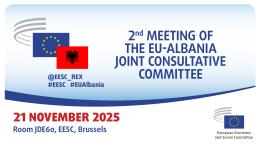
    The second meeting of the EU-Albania Joint Consultative Committee (JCC) will took place on  21 November 2025 at the EESC in Brussels, Belgium. This platform, established within the institutional framework of the EU-Albania Stabilisation and Association Agreement (SAA), will enable representatives from both the EU and Albanian civil society to monitor the country's accession negotiations, discuss issues of common interest, and highlight concerns to be addressed on Albanian's path towards the European Union.

    @EESC_REX
    #EESC
    #EESCAlbania