Χώρες της διεύρυνσης

This page is also available in:

Η ΕΟΚΕ συμμετέχει ενεργά στη διαδικασία διεύρυνσης της ΕΕ και έχει αναπτύξει διττή προσέγγιση ―περιφερειακή και διμερή― στις σχέσεις της με τις οργανώσεις της κοινωνίας των πολιτών στις χώρες της διεύρυνσης.

Σε ό,τι αφορά την περιφερειακή προσέγγιση, το κύριο μέσο για τον συντονισμό των δραστηριοτήτων της ΕΟΚΕ στην περιοχή των Δυτικών Βαλκανίων αποτελεί η επιτροπή παρακολούθησης «Δυτικά Βαλκάνια», ένα μόνιμο εσωτερικό όργανο της ΕΟΚΕ. Το Φόρουμ της κοινωνίας των πολιτών των Δυτικών Βαλκανίων, το οποίο διοργανώνεται κάθε δύο χρόνια, εντάσσεται στο πλαίσιο του έργου της επιτροπής παρακολούθησης.

Η ΕΟΚΕ συνεργάζεται επίσης σε διμερές επίπεδο με τις χώρες των Δυτικών Βαλκανίων και την Τουρκία. Βάσει συμφωνιών σύνδεσης μεταξύ αυτών των χωρών και της ΕΕ, και προκειμένου να συμμετάσχουν οι οργανώσεις της κοινωνίας των πολιτών στις προενταξιακές και ενταξιακές διαδικασίες, η ΕΟΚΕ έχει δημιουργήσει τρεις κοινούς φορείς με τους εκπροσώπους της κοινωνίας των πολιτών – με την Τουρκία, το Μαυροβούνιο και τη Σερβία. Κάθε φορέας αποτελείται από ίσο αριθμό μελών από την ΕΟΚΕ και τη χώρα εταίρο και συνεδριάζει δύο φορές τον χρόνο.

Η ΕΟΚΕ διατηρεί τακτικές επαφές και διοργανώνει κοινές δραστηριότητες με τις οργανώσεις της κοινωνίας των πολιτών των χωρών της διεύρυνσης με τις οποίες δεν έχει θεσπιστεί ακόμη κοινό όργανο εκπροσώπων της κοινωνίας των πολιτών.

Το έργο των κοινών οργάνων συμπληρώνεται με την εκπόνηση γνωμοδοτήσεων της ΕΟΚΕ για τις προενταξιακές και ενταξιακές διαδικασίες των επιμέρους χωρών, καθώς και για θέματα περιφερειακού ενδιαφέροντος.

  • Building an Inclusive Future in an Enlarged EU: The role of Social Dialogue, Civil Society and Youth Engagement

    As part of its ongoing Enlargement Candidate Members (ECMs) initiative, the EESC hosted a second Enlargement Forum on 17 July 2025 in Brussels. The event gathered ministers for European affairs from candidate countries, senior officials from the European Commission, social partners, and civil society representatives to discuss the role of civil and social dialogue in the EU enlargement process.

  • Reference number
    31/2025

    At an Enlargement Forum hosted by the European Economic and Social Committee (EESC), civil society representatives from candidate countries commended the Committee’s Enlargement Candidate Members initiative as a vital tool for shaping their countries’ European integration process and bolstering public support for EU accession. 

  • In this opinion the EESC:

    • believes that institutionalising civil and social dialogue accelerates the integration of candidate countries into the European social model, based on the representativeness and diversity of the social partners and civil society organisations, and their involvement in public decision-making;
    • notes that National Economic and Social Councils and other forms of institutionalised civil and social dialogue contribute significantly to strengthening the model of governance and participatory democracy. Hence, in states where they do not exist, the establishment of Economic and Social Councils will strengthen the role and place of social partners and civil society organisations in the consultation and partnership relationship with the governments of candidate and partner countries.
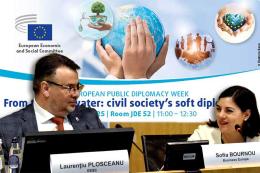
  • On 25 June 2025, the European Economic and Social Committee (EESC) held an event in the context of European Public Diplomacy Week, launched for the first time by the European External Action Service (EEAS). The participants highlighted a fundamental dimension of European action, the contribution of civil society to public diplomacy, from international trade to water, through enlargement. When official diplomacy has limited outreach due to political or other issues, civil society can provide added value.

  • Published in
    13 pages

    The European Economic and Social Committee (EESC) on 19 June 2025 adopted a resolution to provide the European Commission with a contribution to its 2026 work programme.

  • Reference number
    20/2025

    The European Economic and Social Committee (EESC) launched its 10th Western Balkans Civil Society Forum today in Budva, Montenegro, gathering over 100 participants to discuss how to accelerate socio-economic convergence with the EU for improved living standards across the region. The two-day Forum, 13-14 May is taking place in Budva, Montenegro, to support Montenegro's ambition to become the next EU Member State by 2028 and to serve as a model for the rest of the region. 

  • Reference number
    16/2025

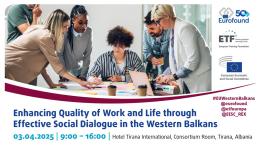
    The European Economic and Social Committee (EESC), the European Training Foundation (ETF), and Eurofound are joining forces on 3 April in Tirana for a high-level event focused on promoting effective social dialogue and collaboration in the Western Balkans. Titled Enhancing quality of work and life through effective social dialogue in the Western Balkans, the by-invitation-only event will bring together key stakeholders to explore challenges and opportunities in the region’s labour markets and social policies.

  • Published in
    8 pages

    2025 Civil Society Week conclusions

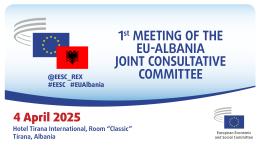
  • The first meeting of the EU-Albania Joint Consultative Committee (JCC) took place on 4 April 2025 in Tirana, Albania. This platform, established within the institutional framework of the EU-Albania Stabilisation and Association Agreement (SAA), will enable representatives from both the EU and Albanian civil society to monitor the country's accession negotiations, discuss issues of common interest, and highlight concerns to be addressed on Albanian's path towards the European Union.

  • Event type
    JCC Meeting

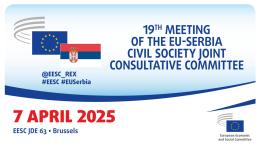
    The EU-Serbia Joint Consultative Committee (JCC) held its 19th meeting on 7 April 2025 at the EESC in Brussels. This platform, established within the institutional framework of the EU-Serbia Stabilisation and Association Agreement (SAA), will enable representatives from both the EU and Serbian civil society to monitor the country's accession negotiations, discuss issues of common interest, and highlight concerns to be addressed on Serbia's path towards the European Union.