Země procesu rozšíření

This page is also available in:

EHSV se aktivně angažuje v procesu rozšíření EU a vypracoval dvojí přístup (regionální a dvoustranný) ke svým vztahům s organizacemi občanské společnosti v zemích procesu rozšíření.

Pokud jde o regionální přístup, je hlavním nástrojem pro koordinaci činností EHSV v tomto regionu monitorovací výbor Západní Balkán, což je stálý interní orgán EHSV. Fórum občanské společnosti zemí západního Balkánu se koná každé dva roky a je součástí činností, které vykonává monitorovací výbor.

EHSV spolupracuje se zeměmi západního Balkánu a Tureckem také na dvoustranném základě. Na základě dohody o přidružení mezi těmito zeměmi a EU vytvořil EHSV tři společné orgány se zástupci občanské společnosti Turecka, Černé Hory a Srbska, aby organizace občanské společnosti zapojil do předvstupního procesu a procesu přistoupení. Každý orgán se skládá ze stejného počtu členů EHSV a partnerské země a schází se dvakrát ročně.

EHSV udržuje pravidelné kontakty a organizuje společné činnosti s organizacemi občanské společnosti v zemích procesu rozšíření, s jejichž zástupci nebyl dosud vytvořen žádný společný orgán.

Činnost společných orgánů doplňuje formulace stanovisek EHSV k předvstupnímu procesu a procesu přistoupení jednotlivých zemí, jakož i k otázkám s významem pro daný region.
  • With youth as one of the main policy areas of the Innovation Agenda for the Western Balkans (WBs), the participants in the hearing "Youth Policy in the Western Balkans, as part of the Innovation Agenda for the WBs", held by the EESC, reaffirmed the importance of young people for the future of the region.

  • The 51st Western Balkans Follow-up Committee meeting, held on 3 December 2021, placed conflict resolution and normalisation of relations between Kosovo* and Serbia in the spotlight. The meeting, presided by Ionuţ Sibian, hosted prominent speakers from the ranks of EU officials, Western Balkans experts, as well as civil society representatives from the local communities, all of whom agreed that EU-facilitated dialogue was the only way to move forward.

  • Members of the European Economic and Social Committee (EESC) and representatives of the Montenegrin organised civil society held on the 1st March the 14th meeting of the EU-Montenegro Joint Consultative Committee (JCC), which took place online. Members of the JCC adopted a joint declaration urging the EU to assist Montenegro to face the devastating consequences of the COVID-19 pandemic in the country.

  • Event type
    JCC Meeting

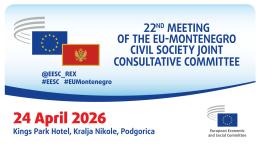
    European Economic and Social Committee (EESC) and Montenegro held its 21st Civil Society Joint Consultative Committee (JCC) on 16 December 2025, at the EESC in Brussels, Belgium. This platform, established between the EESC and Montenegrin civil society, provides a civil society perspective within the EU institutional framework related to the Stabilisation and Association Agreement between the EU and Montenegro. The JCC enables civil society organisations from both sides to monitor Montenegro's accession negotiations, discuss common interests, and inform the public about the challenges during the accession period.

    @EESC_REX   |   #EUMontenegro    |    #EESC_WB

  • Event type
    JCC Meeting

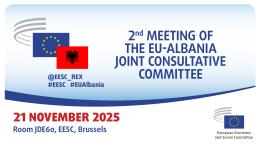
    The second meeting of the EU-Albania Joint Consultative Committee (JCC) will took place on  21 November 2025 at the EESC in Brussels, Belgium. This platform, established within the institutional framework of the EU-Albania Stabilisation and Association Agreement (SAA), will enable representatives from both the EU and Albanian civil society to monitor the country's accession negotiations, discuss issues of common interest, and highlight concerns to be addressed on Albanian's path towards the European Union.

    @EESC_REX
    #EESC
    #EESCAlbania

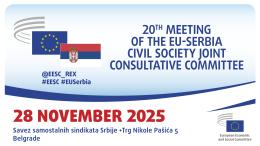
  • The EU-Serbia Joint Consultative Committee (JCC) held its 20th meeting on 28 November 2025 in Serbia. This platform, established within the institutional framework of the EU-Serbia Stabilisation and Association Agreement (SAA), will enable representatives from both the EU and Serbian civil society to monitor the country's accession negotiations, discuss issues of common interest, and highlight concerns to be addressed on Serbia's path towards the European Union.

    @EESC_REX
    #EESC
    #EESCSerbia

  • Building an Inclusive Future in an Enlarged EU: The role of Social Dialogue, Civil Society and Youth Engagement

    As part of its ongoing Enlargement Candidate Members (ECMs) initiative, the EESC hosted a second Enlargement Forum on 17 July 2025 in Brussels. The event gathered ministers for European affairs from candidate countries, senior officials from the European Commission, social partners, and civil society representatives to discuss the role of civil and social dialogue in the EU enlargement process.

  • The first meeting of the EU-Albania Joint Consultative Committee (JCC) took place on 4 April 2025 in Tirana, Albania. This platform, established within the institutional framework of the EU-Albania Stabilisation and Association Agreement (SAA), will enable representatives from both the EU and Albanian civil society to monitor the country's accession negotiations, discuss issues of common interest, and highlight concerns to be addressed on Albanian's path towards the European Union.

  • Event type
    JCC Meeting

    The EU-Serbia Joint Consultative Committee (JCC) held its 19th meeting on 7 April 2025 at the EESC in Brussels. This platform, established within the institutional framework of the EU-Serbia Stabilisation and Association Agreement (SAA), will enable representatives from both the EU and Serbian civil society to monitor the country's accession negotiations, discuss issues of common interest, and highlight concerns to be addressed on Serbia's path towards the European Union.


  • Civil society for an open democratic debate
    Event type
    Conference

    This conference in Lisbon is the fourth event on disinformation being hosted by the European Economic and Social Committee (EESC) as part of its ongoing project aiming to fight disinformation with the help of civil society.