Grannländerna i öst

This page is also available in:

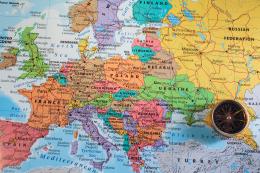
EESK:s verksamhet när det gäller grannländerna i öst omfattar Armenien, Azerbajdzjan, Belarus, Georgien, Moldavien och Ukraina. EESK:s främsta mål när det gäller grannländerna i Östeuropa är att stärka förbindelserna med civilsamhällesorganisationerna i regionen och involvera dem i en dialog med både deras nationella politiska beslutsfattare och EU:s organiserade civila samhälle.

De viktigaste mekanismerna för samarbete med Georgien, Moldavien och Ukraina är plattformarna för det civila samhället (tag to all three) som kompletterar de politiska organ som finns inom ramen för EU:s associeringsavtal med dessa länder. Plattformarna ger det civila samhällets organisationer från både EU och partnerlandet en möjlighet att övervaka genomförandeprocessen och utarbeta sina rekommendationer till de berörda myndigheterna.

På EU:s sida består dessa plattformar av EESK-ledamöter och företrädare för stora europeiska nätverk för det civila samhället. På partnerlandets sida representerar de ett brett spektrum av civilsamhällesorganisationer. Plattformarnas sammansättning bygger på principen om en balanserad representation av alla intressegrupper (arbetsgivarorganisationer, fackföreningar och olika intressegrupper).

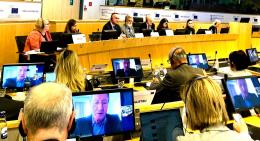
Inom EESK inrättades 2004 uppföljningskommittén för grannländerna i öst som ett särskilt organ med ansvar för förbindelserna med det civila samhället i de länder som ingår i det östliga partnerskapet. Uppföljningskommittén sammanträder vanligen fyra gånger per år och dess ledamöter deltar aktivt i det östliga partnerskapets verksamhet, t.ex. det östliga partnerskapets multilaterala plattformar och forum för det civila samhället.
  • Antagna on 17/01/2012
    Dokumentreferens
    REX/354-EESC-2012-774
    Employers - GR I
    Czech Republic
    Download — Social dialogue in the Eastern Partnership countries
  • Antagna on 16/06/2011
    Dokumentreferens
    REX/323-EESC-2011-01-01-1011
    Employers - GR I
    Lithuania
    Download — Eastern Partnership
  • Antagna on 13/05/2009
    Dokumentreferens
    REX/271-EESC-2009-01-01-889
    Employers - GR I
    Czech Republic
    Plenary session number
    453
    -
    Download — Civil society – Eastern Partnership
  • Dokumentreferens
    REX/371-EESC-0000-01-01-1813
    Employers - GR I
    Finland
    Plenary session number
    489
    -
    L'avis se penchera sur les questions relatives aux dimensions économique, sociale, environnementale et humaine du caractère croissant de l'utilisation des richesses de l'Arctique, et sur le rôle potentiel de la société civile pour exprimer les intérêts des groupes concernés ainsi que pour soutenir la position de l'UE dans le cadre du dialogue avec les partenaires internationaux concernés.
    Download — La politique arctique de l'UE pour aborder les nouveaux enjeux mondiaux dans la région – point de vue de la société civile
  • On the occasion of the fifth anniversary of the ratification of the Enhanced Partnership and Cooperation Agreement (EPCA) between Kazakhstan and the EU, the European Economic and Social Committee (EESC) adopted at its March plenary session an action plan for enhancing cooperation between civil society organisations in the European Union and Kazakhstan. 

  • Cohesion policy is key to overcoming the COVID-19 crisis, to achieving climate neutrality by 2050 and to reducing disparities in Europe. Its most serious challenge for the foreseeable future, however, is the war in Ukraine, the EESC cautions in a recent opinion. Rapid action is needed to help refugees and ensure the country's European integration.

  • The situation of civil society in Belarus following the presidential elections in August 2020 and the huge level of repression, as well as the tragic fate of the people in Afghanistan, show that the EU has to speak up with one voice in the geopolitical arena.

  • Civil society for an open democratic debate
    Event type
    Conference

    This conference in Lisbon is the fourth event on disinformation being hosted by the European Economic and Social Committee (EESC) as part of its ongoing project aiming to fight disinformation with the help of civil society.

  • The fifth meeting of the EU-Armenia Civil Society Platform (CSP) is scheduled to be held on 15 October 2024 in Brussels.

    The meeting will focus on assessing progress in the implementation of the EU-Armenia Comprehensive and Enhanced Partnership Agreement (CEPA), with a strong emphasis on its impact in the Areas of Democracy, Rule of Law, Anti-Corruption, and Human Rights.


  • Civil society for an open democratic debate
    Event type
    Conference

    This conference in Athens is the third event on disinformation being hosted by the European Economic and Social Committee (EESC) as part of its ongoing project aiming to fight disinformation with the help of civil society.