Vzhodnoevropske sosede

This page is also available in:

Dejavnosti EESO v zvezi z vzhodnoevropskimi sosedami vključujejo Armenijo, Azerbajdžan, Belorusijo, Gruzijo, Moldavijo in Ukrajino. Glavni cilj EESO glede vzhodnoevropskih sosed je okrepiti odnose z organizacijami civilne družbe v regiji in jih vključiti v dialog z njihovimi nacionalnimi oblikovalci politike in organizirano civilno družbo EU.

Glavni mehanizmi sodelovanja z Gruzijo, Moldavijo in Ukrajino so platforme civilne družbe: te dopolnjujejo politična telesa, ki obstajajo v okviru pridružitvenih sporazumov med EU in temi državami. Platforme organizacijam civilne družbe iz EU in partnerskih držav omogočajo, da spremljajo proces izvajanja in pripravijo svoja priporočila za ustrezne organe.

S strani EU v platformah sodelujejo člani EESO in predstavniki večjih evropskih mrež civilne družbe. Člani platform s strani partnerskih držav zastopajo široko paleto organizacij civilne družbe. Sestava platform temelji na uravnoteženem zastopanju vseh interesnih skupin (organizacije delodajalcev, sindikati in skupine raznih dejavnosti).

Spremljevalni odbor za vzhodnoevropske sosede EU je bil ustanovljen leta 2004 kot posebno telo v okviru EESO za odnose s civilno družbo v državah vzhodnega sosedstva. Običajno se sestane štirikrat na leto, njegovi člani pa dejavno sodelujejo v dejavnostih vzhodnega partnerstva, kot so njegove večstranske platforme in forum civilne družbe.
  • The External Relations Section (REX) of the European Economic and Social Committee (EESC) held a debate on 23 February 2026 to address the alarming deterioration of trade union freedoms in Belarus. Despite sustained international pressure and the appointment of an International Labour Organization (ILO) Special Envoy in June 2025, the Belarusian authorities continue to refuse any dialogue aimed at restoring compliance with fundamental labour standards. Around twenty trade unionists remain imprisoned.

  • On the occasion of the fifth anniversary of the ratification of the Enhanced Partnership and Cooperation Agreement (EPCA) between Kazakhstan and the EU, the European Economic and Social Committee (EESC) adopted at its March plenary session an action plan for enhancing cooperation between civil society organisations in the European Union and Kazakhstan. 

  • Civil society for an open democratic debate
    Event type
    Conference

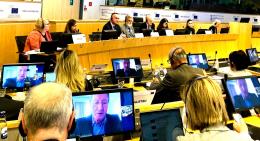
    This conference in Lisbon is the fourth event on disinformation being hosted by the European Economic and Social Committee (EESC) as part of its ongoing project aiming to fight disinformation with the help of civil society.

  • Sprejeta on 17/07/2025 - Bureau decision date: 23/01/2025
    Referenca
    REX/598-EESC-2025
    Plenary session number
    598
    -
    • Follow-up from the Commission REX/598
    Download format:
    Download — Mnenje EESO: The importance of institutionalising civil and social dialogue in EU candidate and partner countries
  • The fifth meeting of the EU-Armenia Civil Society Platform (CSP) is scheduled to be held on 15 October 2024 in Brussels.

    The meeting will focus on assessing progress in the implementation of the EU-Armenia Comprehensive and Enhanced Partnership Agreement (CEPA), with a strong emphasis on its impact in the Areas of Democracy, Rule of Law, Anti-Corruption, and Human Rights.


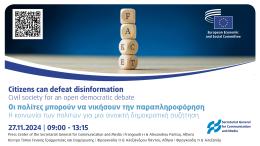
  • Civil society for an open democratic debate
    Event type
    Conference

    This conference in Athens is the third event on disinformation being hosted by the European Economic and Social Committee (EESC) as part of its ongoing project aiming to fight disinformation with the help of civil society.

  • The 14th meeting of the EU-Ukraine Civil Society Platform (CSP) took place on 15 December 2023. During the meeting, a debate focused on assessing the implementation of the European Commission's opinion and the state of play of the implementation of the EU-Ukraine Association Agreement.

    In addition, the CSP discussed the initiatives for Ukraine's green recovery, economic integration of Ukraine to the EU, as well as current challenges related to labour market.

    A joint declaration, prepared by both sides, was discussed and adopted.

  • Published in
    8 pages

    The External Relations Section (REX) of the European Economic and Social Committee (EESC) is responsible for dialogue between European civil society organisations and their homologues from the countries with which the European Union has formal relations (e.g. under the form of a Free Trade Agreement). Through this dialogue, made possible by a series of bilateral bodies, and through specialized opinions and information reports, the Committee is able to concretely contribute to EU foreign policy.

  • Document type
    Joint declaration
    Latest update
    • Joint declaration - 7th joint meeting of the EU-Moldova Domestic Advisory Groups
  • Sprejeta on 26/10/2022 - Bureau decision date: 20/09/2022
    Referenca
    REX/564-EESC-2022
    Civil Society Organisations - GR III
    Download format:
    Download — Mnenje EESO: Specific provisions for the 2014-2020 cooperation programmes supported by the European Neighbourhood Instrument and under the European territorial cooperation goal, following programme implementation disruption