Eiropa

This page is also available in:

Eiropā EESK uztur attiecības ar sociālajiem partneriem un pilsoniskās sabiedrības organizācijām Rietumbalkānos, austrumu kaimiņreģionā, EEZ EBTA valstīs (Islandē, Lihtenšteinā un Norvēģijā), kā arī Apvienotajā Karalistē.

Rietumbalkānu koordinācijas komiteja – pastāvīga EESK iekšējā struktūrvienība – ir svarīgākais instruments EESK darbības koordinācijai šajā reģionā. Rietumbalkānu pilsoniskās sabiedrības forums, kas tiek rīkots reizi divos gados, veido daļu no koordinācijas komitejas darba.

EESK arī divpusēji sadarbojas ar Rietumbalkānu valstīm, ar kurām ir sāktas pievienošanās sarunas, un ar Turciju, izmantojot specializētas struktūras, kas izveidotas, pamatojoties uz asociācijas nolīgumiem starp minētajām valstīm un ES: šo apvienoto konsultatīvo komiteju mērķis ir iesaistīt sociālos partnerus un pilsoniskās sabiedrības organizācijas pirmspievienošanās un reformu procesu uzraudzībā saistībā ar iespējamu pievienošanos Eiropas Savienībai. Katrā struktūrvienībā ir vienāds skaits locekļu no EESK un partnervalsts, un tās sanāksmes notiek parasti vienreiz vai divreiz gadā.

EESK ir arī izveidojusi Austrumu kaimiņattiecību koordinācijas komiteju, kas ir iekšēja struktūra, kuras uzdevums ir uzlabot attiecības ar pilsonisko sabiedrību reģiona valstīs, t. i., Armēnijā, Azerbaidžānā, Baltkrievijā, Gruzijā, Moldovā un Ukrainā.

Galvenie mehānismi sadarbībai ar Armēniju, Gruziju, Moldovu un Ukrainu ir pilsoniskās sabiedrības platformas, kas ļauj gan ES, gan partnervalsts pilsoniskās sabiedrības organizācijām uzraudzīt to, kā tiek īstenoti ES nolīgumi ar šīm valstīm, un izstrādāt ieteikumus attiecīgajām iestādēm. Turklāt 2022. gadā Ukraina un Moldova ir kļuvušas par kandidātvalstīm.

Attiecībā uz Baltkrieviju un Krieviju tiek veidotas attiecības ar tām pilsoniskās sabiedrības organizācijām, kas joprojām darbojas brīvi un no kurām vairums atrodas ES teritorijā. EESK uzskata, ka ir svarīgi turpināt dialogu un vienlaikus cerēt uz labākiem apstākļiem nākotnē.

Eiropas Ekonomikas zona (EEZ) apvieno ES dalībvalstis un trīs EEZ Eiropas Brīvās tirdzniecības asociācijas (EBTA) valstis (Islandi, Lihtenšteinu un Norvēģiju) iekšējā tirgū, kurā preces, pakalpojumi, kapitāls un personas var brīvi pārvietoties. EESK ir iesaistīta Eiropas Ekonomikas zonas konsultatīvajā komitejā, kurā ar EEZ EBTA valstu sociālo partneru pārstāvjiem tiek apspriesti kopīgu interešu jautājumi.

Visbeidzot, EESK ir izveidojusi ES un Apvienotās Karalistes koordinācijas komiteju, kuras uzdevums ir uzraudzīt ES un Lielbritānijas un Ziemeļīrijas Apvienotās Karalistes attiecības no pilsoniskās sabiedrības skatpunkta. Koordinācijas komitejas darbā īpaša uzmanība tiek pievērsta tam, kā tiek īstenots ES un Apvienotās Karalistes noslēgtais izstāšanās līgums un Protokols par Īriju un Ziemeļīriju. Minētā līguma un protokola īstenošanu EESK apspriež regulārās sarunās ar Apvienotās Karalistes pilsoniskās sabiedrības organizācijām. Tāpat koordinācijas komiteja novēro, kā tiek īstenots ES un Apvienotās Karalistes Tirdzniecības un sadarbības nolīgums, uz kura pamata ES un Apvienotās Karalistes koordinācijas komiteja sadarbojas ar ES vietējo konsultantu grupu.
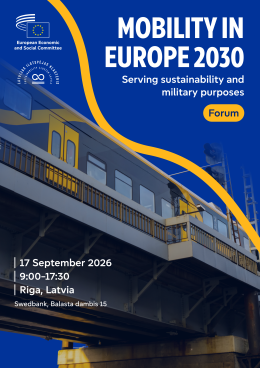

  • The TEN section, in cooperation with the Latvian Sustainability Cluster, is organising a forum on Mobility in Europe 2030 – serving sustainability and military purposes on 17 September 2026 in Riga, Latvia. The forum will deliver recommendations, identify investment and regulatory priorities, and clarify implementation pathways. The outcome of the forum will feed into the EESC’s policy work at EU level and provide practical guidance for Member States in advancing climate-neutral, resilient and competitive mobility systems, including strengthened military mobility, in response to evolving geopolitical challenges. 

  • On 25th of March, the EESC Workers’ Group gathered together with a number of guest speakers from academia, trade unions and MEPs from the European Parliament, to discuss the current geopolitical situation, its impact on social and defence expenditure, its spillovers on supply chains and industry, and the consequences for the welfare states and workers’ rights.  

  • Published in
    Study
    36 pages

    This study examines how social partners and civil society organisations in six Member States — Italy, Austria, Hungary, Poland, Portugal and Sweden — view the effectiveness of current policies in raising employment levels and increasing adult participation in training. It also puts forward recommendations for improving policy outcomes.

  • Published in
    28 pages

    On 8 June 2022 the Consultative Commission on Industrial Change (CCMI) celebrated its 20th anniversary with a conference focused on the challenges of today and the prospects for tomorrow. This publication is a record of the occasion and a commemoration of what CCMI has achieved since joining the EESC.

  • Published in
    Study
    63 pages

    Exploring the evolving landscape of generative artificial intelligence (GenAI) within the European Union, this study delves into technological advancements, market dynamics, and regulatory challenges. It highlights the EU’s position in the global GenAI ecosystem, revealing significant US dominance, while uncovering sector-specific opportunities and risks across industries such as automotive, renewable energy, and education.

  • Published in
    Study
    71 pages

    Taking Stock of SDG 2 and Future Perspectives

  • The EESC:

    • suggests that a systematic stocktaking exercise be carried out, evaluating how EU funds and instruments are perceived and used by the Arctic stakeholders in practice;
    • calls for Arctic decision-makers at all levels to more rigorously apply legal obligations and draw inspiration from best-practice standards and mechanisms for including, consulting and empowering all section of local civil society;
    • supports and encourages full consultation of and cooperation with indigenous peoples in the Arctic, bearing in mind the principle of free, prior and informed consent, before adopting and implementing measures that might affect them directly.
  • Where do EU-US relations go from here?

    In this issue:

    • Our members comment on the results of the US presidential election and reflect on their possible impact;
    • Guest articles by Lennart NILSSON (General Confederation of Agricultural Cooperatives - COGECA), Beatriz ABELLÁN MERELO (Foundation for European Progressive Studies - FEPS) and Francesca CARLSSON (European Environmental Bureau - EEB);
    • Report on our recent conference on protecting Europe's most vulnerable through sustainable and affordable housing;
    • Interview with rapporteur Anastasis YIAPANIS on the new EESC opinion on 'Advanced materials for industrial leadership'.
    • Civil Society Organisations' Bulletin - December 2024
  • Reference number
    39/2024

    The European elections proved that the pro-European majority still holds, but also showed that voters across the EU demand urgent political and legislative responses to the challenges raised in the electoral campaign. Otherwise, the pro-European majority may risk losing support as citizens may increasingly turn their backs on the mainstream political forces.

  • Published in
    15 pages

    This document seeks to provide input to the Global Coalition for Social Justice. It highlights key messages from EESC opinions on the six priority areas identified by the International Labour Organization (ILO) for immediate action.