Země procesu rozšíření

This page is also available in:

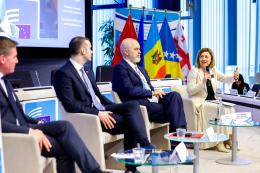
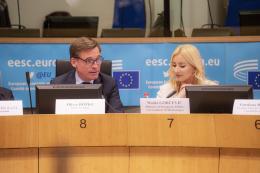
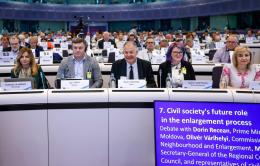
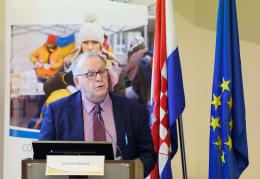
EHSV se aktivně angažuje v procesu rozšíření EU a vypracoval dvojí přístup (regionální a dvoustranný) ke svým vztahům s organizacemi občanské společnosti v zemích procesu rozšíření.

Pokud jde o regionální přístup, je hlavním nástrojem pro koordinaci činností EHSV v tomto regionu monitorovací výbor Západní Balkán, což je stálý interní orgán EHSV. Fórum občanské společnosti zemí západního Balkánu se koná každé dva roky a je součástí činností, které vykonává monitorovací výbor.

EHSV spolupracuje se zeměmi západního Balkánu a Tureckem také na dvoustranném základě. Na základě dohody o přidružení mezi těmito zeměmi a EU vytvořil EHSV tři společné orgány se zástupci občanské společnosti Turecka, Černé Hory a Srbska, aby organizace občanské společnosti zapojil do předvstupního procesu a procesu přistoupení. Každý orgán se skládá ze stejného počtu členů EHSV a partnerské země a schází se dvakrát ročně.

EHSV udržuje pravidelné kontakty a organizuje společné činnosti s organizacemi občanské společnosti v zemích procesu rozšíření, s jejichž zástupci nebyl dosud vytvořen žádný společný orgán.

Činnost společných orgánů doplňuje formulace stanovisek EHSV k předvstupnímu procesu a procesu přistoupení jednotlivých zemí, jakož i k otázkám s významem pro daný region.
  • Reference number
    9/2024

    Today, the European Economic and Social Committee (EESC) officially launched its initiative to welcome civil society representatives from EU candidate countries. A total of 131 'Enlargement Candidate Members' (ECM) were selected to make up  the pool of civil society experts who will be participating in the Committee's work, thus making the EESC the first institution to open its doors to EU candidate countries. The initiative, a political priority of EESC President Oliver Röpke, sets new standards for involving candidate countries in EU activities, facilitating their progressive and tangible integration into the EU.

  • Reference number
    51/2023

    In the run-up to the EU-Western Balkans Summit, the European Economic and Social Committee (EESC) met with Montenegrin civil society on 7 December 2023 to take stock of the country's accession progress, and in particular its public administration reform. The participants raised concerns about the weakening capacity of the country's public administration to respond to the growing demands of the EU agenda. However, with the new government, there is a window of opportunity for the necessary reforms to move forward in the accession negotiations.

  • Reference number
    40

    The European Economic and Social Committee (EESC) held the 9th edition of the Western Balkans Civil Society Forum on 19-20 October 2023, just a few weeks ahead of the European Commission's Enlargement Package and the New Growth Plan. The Forum signalled a renewed momentum for the region to join the EU, in view of the current geopolitical situation and a clear commitment of EU leaders to the enlargement policy. Representatives of Civil Society Organisations stressed the need for greater support and safeguarding of civic space to facilitate the essential socio-economic reforms required for EU integration.

  • Reference number
    30/2023

    The European Economic and Social Committee (EESC) welcomed representatives from civil society organisations from candidate countries at its July plenary session, announcing the initiative to appoint Honorary Enlargement Members and invite them to participate in the daily advisory work of the Committee

  • The  EU-Serbia Joint Consultative Committee (JCC) held its 14th meeting on 29 November 2022 in Belgrade, to discuss the state of play in the accession process and reform policies in the country. The participants from Serbia and the EU Institutions, as well as from civil society organisations pointed out concerns and challenges that still need further improvement. The joint declaration of the EU-Serbia JCC was adopted unanimously.

  • Panel I - In the shadow of war: Europe's new geopolitical context and the consequences for the future of the EU, Zagreb

  • Reference number
    44/2022

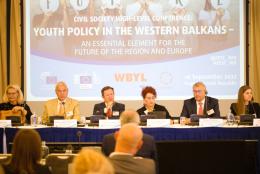
    V rámci konference občanské společnosti na vysoké úrovni na téma Politika v oblasti mládeže v zemích západního Balkánu, kterou uspořádal Evropský hospodářský a sociální výbor (EHSV), byl zdůrazněn klíčový význam mladých lidí pro budoucnost tohoto regionu a byla vyslovena výzva k aktivnímu zapojení mládeže do tvorby politik.

  • Cohesion policy is key to overcoming the COVID-19 crisis, to achieving climate neutrality by 2050 and to reducing disparities in Europe. Its most serious challenge for the foreseeable future, however, is the war in Ukraine, the EESC cautions in a recent opinion. Rapid action is needed to help refugees and ensure the country's European integration.

  • Reference number
    26/2022

    On 24 May in Sarajevo, the EESC's Western Balkans Follow-up Committee held its yearly external meeting - for the first time since the COVID-19 pandemic - to meet with civil society organisations (CSOs) in Bosnia and Herzegovina and discuss their role and concerns regarding the current situation. The conclusions will be conveyed to the country's political authorities and to the EU institutions.


  • Reference number
    22/2022

    The May plenary session of the European Economic and Social Committee (EESC) hosted a debate led by its President Christa Schweng and the President of the European Council Charles Michel on Europe's response to this turning point in history.