European Economic
and Social Committee
European Economic
and Social Committee
The European Economic and Social Committee (EESC) is the voice of organised civil society in Europe.
Find out more about its role and structure at http://www.eesc.europa.eu/en/about
The EESC issues between 160 and 190 opinions, evaluation and information reports a year.
It also organises several annual initiatives and events with a focus on civil society and citizens’ participation such as the Civil Society Prize, the Civil Society Days, the Your Europe, Your Say youth plenary and the ECI Day.
Find the latest EESC opinions and publications at http://www.eesc.europa.eu/en/our-work/opinions-information-reports/opinions and http://www.eesc.europa.eu/en/our-work/publications-other-work/publications respectively.
The EESC is active in a wide range of areas, from social affairs to economy, energy and sustainability.
Learn more about our policy areas and policy highlights at http://www.eesc.europa.eu/en/policies
The EESC holds nine plenary sessions per year. It also organises many conferences, public hearings and high-level debates related to its work.
Find out more about our upcoming events at http://www.eesc.europa.eu/en/agenda/our-events/upcoming-events
Here you can find news and information about the EESC'swork, including its social media accounts, the EESC Info newsletter, photo galleries and videos.
Read the latest EESC news http://www.eesc.europa.eu/en/news-media/news and press releases http://www.eesc.europa.eu/en/news-media/press-releases
The EESC brings together representatives from all areas of organised civil society, who give their independent advice on EU policies and legislation. The EESC's326 Members are organised into three groups: Employers, Workers and Various Interests.
Find out more about our Members and groups at http://www.eesc.europa.eu/en/members-groups
The EESC has six sections, specialising in concrete topics of relevance to the citizens of the European Union, ranging from social to economic affairs, energy, environment, external relations or the internal market.
Find out more at http://www.eesc.europa.eu/en/sections-other-bodies
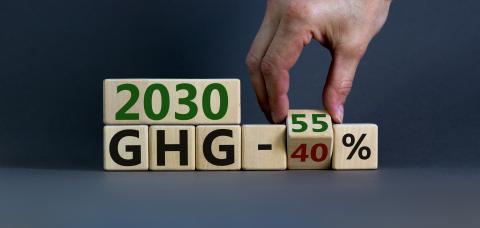
EESK bekräftar att en minskning av växthusgasutsläppen med minst 55 % fram till 2030 är rätt val. I sitt yttrande Höjning av Europas klimatambition understryker kommittén dock att det behövs förstärkta insatser inom delmålen för att påskynda processen, annars finns det risk för att inte uppnå målet för klimatneutralitet senast 2050.
Det är ett faktum att covid-19 har inneburit enorma ekonomiska problem. Omdirigeringen av investeringar mot återhämtningsplanen har dock öppnat dörren för en ny strategi, nämligen ”återhämtningsutgifter kombinerade med ambitiösa klimatåtgärder”, för att citera EESK:s medföredragande Jan Dirx.
”Yttrandet lyfter fram behovet av att förstärka bioekonomin och ersätta fossila bränslen, och därför är det avgörande att prioritera uppdateringen av EU-lagstiftningen om omställningen till förnybara källor”, underströk EESK:s föredragande Arnold Puech d'Alissac.
Det är viktigare än någonsin att använda varje tillgängligt verktyg för att utvidga klimatambitionen (den gröna given, klimatlagen, den fleråriga budgetramen, återhämtningsfonden Next Generation EU, den gemensamma jordbrukspolitiken, strategin Från jord till bord, strategin för biologisk mångfald, handelspolitiken och handelsavtalen osv.). Verktygen bör sammankopplas på ett enhetligt sätt och säkerställa att omställningen inte lämnar någon utanför.
Medborgarna är viktiga partner i kampen mot klimatförändringarna och är en förutsättning för att klimatpolitiken ska lyckas inom EU.
Därför upprepar EESK sitt förslag om att bilda en europeisk plattform för berörda parter inom ramen för klimatpakten som ska bygga på principerna om delaktighet och insyn samt verkligt deltagande och inflytande för klimataktörer på alla nivåer. (mr)