European Economic
and Social Committee
European Economic
and Social Committee
The European Economic and Social Committee (EESC) is the voice of organised civil society in Europe.
Find out more about its role and structure at http://www.eesc.europa.eu/en/about
The EESC issues between 160 and 190 opinions, evaluation and information reports a year.
It also organises several annual initiatives and events with a focus on civil society and citizens’ participation such as the Civil Society Prize, the Civil Society Days, the Your Europe, Your Say youth plenary and the ECI Day.
Find the latest EESC opinions and publications at http://www.eesc.europa.eu/en/our-work/opinions-information-reports/opinions and http://www.eesc.europa.eu/en/our-work/publications-other-work/publications respectively.
The EESC is active in a wide range of areas, from social affairs to economy, energy and sustainability.
Learn more about our policy areas and policy highlights at http://www.eesc.europa.eu/en/policies
The EESC holds nine plenary sessions per year. It also organises many conferences, public hearings and high-level debates related to its work.
Find out more about our upcoming events at http://www.eesc.europa.eu/en/agenda/our-events/upcoming-events
Here you can find news and information about the EESC'swork, including its social media accounts, the EESC Info newsletter, photo galleries and videos.
Read the latest EESC news http://www.eesc.europa.eu/en/news-media/news and press releases http://www.eesc.europa.eu/en/news-media/press-releases
The EESC brings together representatives from all areas of organised civil society, who give their independent advice on EU policies and legislation. The EESC's326 Members are organised into three groups: Employers, Workers and Various Interests.
Find out more about our Members and groups at http://www.eesc.europa.eu/en/members-groups
The EESC has six sections, specialising in concrete topics of relevance to the citizens of the European Union, ranging from social to economic affairs, energy, environment, external relations or the internal market.
Find out more at http://www.eesc.europa.eu/en/sections-other-bodies
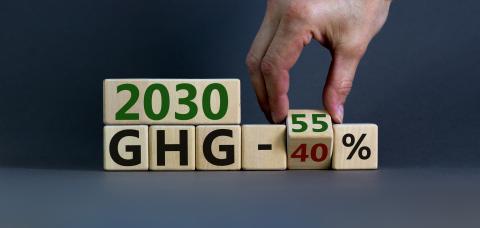
Der EWSA bekräftigt, dass die Senkung der Treibhausgasemissionen um mindestens 55 % bis 2030 der richtige Weg ist. In seiner Stellungnahme Mehr Ehrgeiz für das Klimaziel Europas fordert er indes verstärkte Anstrengungen bei den Meilensteinen, um durch raschere Fortschritte zu verhindern, dass womöglich das Ziel der Klimaneutralität bis 2050 verfehlt wird.
„Zwar hat die COVID-19-Pandemie zu enormen wirtschaftlichen Problemen geführt, doch hat die Ausrichtung der Investitionen auf den Aufbauplan den Weg für eine neue Strategie geebnet: die Kombination der Ausgaben für den Aufbau mit ehrgeizigen Klimaschutzmaßnahmen“, unterstrich der EWSA-Berichterstatter Jan Dirx.
„In der Stellungnahme wird die Notwendigkeit hervorgehoben, die Bioökonomie zu fördern und fossile Brennstoffe zu ersetzen. Daher ist unbedingt der Aktualisierung von EU-Rechtsvorschriften zur Umstellung auf erneuerbare Kraftstoffe Vorrang einzuräumen“, so EWSA-Mitberichterstatter Arnold Puech d'Alissac.
Es ist wichtiger denn je, alle erdenklichen Instrumente für ein ehrgeizigeres Klimaziel zu nutzen, wie u. a. den Grünen Deal, das Klimagesetz, den MFR, das Aufbauinstrument NextGenerationEU, die GAP, die Strategie „Vom Hof auf den Tisch“ und die Biodiversitätsstrategie, die Handelspolitik und Handelsabkommen. Sie alle sollten auf kohärente Weise miteinander verknüpft werden, um niemanden zurückzulassen.
Die Bürgerinnen und Bürger sind „wichtige Partner bei der Bekämpfung des Klimawandels“ und eine Voraussetzung für den Erfolg der Klimapolitik in der EU.
Der EWSA hat deshalb seinen Vorschlag bekräftigt, eine Plattform der Interessenträger für den europäischen Klimapakt zu errichten, die auf Inklusion, Transparenz und einer echten Teilhabe und Eigenverantwortung der Klimaschutzakteure auf allen Ebenen gründet. (mr)