European Economic
and Social Committee
European Economic
and Social Committee
The European Economic and Social Committee (EESC) is the voice of organised civil society in Europe.
Find out more about its role and structure at http://www.eesc.europa.eu/en/about
The EESC issues between 160 and 190 opinions, evaluation and information reports a year.
It also organises several annual initiatives and events with a focus on civil society and citizens’ participation such as the Civil Society Prize, the Civil Society Days, the Your Europe, Your Say youth plenary and the ECI Day.
Find the latest EESC opinions and publications at http://www.eesc.europa.eu/en/our-work/opinions-information-reports/opinions and http://www.eesc.europa.eu/en/our-work/publications-other-work/publications respectively.
The EESC is active in a wide range of areas, from social affairs to economy, energy and sustainability.
Learn more about our policy areas and policy highlights at http://www.eesc.europa.eu/en/policies
The EESC holds nine plenary sessions per year. It also organises many conferences, public hearings and high-level debates related to its work.
Find out more about our upcoming events at http://www.eesc.europa.eu/en/agenda/our-events/upcoming-events
Here you can find news and information about the EESC'swork, including its social media accounts, the EESC Info newsletter, photo galleries and videos.
Read the latest EESC news http://www.eesc.europa.eu/en/news-media/news and press releases http://www.eesc.europa.eu/en/news-media/press-releases
The EESC brings together representatives from all areas of organised civil society, who give their independent advice on EU policies and legislation. The EESC's326 Members are organised into three groups: Employers, Workers and Various Interests.
Find out more about our Members and groups at http://www.eesc.europa.eu/en/members-groups
The EESC has six sections, specialising in concrete topics of relevance to the citizens of the European Union, ranging from social to economic affairs, energy, environment, external relations or the internal market.
Find out more at http://www.eesc.europa.eu/en/sections-other-bodies
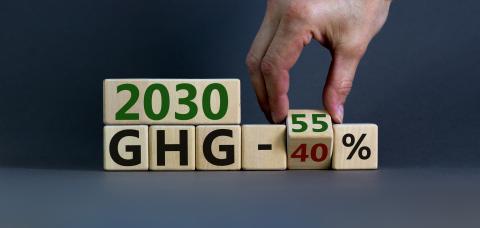
EESO je prepričan, da je zmanjšanje emisij toplogrednih plinov za najmanj 55 % do leta 2030 pravilna odločitev. V svojem mnenju Krepitev evropskih podnebnih ambicij pa je poudaril, da je treba prizadevanja za doseganje vmesnih ciljev povečati in proces pospešiti, drugače morda ne bomo dosegli cilja podnebne nevtralnosti do leta 2050.
Res je, da je COVID-19 povzročil izjemne gospodarske težave. Preusmeritev naložb v načrt za okrevanje pa je odprla vrata novi strategiji – „poraba za okrevanje se poveže z ambicioznimi podnebnimi ukrepi“, je opozoril soporočevalec EESO Jan Dirx.
„V mnenju smo poudarili tudi potrebo po okrepitvi biogospodarstva in zamenjavi fosilnih goriv, zato je ključno prednostno posodobiti evropsko zakonodajo o prehodu na goriva iz obnovljivih virov,“ je prepričan poročevalec EESO Arnold Puech d'Alissac.
Zdaj je bolj kot kdaj prej bistveno izkoristiti vsa možna orodja za povečanje ambicij glede podnebja: evropski zeleni dogovor, podnebna pravila, večletni finančni okvir, instrument za okrevanje „Next Generation EU“, SKP, strategijo „od vil do vilic“ in strategijo za biotsko raznovrstnost, trgovinske politike in sporazume ipd. Vse te bi bilo treba skladno povezati, pri tem pa zagotoviti, da pri prehodu nihče ne bo zapostavljen.
Državljani so „ključni partnerji v boju proti podnebnim spremembam“ in predpogoj za uspeh podnebne politike v EU.
Zato EESO ponavlja svoj predlog za ustanovitev platforme deležnikov za evropski podnebni pakt, ki bi temeljila na načelih vključevanja, preglednosti, dejanske udeležbe in odgovornosti podnebnih deležnikov na vseh ravneh. (mr)