European Economic
and Social Committee
European Economic
and Social Committee
The European Economic and Social Committee (EESC) is the voice of organised civil society in Europe.
Find out more about its role and structure at http://www.eesc.europa.eu/en/about
The EESC issues between 160 and 190 opinions, evaluation and information reports a year.
It also organises several annual initiatives and events with a focus on civil society and citizens’ participation such as the Civil Society Prize, the Civil Society Days, the Your Europe, Your Say youth plenary and the ECI Day.
Find the latest EESC opinions and publications at http://www.eesc.europa.eu/en/our-work/opinions-information-reports/opinions and http://www.eesc.europa.eu/en/our-work/publications-other-work/publications respectively.
The EESC is active in a wide range of areas, from social affairs to economy, energy and sustainability.
Learn more about our policy areas and policy highlights at http://www.eesc.europa.eu/en/policies
The EESC holds nine plenary sessions per year. It also organises many conferences, public hearings and high-level debates related to its work.
Find out more about our upcoming events at http://www.eesc.europa.eu/en/agenda/our-events/upcoming-events
Here you can find news and information about the EESC'swork, including its social media accounts, the EESC Info newsletter, photo galleries and videos.
Read the latest EESC news http://www.eesc.europa.eu/en/news-media/news and press releases http://www.eesc.europa.eu/en/news-media/press-releases
The EESC brings together representatives from all areas of organised civil society, who give their independent advice on EU policies and legislation. The EESC's326 Members are organised into three groups: Employers, Workers and Various Interests.
Find out more about our Members and groups at http://www.eesc.europa.eu/en/members-groups
The EESC has six sections, specialising in concrete topics of relevance to the citizens of the European Union, ranging from social to economic affairs, energy, environment, external relations or the internal market.
Find out more at http://www.eesc.europa.eu/en/sections-other-bodies
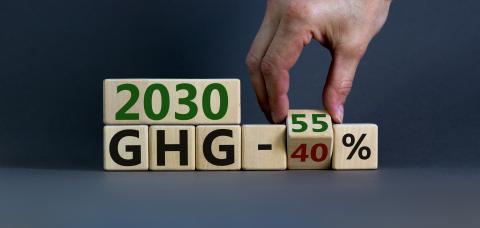
Het EESC herhaalt dat een vermindering van de uitstoot van broeikasgassen met ten minste 55 % tegen 2030 de juiste keuze is. Wel beklemtoont het in zijn advies Een ambitieuzere klimaatdoelstelling voor Europa dat meer werk moet worden gemaakt van de tussentijdse doelen willen we de doelstelling van klimaatneutraliteit tegen 2050 halen.
Het is een feit dat COVID-19 een zware wissel op de economie heeft getrokken, maar dankzij de extra investeringen in het kader van het herstelplan kon wel de weg worden vrijgemaakt voor een nieuwe strategie waarbij “de uitgaven voor herstel hand in hand gaan met ambitieuze klimaatmaatregelen”, zo benadrukte EESC-corapporteur Jan Dirx.
“Voorts wordt er in het advies op gehamerd dat de bio-economie moet worden versterkt en fossiele brandstoffen moeten worden vervangen. Een actualisering van de Europese wetgeving inzake de transitie naar hernieuwbare brandstoffen mag dan ook niet langer worden uitgesteld”, aldus rapporteur Arnold Puech d'Alissac.
Het is de hoogste tijd om de klimaatactie op te voeren en daarbij alle mogelijke instrumenten in te zetten: de Green Deal, de klimaatwet, het MFK, het Europees herstelfonds Next Generation EU, het GLB, de “van boer tot bord”- en de biodiversiteitsstrategie, het handelsbeleid en handelsovereenkomsten, enz. Daarbij moet er steeds oog zijn voor de onderlinge samenhang tussen de verschillende instrumenten, zodat bij de transitie niemand buiten de boot valt.
Burgers zijn “cruciale partners in de strijd tegen klimaatverandering”; zonder burgerparticipatie is het klimaatbeleid van de EU dan ook tot mislukken gedoemd.
Vandaar dat het EESC nog maar eens een lans breekt voor een Europees stakeholdersplatform voor het klimaatpact, gestoeld op de beginselen van inclusiviteit, transparantie, echte participatie en eigen verantwoordelijkheid van klimaatstakeholders op alle niveaus. (mr)