European Economic
and Social Committee
European Economic
and Social Committee
The European Economic and Social Committee (EESC) is the voice of organised civil society in Europe.
Find out more about its role and structure at http://www.eesc.europa.eu/en/about
The EESC issues between 160 and 190 opinions, evaluation and information reports a year.
It also organises several annual initiatives and events with a focus on civil society and citizens’ participation such as the Civil Society Prize, the Civil Society Days, the Your Europe, Your Say youth plenary and the ECI Day.
Find the latest EESC opinions and publications at http://www.eesc.europa.eu/en/our-work/opinions-information-reports/opinions and http://www.eesc.europa.eu/en/our-work/publications-other-work/publications respectively.
The EESC is active in a wide range of areas, from social affairs to economy, energy and sustainability.
Learn more about our policy areas and policy highlights at http://www.eesc.europa.eu/en/policies
The EESC holds nine plenary sessions per year. It also organises many conferences, public hearings and high-level debates related to its work.
Find out more about our upcoming events at http://www.eesc.europa.eu/en/agenda/our-events/upcoming-events
Here you can find news and information about the EESC'swork, including its social media accounts, the EESC Info newsletter, photo galleries and videos.
Read the latest EESC news http://www.eesc.europa.eu/en/news-media/news and press releases http://www.eesc.europa.eu/en/news-media/press-releases
The EESC brings together representatives from all areas of organised civil society, who give their independent advice on EU policies and legislation. The EESC's326 Members are organised into three groups: Employers, Workers and Various Interests.
Find out more about our Members and groups at http://www.eesc.europa.eu/en/members-groups
The EESC has six sections, specialising in concrete topics of relevance to the citizens of the European Union, ranging from social to economic affairs, energy, environment, external relations or the internal market.
Find out more at http://www.eesc.europa.eu/en/sections-other-bodies
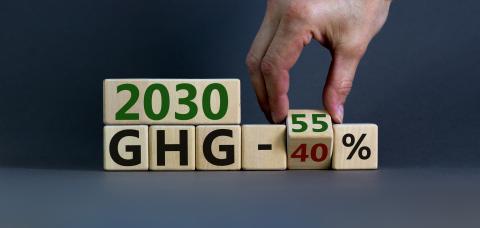
EØSU bekræfter, at en reduktion af drivhusgasemissionerne med mindst 55 % inden 2030 er den rigtige vej. Udvalget påpeger dog i sin udtalelse om Styrkelse af Europas klimaambitioner, at det er nødvendigt at intensivere indsatsen for at nå de mellemliggende mål om at fremskynde processen for ikke at risikere at forpasse målet om klimaneutralitet inden 2050.
Det er sandt, at covid-19 har medført enorme økonomiske problemer. Omdirigeringen af investeringer til genopretningsplanen har imidlertid banet vejen for en ny strategi, der går ud på at "kombinere udgifter til genopretningen med en ambitiøs klimaindsats", sagde EØSU's medordfører, Jan Dirx.
"I udtalelsen fremhæves ligeledes behovet for at styrke bioøkonomien og erstatte fossile brændstoffer, og det er således altafgørende at prioritere ajourføringen af EU-lovgivningen vedrørende omstillingen til vedvarende brændstoffer", sagde EØSU's ordfører, Arnold Puech d'Alissac.
Det er derfor vigtigere end nogensinde før at udnytte alle forhåndenværende midler til at opjustere klimaambitionerne: den grønne pagt, klimaloven, den flerårige finansielle ramme, genopretningsfonden Next Generation EU, "fra jord til bord"-strategien og biodiversitetsstrategien, handelspolitikker og -aftaler osv. De bør alle kobles sammen på en konsekvent måde, hvorved det sikres, at ingen lades i stikken.
Borgerne er "vigtige partnere i kampen mod klimaændringer" og en nødvendig forudsætning for, at klimapolitikken kan blive en succes i EU.
Netop derfor foreslår EØSU på ny at oprette en interessentplatform for den europæiske klimapagt baseret på principperne om inklusion, gennemsigtighed og reel deltagelse og ejerskab mellem klimainteressenter på alle niveauer. (mr)