European Economic
and Social Committee
European Economic
and Social Committee
The European Economic and Social Committee (EESC) is the voice of organised civil society in Europe.
Find out more about its role and structure at http://www.eesc.europa.eu/en/about
The EESC issues between 160 and 190 opinions, evaluation and information reports a year.
It also organises several annual initiatives and events with a focus on civil society and citizens’ participation such as the Civil Society Prize, the Civil Society Days, the Your Europe, Your Say youth plenary and the ECI Day.
Find the latest EESC opinions and publications at http://www.eesc.europa.eu/en/our-work/opinions-information-reports/opinions and http://www.eesc.europa.eu/en/our-work/publications-other-work/publications respectively.
The EESC is active in a wide range of areas, from social affairs to economy, energy and sustainability.
Learn more about our policy areas and policy highlights at http://www.eesc.europa.eu/en/policies
The EESC holds nine plenary sessions per year. It also organises many conferences, public hearings and high-level debates related to its work.
Find out more about our upcoming events at http://www.eesc.europa.eu/en/agenda/our-events/upcoming-events
Here you can find news and information about the EESC'swork, including its social media accounts, the EESC Info newsletter, photo galleries and videos.
Read the latest EESC news http://www.eesc.europa.eu/en/news-media/news and press releases http://www.eesc.europa.eu/en/news-media/press-releases
The EESC brings together representatives from all areas of organised civil society, who give their independent advice on EU policies and legislation. The EESC's326 Members are organised into three groups: Employers, Workers and Various Interests.
Find out more about our Members and groups at http://www.eesc.europa.eu/en/members-groups
The EESC has six sections, specialising in concrete topics of relevance to the citizens of the European Union, ranging from social to economic affairs, energy, environment, external relations or the internal market.
Find out more at http://www.eesc.europa.eu/en/sections-other-bodies
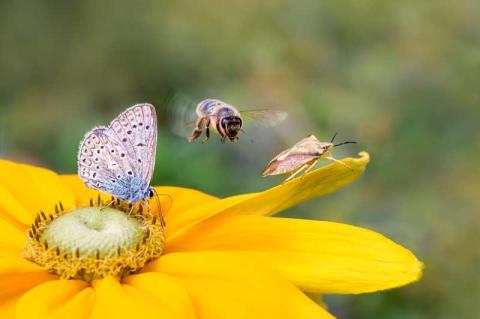
Od roku 1992 sa EÚ snaží vykonávať stratégie v oblasti biodiverzity bez významných výsledkov. Je to spôsobené hlavne nedostatočnou implementáciou právneho rámca členskými štátmi a nedostatočným financovaním potrebných opatrení.
EHSV víta, že Komisia sa opäť začala angažovať a snaží sa pripraviť Stratégiu v oblasti biodiverzity s cieľmi, ktoré sa majú dosiahnuť v roku 2030. Táto stratégia je súčasťou úsilia o naplnenie Európskej zelenej dohody.
Podľa spravodajcu Antonella Pezziniho a pomocného spravodajcu Lutza Ribbeho je cestou, ktorou treba ísť, aby sa európska biodiverzita stala stredobodom obnovy po pandémii COVID-19 v prospech ľudí, klímy a planéty a do nášho života prinavrátila prírodu.
EÚ musí osvetovými a komunikačnými kampaňami podstatne zvýšiť úsilie o ochranu našich zostávajúcich prírodných zdrojov. Okrem toho EHSV považuje za potrebné zväčšiť rozlohu chránených území, najmä tých prísne chránených, aby sa obnovili biotopy a zastavil úbytok druhov.
Navyše zdôrazňuje, že ochrana biodiverzity nesmie pre poľnohospodárov a vlastníkov lesov predstavovať záťaž z hospodárskeho hľadiska. Poskytovanie tohto „verejného statku a verejných hodnôt“ sa pre poľnohospodárov musí skôr stať zaujímavou príjmovou príležitosťou.
V príprave na nasledujúce zasadnutie signatárov Dohovoru o biologickej diverzite v Číne v roku 2021 sa na zachovanie celosvetovej biologickej rozmanitosti musí urobiť oveľa viac. Nastal čas, aby Európa prevzala svoju vedúcu úlohu a presvedčila ostatné strany, že má zmysel vykonávať prijaté stratégie. (mr)