European Economic
and Social Committee
European Economic
and Social Committee
The European Economic and Social Committee (EESC) is the voice of organised civil society in Europe.
Find out more about its role and structure at http://www.eesc.europa.eu/en/about
The EESC issues between 160 and 190 opinions, evaluation and information reports a year.
It also organises several annual initiatives and events with a focus on civil society and citizens’ participation such as the Civil Society Prize, the Civil Society Days, the Your Europe, Your Say youth plenary and the ECI Day.
Find the latest EESC opinions and publications at http://www.eesc.europa.eu/en/our-work/opinions-information-reports/opinions and http://www.eesc.europa.eu/en/our-work/publications-other-work/publications respectively.
The EESC is active in a wide range of areas, from social affairs to economy, energy and sustainability.
Learn more about our policy areas and policy highlights at http://www.eesc.europa.eu/en/policies
The EESC holds nine plenary sessions per year. It also organises many conferences, public hearings and high-level debates related to its work.
Find out more about our upcoming events at http://www.eesc.europa.eu/en/agenda/our-events/upcoming-events
Here you can find news and information about the EESC'swork, including its social media accounts, the EESC Info newsletter, photo galleries and videos.
Read the latest EESC news http://www.eesc.europa.eu/en/news-media/news and press releases http://www.eesc.europa.eu/en/news-media/press-releases
The EESC brings together representatives from all areas of organised civil society, who give their independent advice on EU policies and legislation. The EESC's326 Members are organised into three groups: Employers, Workers and Various Interests.
Find out more about our Members and groups at http://www.eesc.europa.eu/en/members-groups
The EESC has six sections, specialising in concrete topics of relevance to the citizens of the European Union, ranging from social to economic affairs, energy, environment, external relations or the internal market.
Find out more at http://www.eesc.europa.eu/en/sections-other-bodies
È dal 1992 che l'Unione europea cerca di mettere in campo una strategia sulla biodiversità senza però ottenere grandi risultati, principalmente a causa di un'attuazione inadeguata del quadro giuridico negli Stati membri e delle scarse risorse finanziarie dedicate alle misure necessarie.
Il CESE accoglie favorevolmente il rinnovato impegno e i nuovi sforzi della Commissione per l'elaborazione di una strategia sulla biodiversità che fissi gli obiettivi da raggiungere entro il 2030, come uno dei percorsi verso la realizzazione del Green Deal europeo.
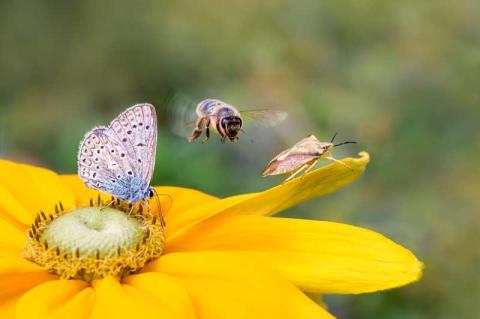
Secondo il relatore Antonello Pezzini e il correlatore Lutz Ribbe, questa strategia è la strada maestra da percorrere per mettere la biodiversità europea al centro della ripresa post Covid-19, a beneficio delle persone, del clima e del pianeta, riportando la natura nella nostra vita.
L'UE deve adoperarsi molto di più per proteggere le risorse naturali ancora esistenti attraverso campagne di sensibilizzazione e di comunicazione. Il CESE ritiene inoltre necessario estendere le superfici delle aree protette, soprattutto quelle rigorosamente protette, per il ripristino degli habitat e la lotta al declino delle specie.
Il CESE sottolinea che la protezione della biodiversità non può essere a carico degli agricoltori e dei proprietari di foreste dal punto di vista economico. La fornitura di questo "bene e valore pubblico" dovrebbe piuttosto diventare un'interessante opportunità di reddito per gli agricoltori stessi.
In vista della prossima Conferenza delle parti della Convenzione sulla diversità biologica, che si terrà in Cina nel 2021, occorre fare molto di più per proteggere la biodiversità a livello mondiale. È tempo che l'Europa assuma il suo ruolo di leader e convinca le altre parti che vale la pena seguire le strategie adottate. (mr)