European Economic
and Social Committee
European Economic
and Social Committee
The European Economic and Social Committee (EESC) is the voice of organised civil society in Europe.
Find out more about its role and structure at http://www.eesc.europa.eu/en/about
The EESC issues between 160 and 190 opinions, evaluation and information reports a year.
It also organises several annual initiatives and events with a focus on civil society and citizens’ participation such as the Civil Society Prize, the Civil Society Days, the Your Europe, Your Say youth plenary and the ECI Day.
Find the latest EESC opinions and publications at http://www.eesc.europa.eu/en/our-work/opinions-information-reports/opinions and http://www.eesc.europa.eu/en/our-work/publications-other-work/publications respectively.
The EESC is active in a wide range of areas, from social affairs to economy, energy and sustainability.
Learn more about our policy areas and policy highlights at http://www.eesc.europa.eu/en/policies
The EESC holds nine plenary sessions per year. It also organises many conferences, public hearings and high-level debates related to its work.
Find out more about our upcoming events at http://www.eesc.europa.eu/en/agenda/our-events/upcoming-events
Here you can find news and information about the EESC'swork, including its social media accounts, the EESC Info newsletter, photo galleries and videos.
Read the latest EESC news http://www.eesc.europa.eu/en/news-media/news and press releases http://www.eesc.europa.eu/en/news-media/press-releases
The EESC brings together representatives from all areas of organised civil society, who give their independent advice on EU policies and legislation. The EESC's326 Members are organised into three groups: Employers, Workers and Various Interests.
Find out more about our Members and groups at http://www.eesc.europa.eu/en/members-groups
The EESC has six sections, specialising in concrete topics of relevance to the citizens of the European Union, ranging from social to economic affairs, energy, environment, external relations or the internal market.
Find out more at http://www.eesc.europa.eu/en/sections-other-bodies
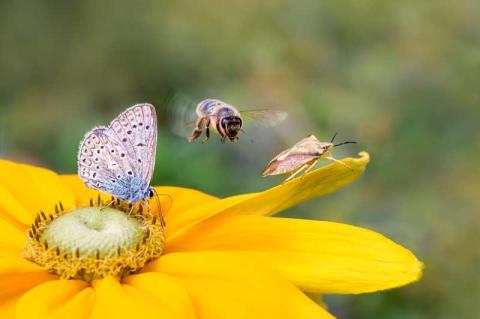
Sinds 1992 probeert de EU biodiversiteitsstrategieën uit te voeren, maar zonder significante resultaten. Dit is vooral te wijten aan gebrekkige tenuitvoerlegging van het regelgevingskader op nationaal niveau en ontoereikende financiering voor de noodzakelijke maatregelen.
Het EESC is ingenomen met de nieuwe verbintenis en inspanningen van de Europese Commissie voor de ontwikkeling van een biodiversiteitsstrategie, waarin streefcijfers voor 2030 worden bepaald, in het kader van de verwezenlijking van de Green Deal.
Volgens rapporteur Antonello Pezzini en corapporteur Lutz Ribbe is zo’n strategie de juiste weg om de Europese biodiversiteit centraal te stellen in een post-COVID-19-herstel dat ten goede komt aan de burgers, het klimaat en de planeet, zodat de natuur weer in ons leven wordt gebracht.
De EU moet haar inspanningen ter bescherming van onze resterende natuurlijke hulpbronnen significant opvoeren, via bewustwordings- en voorlichtingscampagnes. Het EESC acht het tevens noodzakelijk om de omvang van de beschermde gebieden uit te breiden, met name de strikt beschermde gebieden, habitats te herstellen en de verdwijning van soorten tegen te gaan.
Volgens het EESC kan niet van landbouwers en boseigenaren worden verwacht dat ze de kosten van de bescherming van de biodiversiteit dragen. Het beschikbaar stellen van deze en andere publieke “waarden en goederen” moet voor hen juist een aantrekkelijke kans vormen om inkomsten te genereren.
In de aanloop naar de volgende Conferentie van de partijen bij het Verdrag inzake biologische diversiteit in China in 2021 moet veel meer worden gedaan om de wereldwijde biodiversiteit te beschermen. Europa moet nu zijn voortrekkersrol waarmaken en de andere partijen ervan overtuigen dat de goedgekeurde strategieën navolging verdienen. (mr)