European Economic
and Social Committee
European Economic
and Social Committee
The European Economic and Social Committee (EESC) is the voice of organised civil society in Europe.
Find out more about its role and structure at http://www.eesc.europa.eu/en/about
The EESC issues between 160 and 190 opinions, evaluation and information reports a year.
It also organises several annual initiatives and events with a focus on civil society and citizens’ participation such as the Civil Society Prize, the Civil Society Days, the Your Europe, Your Say youth plenary and the ECI Day.
Find the latest EESC opinions and publications at http://www.eesc.europa.eu/en/our-work/opinions-information-reports/opinions and http://www.eesc.europa.eu/en/our-work/publications-other-work/publications respectively.
The EESC is active in a wide range of areas, from social affairs to economy, energy and sustainability.
Learn more about our policy areas and policy highlights at http://www.eesc.europa.eu/en/policies
The EESC holds nine plenary sessions per year. It also organises many conferences, public hearings and high-level debates related to its work.
Find out more about our upcoming events at http://www.eesc.europa.eu/en/agenda/our-events/upcoming-events
Here you can find news and information about the EESC'swork, including its social media accounts, the EESC Info newsletter, photo galleries and videos.
Read the latest EESC news http://www.eesc.europa.eu/en/news-media/news and press releases http://www.eesc.europa.eu/en/news-media/press-releases
The EESC brings together representatives from all areas of organised civil society, who give their independent advice on EU policies and legislation. The EESC's326 Members are organised into three groups: Employers, Workers and Various Interests.
Find out more about our Members and groups at http://www.eesc.europa.eu/en/members-groups
The EESC has six sections, specialising in concrete topics of relevance to the citizens of the European Union, ranging from social to economic affairs, energy, environment, external relations or the internal market.
Find out more at http://www.eesc.europa.eu/en/sections-other-bodies
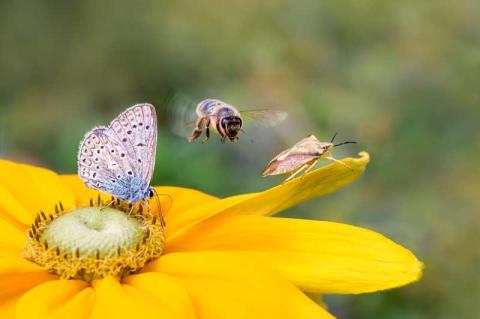
Desde 1992, la UE ha estado intentando ejecutar estrategias en materia de biodiversidad sin resultados significativos. Ello se debe principalmente a la aplicación incorrecta del marco jurídico y a la insuficiente financiación de las medidas necesarias.
El CESE acoge con satisfacción el compromiso renovado de la Comisión y el esfuerzo que realiza para elaborar una Estrategia sobre Biodiversidad para 2030 como uno de los itinerarios hacia el Pacto Verde Europeo.
Como señalan el ponente Antonello Pezzini y el coponente Lutz Ribbe, esta Estrategia es el camino que hay que recorrer para que la biodiversidad europea ocupe un lugar central en la recuperación tras la pandemia de COVID-19, en beneficio de las personas, el clima y el planeta, para reintegrar la naturaleza en nuestras vidas.
La UE tiene que incrementar de forma significativa los esfuerzos destinados a proteger los recursos naturales que todavía existen, mediante campañas de concienciación y comunicación. El CESE considera igualmente necesario ampliar el tamaño de los espacios protegidos y, en particular, los que son objeto de una protección estricta para recuperar los hábitats y combatir el declive de las especies.
El CESE insiste, además, en que la protección de la biodiversidad no puede, desde el punto de vista económico, recaer en los agricultores y los propietarios de bosques. El suministro de este «bien y valor público» debe convertirse más bien en una interesante oportunidad de ingresos para estos.
Con vistas a la próxima Conferencia de las Partes sobre Biodiversidad prevista en China en 2021, aún queda mucho por hacer para salvaguardar la biodiversidad del planeta. Ha llegado el momento de que Europa asuma su papel de liderazgo y convenza a las demás partes de que vale la pena seguir las estrategias adoptadas. (mr)