European Economic
and Social Committee
European Economic
and Social Committee
The European Economic and Social Committee (EESC) is the voice of organised civil society in Europe.
Find out more about its role and structure at http://www.eesc.europa.eu/en/about
The EESC issues between 160 and 190 opinions, evaluation and information reports a year.
It also organises several annual initiatives and events with a focus on civil society and citizens’ participation such as the Civil Society Prize, the Civil Society Days, the Your Europe, Your Say youth plenary and the ECI Day.
Find the latest EESC opinions and publications at http://www.eesc.europa.eu/en/our-work/opinions-information-reports/opinions and http://www.eesc.europa.eu/en/our-work/publications-other-work/publications respectively.
The EESC is active in a wide range of areas, from social affairs to economy, energy and sustainability.
Learn more about our policy areas and policy highlights at http://www.eesc.europa.eu/en/policies
The EESC holds nine plenary sessions per year. It also organises many conferences, public hearings and high-level debates related to its work.
Find out more about our upcoming events at http://www.eesc.europa.eu/en/agenda/our-events/upcoming-events
Here you can find news and information about the EESC'swork, including its social media accounts, the EESC Info newsletter, photo galleries and videos.
Read the latest EESC news http://www.eesc.europa.eu/en/news-media/news and press releases http://www.eesc.europa.eu/en/news-media/press-releases
The EESC brings together representatives from all areas of organised civil society, who give their independent advice on EU policies and legislation. The EESC's326 Members are organised into three groups: Employers, Workers and Various Interests.
Find out more about our Members and groups at http://www.eesc.europa.eu/en/members-groups
The EESC has six sections, specialising in concrete topics of relevance to the citizens of the European Union, ranging from social to economic affairs, energy, environment, external relations or the internal market.
Find out more at http://www.eesc.europa.eu/en/sections-other-bodies
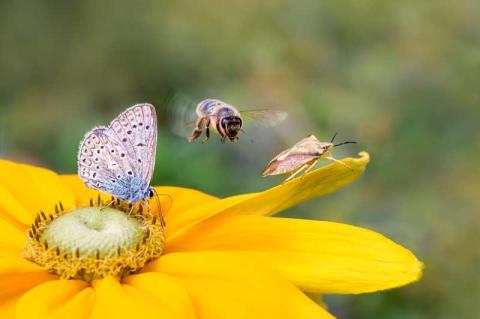
EU još od 1992. godine pokušava provesti strategije biološke raznolikosti, ali bez većih rezultata. Razlog je tome uglavnom slaba primjena pravnog okvira na nacionalnoj razini, kao i nedovoljna financijska sredstva za potrebne mjere.
EGSO pozdravlja novu predanost Komisije i napore koje ulaže u razvoj strategije za biološku raznolikost u kojoj se iznose ciljne vrijednosti koje je potrebno ostvariti do 2030., kao dio djelovanja za ostvarivanje zelenog plana EU-a.
Izvjestitelj Antonello Pezzini i suizvjestitelj Lutz Ribbe smatraju da je ova strategija pravi način za postavljanje biološke raznolikosti u Europi u središte oporavka nakon pandemije COVID-a 19 u korist ljudi, klime i planeta, čime bi se priroda vratila u naš život.
EU treba uložiti znatno veće napore u zaštitu naših preostalih prirodnih resursa uz pomoć kampanja za podizanje svijesti i komunikaciju. EGSO također smatra da je nužno povećati površinu zaštićenih područja, naročito područja koja su strogo zaštićena, kako bi se obnovila staništa i zaustavio gubitak vrsta.
EGSO nadalje ističe da se ne može očekivati da će troškove zaštite biološke raznolikosti snositi poljoprivrednici i vlasnici šuma. Baš naprotiv, osiguravanje tog „javnog dobra i vrijednosti“ za njih bi trebao biti koristan izvor prihoda.
U pripremi za idući sastanak Konvencije o biološkoj raznolikosti, koji će se održati u Kini 2021., mora se učiniti mnogo više za zaštitu globalne biološke raznolikosti. Vrijeme je da Europa preuzme vodeću ulogu i uvjeri ostale aktere da su usvojene strategije vrijedne provedbe. (mr)