Europa

This page is also available in:

În Europa, CESE menține relații cu partenerii sociali și cu organizațiile societății civile (OSC) din Balcanii de Vest, din vecinătatea estică, din statele SEE-AELS Islanda, Liechtenstein și Norvegia, precum și din Regatul Unit.

Comitetul de monitorizare „Balcanii de Vest” – un organ intern permanent al CESE – este principalul instrument de coordonare a activităților CESE în această regiune. Forumul societății civile din Balcanii de Vest, organizat o dată la doi ani, face parte din activitatea Comitetului de monitorizare.

De asemenea, CESE colaborează bilateral cu țările din Balcanii de Vest care au început negocierile de aderare și cu Turcia, prin intermediul organismelor specializate create pe baza acordurilor de asociere dintre aceste țări și UE: obiectivul acestor comitete consultative mixte este de a implica partenerii sociali și organizațiile societății civile în monitorizarea proceselor de preaderare și de reformă în vederea unei posibile aderări la UE. Fiecare organism este alcătuit dintr-un număr egal de membri din partea CESE și din partea țării partenere și se întrunește de obicei o dată sau de două ori pe an.

De asemenea, CESE a înființat un Comitet de monitorizare pentru vecinătatea estică, un organ intern responsabil cu consolidarea relațiilor cu societatea civilă din țările din regiune, și anume Armenia, Azerbaidjan, Belarus, Georgia, Moldova și Ucraina.

Principalele mecanisme de cooperare cu Armenia, Georgia, Moldova și Ucraina sunt platformele societății civile, care permit organizațiilor societății civile atât din UE, cât și din țara parteneră să monitorizeze punerea în aplicare a acordurilor UE cu aceste țări și să elaboreze recomandări adresate autorităților relevante. În plus, Ucraina și Moldova au devenit țări candidate în 2022.

În ceea ce privește Belarus și Rusia, se dezvoltă relații cu acele organizații ale societății civile care își desfășoară în continuare activitatea în mod liber, majoritatea având sediul pe teritoriul UE. CESE consideră că este important ca dialogul să fie menținut, în așteptarea unor condiții mai bune în viitor.

Spațiul Economic European (SEE) reunește statele membre ale UE și cele trei state SEE-AELS (Islanda, Liechtenstein și Norvegia) într-o piață internă în interiorul căreia bunurile, serviciile, capitalul și persoanele pot circula liber. CESE face parte din Comitetul consultativ al Spațiului Economic European, în cadrul căruia se discută chestiuni de interes comun cu reprezentanți ai partenerilor sociali din statele SEE-AELS.

Nu în ultimul rând, CESE are un Comitet de monitorizare UE-Regatul Unit responsabil cu monitorizarea relației dintre UE și Regatul Unit al Marii Britanii și Irlandei de Nord din perspectiva societății civile. Activitatea sa se axează în special pe punerea în aplicare a Acordului de retragere dintre UE și Regatul Unit și a Protocolului privind Irlanda și Irlanda de Nord, cu privire la care are o discuție în curs cu organizațiile societății civile din Regatul Unit, precum și pe punerea în aplicare a Acordului comercial și de cooperare UE-Regatul Unit, cu privire la care Comitetul de monitorizare UE-Regatul Unit cooperează cu Grupul consultativ intern al UE în temeiul Acordului comercial și de cooperare UE-Regatul Unit.
  • EU-Turkey JCC
    -

    The EU-Turkey Civil Society Joint Consultative Committee established in 1995 is composed of members from the EESC and members representing organised civil society in Turkey. Its objective is to contribute to the dialogue among civil society organisations in Turkey and the EU and to issue reports and recommendations to the Turkish authorities and the EU institutions. The JCC discusses a wide range of topics, including cooperation between Turkey and the EU in various areas such as migration, energy, small and medium-sized enterprises and vocational training. This meeting will focus on "Disaster management - How can Turkey and the EU work together?" and "The Green Economy" - as well as other topics such as the "modernisation of the EU-Turkey Customs Union".

  • The representatives of the two Domestic Advisory Groups (DAGs) from the EU and Ukraine held their fifth joint meeting via a videoconference on 22 October 2021. 

  • The 8th meeting of the EU-Moldova Civil Society Platform took place on 28 October 2021 in the format of a videoconference. During the meeting, a debate focused on assessing the state of play of the implementation of the EU-Moldova Association Agreement. The social dialogue and prospects for the future in Moldova were also discussed as well as the minimum wage mechanism. 

  • The 11th meeting of the EU Domestic Advisory Group under the EU-Ukraine DCFTA took place via a videoconference on 18 October 2021. 

  • The 10th meeting of the EU-Ukraine Civil Society Platform took place on 27 September 2021 remotely by videoconference. During the meeting, a debate was held to assess the state of play of the implementation of the EU-Ukraine Association Agreement with special focus on rural youth, and on digital and green skills. 

  • Event type
    Meeting

    The seventh meeting of the EU-Georgia Civil Society Platform (CSP) was convened on 30 June 2021 in Tbilisi and it was held via a videoconference.

  • The 7th meeting of the EU-Georgia Domestic Advisory Group took place on 21 May 2021 via a video conference. Please click on the programme tab to consult the topics on the agenda.

  • The 10th meeting of the EU Domestic Advisory Group under the EU-Ukraine DCFTA took place via a videoconference on 15 March 2021.

  • -

    The 7th meeting of the EU-Moldova Civil Society Platform took place on 30-31 March 2021 in the format of a videoconference. During the meeting, a debate focused on assessing the state of play of the implementation of the EU-Moldova Association Agreement. The impact of the COVID 19 pandemic on the socio-economic development of Moldova was also discussed as well as the aspect of digitalisation in health care in Moldova. 

  • Event type
    JCC Meeting

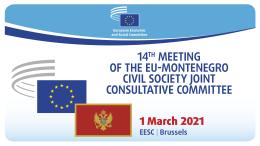
    For the 14th time, the European Economic and Social Committee (EESC) and Montenegro held the Civil Society Joint Consultative Committee (JCC). ge on the challenges ahead during the accession period.

    This 14th JCC tackled issues such as:

    • Current state of play in EU-Montenegro relations, including 2020 Montenegro Report and the response to the Covid-19 pandemics
    • Overview of the civil society situation in Montenegro

    A joint declaration was adopted at the meeting and distributed to all relevant EU institutions, as well as to the Montenegrin authorities.