European Economic
and Social Committee
European Economic
and Social Committee
The European Economic and Social Committee (EESC) is the voice of organised civil society in Europe.
Find out more about its role and structure at http://www.eesc.europa.eu/en/about
The EESC issues between 160 and 190 opinions, evaluation and information reports a year.
It also organises several annual initiatives and events with a focus on civil society and citizens’ participation such as the Civil Society Prize, the Civil Society Days, the Your Europe, Your Say youth plenary and the ECI Day.
Find the latest EESC opinions and publications at http://www.eesc.europa.eu/en/our-work/opinions-information-reports/opinions and http://www.eesc.europa.eu/en/our-work/publications-other-work/publications respectively.
The EESC is active in a wide range of areas, from social affairs to economy, energy and sustainability.
Learn more about our policy areas and policy highlights at http://www.eesc.europa.eu/en/policies
The EESC holds nine plenary sessions per year. It also organises many conferences, public hearings and high-level debates related to its work.
Find out more about our upcoming events at http://www.eesc.europa.eu/en/agenda/our-events/upcoming-events
Here you can find news and information about the EESC'swork, including its social media accounts, the EESC Info newsletter, photo galleries and videos.
Read the latest EESC news http://www.eesc.europa.eu/en/news-media/news and press releases http://www.eesc.europa.eu/en/news-media/press-releases
The EESC brings together representatives from all areas of organised civil society, who give their independent advice on EU policies and legislation. The EESC's326 Members are organised into three groups: Employers, Workers and Various Interests.
Find out more about our Members and groups at http://www.eesc.europa.eu/en/members-groups
The EESC has six sections, specialising in concrete topics of relevance to the citizens of the European Union, ranging from social to economic affairs, energy, environment, external relations or the internal market.
Find out more at http://www.eesc.europa.eu/en/sections-other-bodies
Η ΕΟΚΕ υπέβαλε σειρά σημαντικών συστάσεων ως απάντηση στην προταθείσα από την Επιτροπή δέσμη νομοθετικών μέτρων για τη μεταρρύθμιση του πλαισίου οικονομικής διακυβέρνησης της Ευρωπαϊκής Ένωσης. Καίτοι εκτιμά την πρόθεση απλούστευσης του πλαισίου, η ΕΟΚΕ τάσσεται υπέρ ουσιαστικών προσαρμογών της πρότασης. Οι συστάσεις αυτές διατυπώνονται σε μια κρίσιμη στιγμή, υπογραμμίζοντας την ανάγκη για μια ισορροπημένη, ευπροσάρμοστη και βιώσιμη προσέγγιση της οικονομικής διακυβέρνησης εντός της ΕΕ.
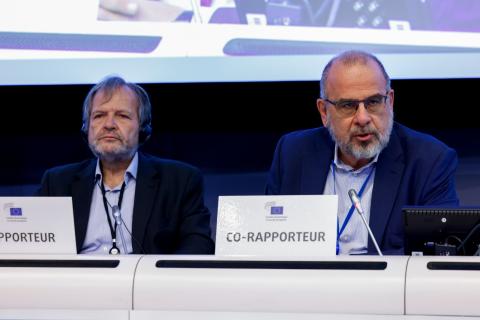
Εν μέσω προκλήσεων για την ΕΕ, όπως η πανδημία, η γεωπολιτική πολυπλοκότητα και οι κλιματικοί στόχοι, ο εισηγητής της ΕΟΚΕ Javier Doz Orrit τάσσεται υπέρ πιο ευέλικτων δημοσιονομικών και διαρθρωτικών σχεδίων με τη συμμετοχή των εθνικών δημοκρατικών θεσμών και της κοινωνίας των πολιτών, προτείνοντας μια μόνιμη δημοσιονομική ικανότητα για την ΕΕ και βαθύτερη οικονομική διακυβέρνηση. Καίτοι αξιολογεί θετικά ορισμένες πτυχές της δέσμης νομοθετικών μέτρων, η ΕΟΚΕ ζητεί ουσιαστικές προσαρμογές.
Ο συνεισηγητής Luca Jahier ζητεί την επίσπευση των διαπραγματεύσεων για ένα ισορροπημένο και εφαρμόσιμο οικονομικό πλαίσιο. Μεταξύ των βασικών προτάσεων περιλαμβάνονται η αντικατάσταση των άκαμπτων κανόνων μείωσης του ελλείμματος με μια πιο εξατομικευμένη προσέγγιση, η επανεξέταση των αυτόματων κυρώσεων και η δυνατότητα που παρέχεται στις εθνικές κυβερνήσεις να έχουν λόγο επί των δημοσιονομικών σχεδίων. Η ΕΟΚΕ προτείνει επίσης να αντιμετωπίζονται διαφορετικά οι πράσινες επενδύσεις και οι επενδύσεις στον τομέα της άμυνας, να διευρυνθεί ο ορισμός των δημόσιων επενδύσεων και να θεσμοθετηθεί δημοσιονομική ικανότητα της ΕΕ έως το 2026. Η σημασία που υπέχει μια διακυβέρνηση χωρίς αποκλεισμούς και με τη συμμετοχή των κοινωνικών εταίρων, της κοινωνίας των πολιτών και των κοινοβουλίων τονίζεται καθ’ όλη τη διάρκεια της διαδικασίας.