European Economic
and Social Committee
European Economic
and Social Committee
The European Economic and Social Committee (EESC) is the voice of organised civil society in Europe.
Find out more about its role and structure at http://www.eesc.europa.eu/en/about
The EESC issues between 160 and 190 opinions, evaluation and information reports a year.
It also organises several annual initiatives and events with a focus on civil society and citizens’ participation such as the Civil Society Prize, the Civil Society Days, the Your Europe, Your Say youth plenary and the ECI Day.
Find the latest EESC opinions and publications at http://www.eesc.europa.eu/en/our-work/opinions-information-reports/opinions and http://www.eesc.europa.eu/en/our-work/publications-other-work/publications respectively.
The EESC is active in a wide range of areas, from social affairs to economy, energy and sustainability.
Learn more about our policy areas and policy highlights at http://www.eesc.europa.eu/en/policies
The EESC holds nine plenary sessions per year. It also organises many conferences, public hearings and high-level debates related to its work.
Find out more about our upcoming events at http://www.eesc.europa.eu/en/agenda/our-events/upcoming-events
Here you can find news and information about the EESC'swork, including its social media accounts, the EESC Info newsletter, photo galleries and videos.
Read the latest EESC news http://www.eesc.europa.eu/en/news-media/news and press releases http://www.eesc.europa.eu/en/news-media/press-releases
The EESC brings together representatives from all areas of organised civil society, who give their independent advice on EU policies and legislation. The EESC's326 Members are organised into three groups: Employers, Workers and Various Interests.
Find out more about our Members and groups at http://www.eesc.europa.eu/en/members-groups
The EESC has six sections, specialising in concrete topics of relevance to the citizens of the European Union, ranging from social to economic affairs, energy, environment, external relations or the internal market.
Find out more at http://www.eesc.europa.eu/en/sections-other-bodies
Από συζήτηση που πραγματοποιήθηκε στην ΕΟΚΕ στις 24 Ιανουαρίου προέκυψε ότι η ΕΕ δεν επιτυγχάνει τους στόχους του θεματολογίου του ΟΗΕ για το 2030. Ωστόσο, υπάρχει ελπίδα. Η ΕΕ έχει την ευκαιρία να αναλάβει ηγετικό ρόλο, μεταξύ άλλων μέσω χρηματοδοτικής στήριξης. Η ΕΟΚΕ επιτελεί σημαντικό ρόλο στην παρακολούθηση της προόδου.
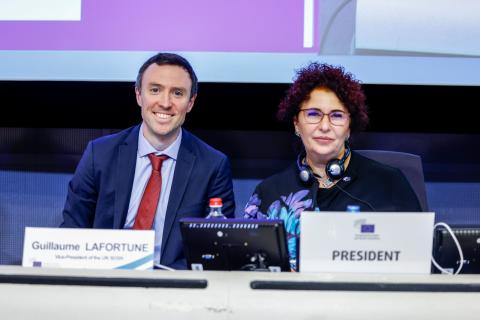
Στη σύνοδο ολομέλειας της ΕΟΚΕ φιλοξενήθηκε συζήτηση με τον Guillaume Lafortune, Αντιπρόεδρο του Δικτύου Λύσεων Βιώσιμης Ανάπτυξης του ΟΗΕ (UN SDSN), σχετικά με την υλοποίηση των Στόχων Βιώσιμης Ανάπτυξης (ΣΒΑ) του Οργανισμού Ηνωμένων Εθνών.
Ο κ. Lafortune παρουσίασε την έκθεση του 2022 για τη βιώσιμη ανάπτυξη στην Ευρώπη, η οποία συντάχθηκε με την υποστήριξη της ΕΟΚΕ. Σύμφωνα με τον κ. Lafortune, η ΕΕ δεν επιτυγχάνει τους στόχους. Εντωμεταξύ, η πρόοδος επιβραδύνεται σε ολόκληρο τον κόσμο, ενώ ιδίως οι αναπτυσσόμενες χώρες, οι οποίες αντιμετωπίζουν σοβαρές δυσκολίες χρηματοδότησης, υστερούν.
Η έκθεση συνιστά στην ΕΕ να υποστηρίξει, στο πλαίσιο του συστήματος του Οργανισμού Ηνωμένων Εθνών, ένα παγκόσμιο σχέδιο με μέλημα την αύξηση της διεθνούς χρηματοδότησης για τους ΣΒΑ. Η Πρόεδρος της ΕΟΚΕ Christa Schweng συμφώνησε με αυτήν την ιδέα τονίζοντας τη σημασία του ηγετικού ρόλου της ΕΕ στην επίτευξη παγκόσμιων μετασχηματισμών.
Η ΕΟΚΕ θα διαδραματίσει επίσης καίριο ρόλο στην πρώτη εθελοντική αξιολόγηση της Ευρωπαϊκής Επιτροπής τον Ιούλιο του 2023, συγκεντρώνοντας τις απόψεις των ενδιαφερόμενων μερών σχετικά με την πρόοδο ως προς την επίτευξη των ΣΒΑ. Η ΕΟΚΕ συνέστησε μια εγκάρσια προσέγγιση των στόχων, δεδομένου του αλληλένδετου χαρακτήρα των ΣΒΑ και των αντίστοιχων επιδιώξεών τους, και πρότεινε τη δημιουργία μιας νέας πλατφόρμας για την προώθηση της διαρθρωμένης συμμετοχής της κοινωνίας των πολιτών στην πολιτική που σχετίζεται με τους ΣΒΑ. (gb)