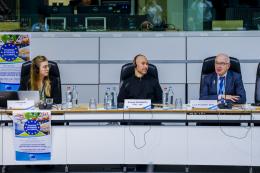
The EESC is the first EU body to offer concrete recommendations on using digital tools to improve law-making – an area still plagued by complexity and opacity. With 18 000 pages of binding legislation added each year and annual administrative costs reaching €150 billion, AI could be a gamechanger in making EU laws more accessible to Europeans.
In an opinion adopted on 23 February, the EESC commented on the Commission's Communication on the 2023 Annual Sustainable Growth Survey, which outlines the economic and employment policy priorities for the EU for the coming 12 to 18 months.
The European Economic and Social Committee held a plenary debate on the role of finance and public recovery policies in promoting gender equality and the economic empowerment of women in the EU. The discussion was linked to the adoption of two opinions: one on a gender-based approach to budgeting and investing and the other on how Member States can improve the way in which the direct and indirect measures proposed in their Recovery and Resilience Plans (RRPs) affect gender equality.
The EESC held a conference on the future of European strategic autonomy. The event was organised jointly by three Committee bodies; the Digital Transition and Single Market Observatory, the Labour Market Observatory and the Sustainable Development Observatory. Policy-makers, experts from organised civil society and academia, as well as youth representatives, gathered to discuss how to overcome current and future obstacles to a self-sufficient EU in times of great geopolitical tensions and multiple crises.
The EESC held a debate on gender-based investments in the Member States' national Recovery and Resilience Plans (RRPs). Following on from the European Gender Equality Week, the event gathered policy-makers, experts from organised civil society and academia to discuss, among other things, how EU countries can improve the impact of the measures proposed in their RRPs on gender equality during implementation and monitoring.
In two newly adopted opinions, the European Economic and Social Committee (EESC) gives updated views on the Commission's Annual Sustainable Growth Survey 2022, which outlines the upcoming economic and employment policy priorities for the EU, as well as on the Recommendations on euro area economic policy for 2022. The EESC calls for a balanced approach that does not jeopardise the EU's social and environmental goals.