European Economic
and Social Committee
European Economic
and Social Committee
The European Economic and Social Committee (EESC) is the voice of organised civil society in Europe.
Find out more about its role and structure at http://www.eesc.europa.eu/en/about
The EESC issues between 160 and 190 opinions, evaluation and information reports a year.
It also organises several annual initiatives and events with a focus on civil society and citizens’ participation such as the Civil Society Prize, the Civil Society Days, the Your Europe, Your Say youth plenary and the ECI Day.
Find the latest EESC opinions and publications at http://www.eesc.europa.eu/en/our-work/opinions-information-reports/opinions and http://www.eesc.europa.eu/en/our-work/publications-other-work/publications respectively.
The EESC is active in a wide range of areas, from social affairs to economy, energy and sustainability.
Learn more about our policy areas and policy highlights at http://www.eesc.europa.eu/en/policies
The EESC holds nine plenary sessions per year. It also organises many conferences, public hearings and high-level debates related to its work.
Find out more about our upcoming events at http://www.eesc.europa.eu/en/agenda/our-events/upcoming-events
Here you can find news and information about the EESC'swork, including its social media accounts, the EESC Info newsletter, photo galleries and videos.
Read the latest EESC news http://www.eesc.europa.eu/en/news-media/news and press releases http://www.eesc.europa.eu/en/news-media/press-releases
The EESC brings together representatives from all areas of organised civil society, who give their independent advice on EU policies and legislation. The EESC's326 Members are organised into three groups: Employers, Workers and Various Interests.
Find out more about our Members and groups at http://www.eesc.europa.eu/en/members-groups
The EESC has six sections, specialising in concrete topics of relevance to the citizens of the European Union, ranging from social to economic affairs, energy, environment, external relations or the internal market.
Find out more at http://www.eesc.europa.eu/en/sections-other-bodies
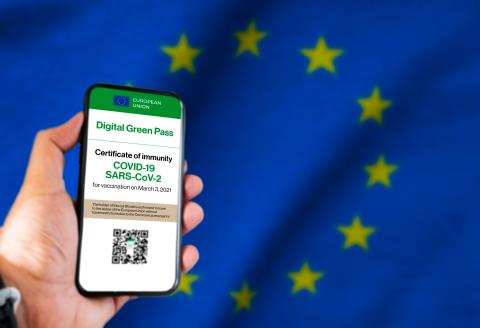
Již více než rok není možné uplatňovat jednu ze základních hodnot EU, kterou je volný pohyb osob. Certifikát EU COVID-19, který původně pod názvem „digitální zelený certifikát“ navrhla Evropská komise, však nyní otevírá cestu pro volný a bezpečný pohyb v Evropě. EHSV vítá zavedení tohoto certifikátu, který považuje za vynikající společný standard, jenž by měl minimalizovat obtíže spojené s cestováním a usnadnit pohyb cestujících, a to za předpokladu, že budou plně dodržována základní práva a požadavky na ochranu údajů.
Jak EHSV uvádí ve svém stanovisku, osvědčení sice lidem usnadní cestování, nicméně navrhované nařízení nezakládá povinnost ani právo na očkování. „Tento certifikát musí být transparentní a musí zaručit ochranu našeho soukromí,“ zdůraznil zpravodaj stanoviska George Vernicos.
Sociální a etické aspekty, které je nutno vzít v potaz
Certifikát bude sloužit nejen k doložení toho, zda byla daná osoba naočkována, ale bude obsahovat také výsledky nedávno provedených PCR testů a informace o uzdravení z infekce SARS-CoV-2.
Orgány jednotlivých států musí zajistit, aby byl proveden urychleně, bezplatně a bez jakékoli diskriminace. Dále EHSV zdůrazňuje, že certifikát nesmí vést k diskriminaci na pracovišti ani otevřít prostor pro mzdový dumping tím, že pracovní místa budou obsazována očkovanými pracovníky ze třetích zemí.
Zvláštní pozornost je zapotřebí věnovat ochraně údajů, a proto je nezbytné, aby měly členské státy zavedeny interoperabilní systémy se stejně přísnými předpisy v oblasti ochrany údajů. (at)