European Economic
and Social Committee
European Economic
and Social Committee
The European Economic and Social Committee (EESC) is the voice of organised civil society in Europe.
Find out more about its role and structure at http://www.eesc.europa.eu/en/about
The EESC issues between 160 and 190 opinions, evaluation and information reports a year.
It also organises several annual initiatives and events with a focus on civil society and citizens’ participation such as the Civil Society Prize, the Civil Society Days, the Your Europe, Your Say youth plenary and the ECI Day.
Find the latest EESC opinions and publications at http://www.eesc.europa.eu/en/our-work/opinions-information-reports/opinions and http://www.eesc.europa.eu/en/our-work/publications-other-work/publications respectively.
The EESC is active in a wide range of areas, from social affairs to economy, energy and sustainability.
Learn more about our policy areas and policy highlights at http://www.eesc.europa.eu/en/policies
The EESC holds nine plenary sessions per year. It also organises many conferences, public hearings and high-level debates related to its work.
Find out more about our upcoming events at http://www.eesc.europa.eu/en/agenda/our-events/upcoming-events
Here you can find news and information about the EESC'swork, including its social media accounts, the EESC Info newsletter, photo galleries and videos.
Read the latest EESC news http://www.eesc.europa.eu/en/news-media/news and press releases http://www.eesc.europa.eu/en/news-media/press-releases
The EESC brings together representatives from all areas of organised civil society, who give their independent advice on EU policies and legislation. The EESC's326 Members are organised into three groups: Employers, Workers and Various Interests.
Find out more about our Members and groups at http://www.eesc.europa.eu/en/members-groups
The EESC has six sections, specialising in concrete topics of relevance to the citizens of the European Union, ranging from social to economic affairs, energy, environment, external relations or the internal market.
Find out more at http://www.eesc.europa.eu/en/sections-other-bodies
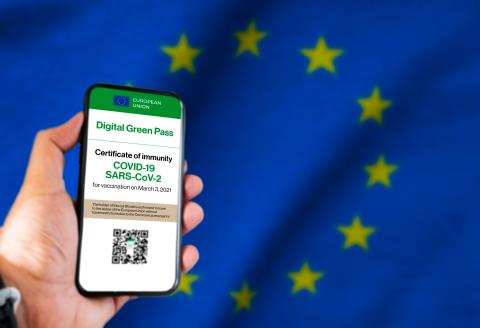
Nu hvor en af EU's grundlæggende værdier har været lagt på is i over et år, baner EU covid-19-certifikatet, og ikke "det digitale grønne certifikat" som foreslået af Kommissionen, vejen for fri og sikker bevægelighed inden for Europa. EØSU bifalder indførelsen af certifikatet som en fremragende fælles standard til at mindske kompleksiteten for de rejsende og gøre det lettere for dem at bevæge sig rundt, så længe de grundlæggende rettigheder og kravene til databeskyttelse bliver overholdt.
I dets udtalelse fastholder EØSU, at certifikatet vil gøre det lettere for passagerer at rejse, men den foreslåede regulering fastlægger ikke et krav om eller en ret til at blive vaccineret. "Dette certifikat skal være gennemsigtigt, og det skal beskytte vores privatliv," understreger ordføreren for udtalelsen, George Vernicos.
Sociale og etiske aspekter, der skal overvejes
Certifikatet vil ikke alene være et bevis på, at en person er blevet vaccineret, men vil også indeholde resultaterne af nylige PCR-test og information om en persons raskmeldelse efter en SARS-CoV-2-infektion.
De nationale myndigheder skal sikre dets hurtige indførelse uden omkostninger og uden forskelsbehandling. EØSU understreger endvidere, at certifikatet ikke må føre til forskelsbehandling på arbejdspladsen eller åbne dørene for løndumping ved at ansætte vaccinerede personer fra tredjelande.
Der skal være særligt fokus på databeskyttelse, hvilket betyder, at det er vigtigt for medlemsstaterne at have interoperable systemer med lige robuste databeskyttelsesforanstaltninger. (at)