European Economic
and Social Committee
European Economic
and Social Committee
The European Economic and Social Committee (EESC) is the voice of organised civil society in Europe.
Find out more about its role and structure at http://www.eesc.europa.eu/en/about
The EESC issues between 160 and 190 opinions, evaluation and information reports a year.
It also organises several annual initiatives and events with a focus on civil society and citizens’ participation such as the Civil Society Prize, the Civil Society Days, the Your Europe, Your Say youth plenary and the ECI Day.
Find the latest EESC opinions and publications at http://www.eesc.europa.eu/en/our-work/opinions-information-reports/opinions and http://www.eesc.europa.eu/en/our-work/publications-other-work/publications respectively.
The EESC is active in a wide range of areas, from social affairs to economy, energy and sustainability.
Learn more about our policy areas and policy highlights at http://www.eesc.europa.eu/en/policies
The EESC holds nine plenary sessions per year. It also organises many conferences, public hearings and high-level debates related to its work.
Find out more about our upcoming events at http://www.eesc.europa.eu/en/agenda/our-events/upcoming-events
Here you can find news and information about the EESC'swork, including its social media accounts, the EESC Info newsletter, photo galleries and videos.
Read the latest EESC news http://www.eesc.europa.eu/en/news-media/news and press releases http://www.eesc.europa.eu/en/news-media/press-releases
The EESC brings together representatives from all areas of organised civil society, who give their independent advice on EU policies and legislation. The EESC's326 Members are organised into three groups: Employers, Workers and Various Interests.
Find out more about our Members and groups at http://www.eesc.europa.eu/en/members-groups
The EESC has six sections, specialising in concrete topics of relevance to the citizens of the European Union, ranging from social to economic affairs, energy, environment, external relations or the internal market.
Find out more at http://www.eesc.europa.eu/en/sections-other-bodies
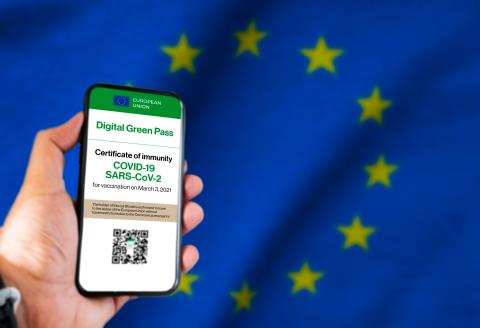
Potrdilo EU o COVID-19, ki bo nadomestilo Komisijino digitalno zeleno potrdilo, utira pot prostemu in varnemu gibanju znotraj Evrope ter s tem po več kot letu zamrznitve ponovno oživlja eno temeljnih vrednot EU. EESO pozdravlja uvedbo potrdila, ki je odličen skupni standard za zmanjšanje zapletov za potnike in olajšanje njihovega gibanja, če se bodo le v celoti spoštovale temeljne pravice in zahteve glede varstva podatkov.
V mnenju EESO je zapisano, da bo potrdilo potnikom olajšalo potovanje, toda v predlogu uredbe ni opredeljena zahteva ali pravica do cepljenja. „Potrdilo mora biti pregledno in mora zaščititi naše zasebno življenje,“ poudarjaGeorge Vernicos, poročevalec za to mnenje.
Treba je upoštevati socialni in etični vidik
Potrdilo ne bo le dokazovalo, ali je bila oseba cepljena, temveč bo vsebovalo tudi rezultate nedavnih testov PCR in informacije o tem, ali je oseba prebolela SARS-CoV-2.
Nacionalne oblasti morajo zagotoviti hitro izvajanje, ki ljudem ne bo povzročalo stroškov in ne bo diskriminatorno. EESO tudi poudarja, da potrdilo ne sme povzročati diskriminacije na delovnem mestu ali z zaposlovanjem cepljenih oseb iz tretjih držav dopustiti plačnega dampinga.
Posebno pozornost je treba posvetiti varstvu podatkov, zato je ključno, da imajo države članice interoperabilne sisteme z enako strogimi določbami o varstvu podatkov. (at)