European Economic
and Social Committee
European Economic
and Social Committee
The European Economic and Social Committee (EESC) is the voice of organised civil society in Europe.
Find out more about its role and structure at http://www.eesc.europa.eu/en/about
The EESC issues between 160 and 190 opinions, evaluation and information reports a year.
It also organises several annual initiatives and events with a focus on civil society and citizens’ participation such as the Civil Society Prize, the Civil Society Days, the Your Europe, Your Say youth plenary and the ECI Day.
Find the latest EESC opinions and publications at http://www.eesc.europa.eu/en/our-work/opinions-information-reports/opinions and http://www.eesc.europa.eu/en/our-work/publications-other-work/publications respectively.
The EESC is active in a wide range of areas, from social affairs to economy, energy and sustainability.
Learn more about our policy areas and policy highlights at http://www.eesc.europa.eu/en/policies
The EESC holds nine plenary sessions per year. It also organises many conferences, public hearings and high-level debates related to its work.
Find out more about our upcoming events at http://www.eesc.europa.eu/en/agenda/our-events/upcoming-events
Here you can find news and information about the EESC'swork, including its social media accounts, the EESC Info newsletter, photo galleries and videos.
Read the latest EESC news http://www.eesc.europa.eu/en/news-media/news and press releases http://www.eesc.europa.eu/en/news-media/press-releases
The EESC brings together representatives from all areas of organised civil society, who give their independent advice on EU policies and legislation. The EESC's326 Members are organised into three groups: Employers, Workers and Various Interests.
Find out more about our Members and groups at http://www.eesc.europa.eu/en/members-groups
The EESC has six sections, specialising in concrete topics of relevance to the citizens of the European Union, ranging from social to economic affairs, energy, environment, external relations or the internal market.
Find out more at http://www.eesc.europa.eu/en/sections-other-bodies
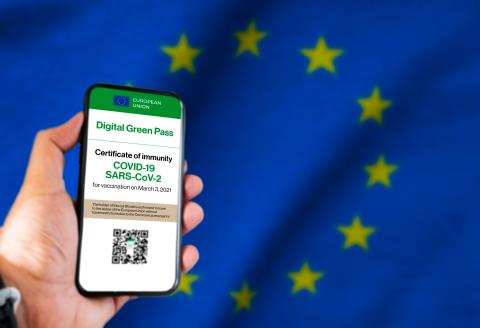
Agus ceann de bhunluachanna an Aontais Eorpaigh ina stad le breis is bliain anuas, is é an Deimhniú Glas Digiteach, ar a dtugtar Deimhniú COVID-19 AE anois, atá á mholadh ag an gCoimisiún, an bealach chun tosaigh maidir le gluaiseacht shaor agus shábháilte san Eoraip. Is díol sásaimh do CESE tabhairt isteach an deimhnithe mar chaighdeán comhchoiteann den scoth chun deacrachtaí a íoslaghdú do thaistealaithe agus chun gluaiseacht a éascú dóibh, ar an gcoinníoll go bhfuil cearta bunúsacha agus ceanglais maidir le cosaint sonraí á n-urramú go hiomlán.
De réir na tuairime ó CESE, creideann an Coiste go mbeidh sé níos éasca, a bhuí leis an deimhniú, do phaisinéirí dul ag taisteal, ach sa rialachán atá beartaithe, ní leagtar síos aon cheanglas ná ceart maidir le vacsaín a fháil. “Ní mór trédhearcacht a bheith ann maidir leis an deimhniú sin agus ní mór dó ár saol príobháideach a chosaint ”, arsa George Vernicos, rapóirtéir na tuairime, go diongbháilte.
Gnéithe sóisialta agus eiticiúla le chur san áireamh
Leis an deimhniú, dearbhófar ní hamháin má tá vacsaín faighte ag duine, ach léireofar freisin torthaí tástála PCR a rinneadh le déanaí, maille le faisnéis maidir le téarnamh duine ó ionfhabhtú SARS‑CoV‑2.
Ní mór do na húdaráis náisiúnta a chinntiú go gcuirfear an deimhniú chun feidhme go pras, gan aon chostas agus gan idirdhealú. Tá sé á chur i bhfáth ag CESE freisin nach mór a chinntiú nach ndéanfar idirdhealú san ionad oibre de thoradh an deimhnithe agus nach mbeidh an deis ann gabháil do phádhumpáil trí dhaoine ó thríú tíortha a bhfuil vacsaín faighte acu a fhostú.
Ba cheart aird ar leith a thabhairt ar chosaint sonraí, rud a fhágann go bhfuil sé thar a bheith tábhachtach do na Ballstáit córais idir-inoibritheacha a bheith acu a mbeidh forálacha láidre maidir le cosaint sonraí ag gabháil leo. (at)