European Economic
and Social Committee
European Economic
and Social Committee
The European Economic and Social Committee (EESC) is the voice of organised civil society in Europe.
Find out more about its role and structure at http://www.eesc.europa.eu/en/about
The EESC issues between 160 and 190 opinions, evaluation and information reports a year.
It also organises several annual initiatives and events with a focus on civil society and citizens’ participation such as the Civil Society Prize, the Civil Society Days, the Your Europe, Your Say youth plenary and the ECI Day.
Find the latest EESC opinions and publications at http://www.eesc.europa.eu/en/our-work/opinions-information-reports/opinions and http://www.eesc.europa.eu/en/our-work/publications-other-work/publications respectively.
The EESC is active in a wide range of areas, from social affairs to economy, energy and sustainability.
Learn more about our policy areas and policy highlights at http://www.eesc.europa.eu/en/policies
The EESC holds nine plenary sessions per year. It also organises many conferences, public hearings and high-level debates related to its work.
Find out more about our upcoming events at http://www.eesc.europa.eu/en/agenda/our-events/upcoming-events
Here you can find news and information about the EESC'swork, including its social media accounts, the EESC Info newsletter, photo galleries and videos.
Read the latest EESC news http://www.eesc.europa.eu/en/news-media/news and press releases http://www.eesc.europa.eu/en/news-media/press-releases
The EESC brings together representatives from all areas of organised civil society, who give their independent advice on EU policies and legislation. The EESC's326 Members are organised into three groups: Employers, Workers and Various Interests.
Find out more about our Members and groups at http://www.eesc.europa.eu/en/members-groups
The EESC has six sections, specialising in concrete topics of relevance to the citizens of the European Union, ranging from social to economic affairs, energy, environment, external relations or the internal market.
Find out more at http://www.eesc.europa.eu/en/sections-other-bodies
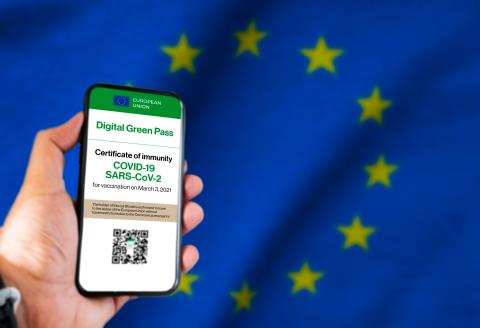
Когато една от основните ценности на ЕС беше замразена за повече от година, предложеното от Комисията удостоверение на ЕС за COVID, наричано по-рано „цифрово зелено удостоверение“, проправя пътя за свободно и безопасно движение в Европа. ЕИСК приветства въвеждането на удостоверението като отличен общ стандарт за опростяване в максимална степен на пътуванията за хората и улесняване на движението им, при условие че основните права и изискванията за защита на данните се зачитат в пълна степен.
В становището си ЕИСК застъпва мнението, че удостоверението ще улесни пътуванията, но с предложения регламент не се установява задължение или право за ваксиниране. „Удостоверението трябва да бъде прозрачно и да защитава личния ни живот“, подчерта докладчикът по становището Джордж Верникос.
Социалните и етичните особености трябва да бъдат взети под внимание
Удостоверението не само ще доказва дали лицето е било ваксинирано, но и ще предоставя информация за последните ПСР тестове и за възстановяването от прекарана инфекция със SARS-CoV-2.
Националните власти трябва да гарантират бързото, безплатното и недискриминационното му прилагане. ЕИСК подчертава още, че удостоверението не трябва да води до дискриминация на работното място или дъмпинг по отношение на заплащането чрез наемането на ваксинирани лица от трети държави.
Специално внимание трябва да се отдели на защитата на данните, поради което от решаващо значение за всички държави членки е наличието на оперативно съвместими системи с не по-малко строги разпоредби за защита на данните. (at)