European Economic
and Social Committee
European Economic
and Social Committee
The European Economic and Social Committee (EESC) is the voice of organised civil society in Europe.
Find out more about its role and structure at http://www.eesc.europa.eu/en/about
The EESC issues between 160 and 190 opinions, evaluation and information reports a year.
It also organises several annual initiatives and events with a focus on civil society and citizens’ participation such as the Civil Society Prize, the Civil Society Days, the Your Europe, Your Say youth plenary and the ECI Day.
Find the latest EESC opinions and publications at http://www.eesc.europa.eu/en/our-work/opinions-information-reports/opinions and http://www.eesc.europa.eu/en/our-work/publications-other-work/publications respectively.
The EESC is active in a wide range of areas, from social affairs to economy, energy and sustainability.
Learn more about our policy areas and policy highlights at http://www.eesc.europa.eu/en/policies
The EESC holds nine plenary sessions per year. It also organises many conferences, public hearings and high-level debates related to its work.
Find out more about our upcoming events at http://www.eesc.europa.eu/en/agenda/our-events/upcoming-events
Here you can find news and information about the EESC'swork, including its social media accounts, the EESC Info newsletter, photo galleries and videos.
Read the latest EESC news http://www.eesc.europa.eu/en/news-media/news and press releases http://www.eesc.europa.eu/en/news-media/press-releases
The EESC brings together representatives from all areas of organised civil society, who give their independent advice on EU policies and legislation. The EESC's326 Members are organised into three groups: Employers, Workers and Various Interests.
Find out more about our Members and groups at http://www.eesc.europa.eu/en/members-groups
The EESC has six sections, specialising in concrete topics of relevance to the citizens of the European Union, ranging from social to economic affairs, energy, environment, external relations or the internal market.
Find out more at http://www.eesc.europa.eu/en/sections-other-bodies
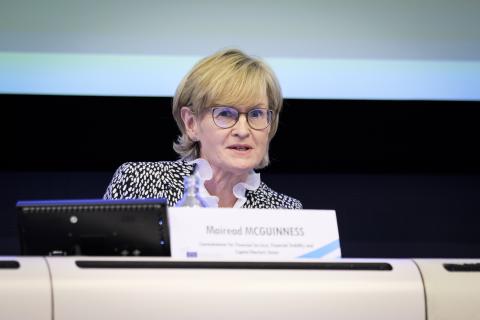
На последната си пленарна сесия Европейският икономически и социален комитет проведе дебат с европейския комисар Макгинес относно начините за постигане на по-екологична, по-устойчива и по-цифровизирана европейска икономическа и финансова система.
На пленарната сесия бяха приети редица становища, чиято цел е да помогнат да се проправи пътя към един наистина по-устойчив ЕС. В становище по собствена инициатива ЕИСК предлага да се разработят редица нови показатели, които да допълват БВП и да подпомагат прехода. В друго становище ЕИСК подкрепя целта за пренасочване на инвестициите, но отбелязва, че много от мерките, предложени от ЕК в обновената ѝ стратегия за устойчиво финансиране, често изглеждат твърде колебливи и не вземат предвид жизненоважната концепция за социална устойчивост. Освен това таксономията на ЕС не включва в еднаква степен екологичните и социалните цели и оставя съмнения относно някои спорни икономически дейности. И накрая, в трето становище ЕИСК приветства идеята за нов доброволен европейски стандарт за екосъобразните облигации и отправя важни препоръки за това как той да се превърне в истински мощен инструмент, който да насочва инвеститорите към инвестиции в проекти, които имат положително въздействие върху околната среда. (tk)