European Economic
and Social Committee
European Economic
and Social Committee
The European Economic and Social Committee (EESC) is the voice of organised civil society in Europe.
Find out more about its role and structure at http://www.eesc.europa.eu/en/about
The EESC issues between 160 and 190 opinions, evaluation and information reports a year.
It also organises several annual initiatives and events with a focus on civil society and citizens’ participation such as the Civil Society Prize, the Civil Society Days, the Your Europe, Your Say youth plenary and the ECI Day.
Find the latest EESC opinions and publications at http://www.eesc.europa.eu/en/our-work/opinions-information-reports/opinions and http://www.eesc.europa.eu/en/our-work/publications-other-work/publications respectively.
The EESC is active in a wide range of areas, from social affairs to economy, energy and sustainability.
Learn more about our policy areas and policy highlights at http://www.eesc.europa.eu/en/policies
The EESC holds nine plenary sessions per year. It also organises many conferences, public hearings and high-level debates related to its work.
Find out more about our upcoming events at http://www.eesc.europa.eu/en/agenda/our-events/upcoming-events
Here you can find news and information about the EESC'swork, including its social media accounts, the EESC Info newsletter, photo galleries and videos.
Read the latest EESC news http://www.eesc.europa.eu/en/news-media/news and press releases http://www.eesc.europa.eu/en/news-media/press-releases
The EESC brings together representatives from all areas of organised civil society, who give their independent advice on EU policies and legislation. The EESC's326 Members are organised into three groups: Employers, Workers and Various Interests.
Find out more about our Members and groups at http://www.eesc.europa.eu/en/members-groups
The EESC has six sections, specialising in concrete topics of relevance to the citizens of the European Union, ranging from social to economic affairs, energy, environment, external relations or the internal market.
Find out more at http://www.eesc.europa.eu/en/sections-other-bodies
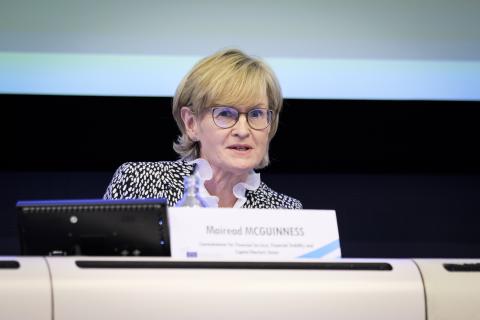
Na svojem posljednjem plenarnom zasjedanju Europski gospodarski i socijalni odbor održao je raspravu u kojoj je sudjelovala europska povjerenica McGuinness, a tema je bila postizanje zelenijeg, održivijeg i digitaliziranijeg europskog gospodarskog i financijskog sustava.
Na plenarnom zasjedanju usvojeno je više mišljenja kojima se nastoji utrti put prema istinski održivijem EU-u. U jednom samoinicijativnom mišljenju EGSO predlaže da se razvije niz novih pokazatelja uz BDP i pomoglo u tranziciji. U drugom mišljenju EGSO podržava cilj preusmjeravanja ulaganja, ali smatra da su mnoge mjere koje je Europska komisija predložila u svojoj obnovljenoj strategiji održivog financiranja često nedovoljno odlučne i ne uzimaju u obzir ključni koncept socijalne održivosti. Nadalje, taksonomijom EU-a nisu u jednakoj mjeri obuhvaćeni okolišni i socijalni ciljevi te postoje nejasnoće u pogledu kontroverznih gospodarskih djelatnosti. Naposljetku, u trećem mišljenju EGSO pozdravlja ideju o novom dobrovoljnom europskom standardu za zelene obveznice i iznosi ključne preporuke o tome kako ga pretvoriti u istinski snažan instrument za usmjeravanje ulagača prema ulaganjima u projekte koji imaju pozitivan učinak na okoliš. (tk)